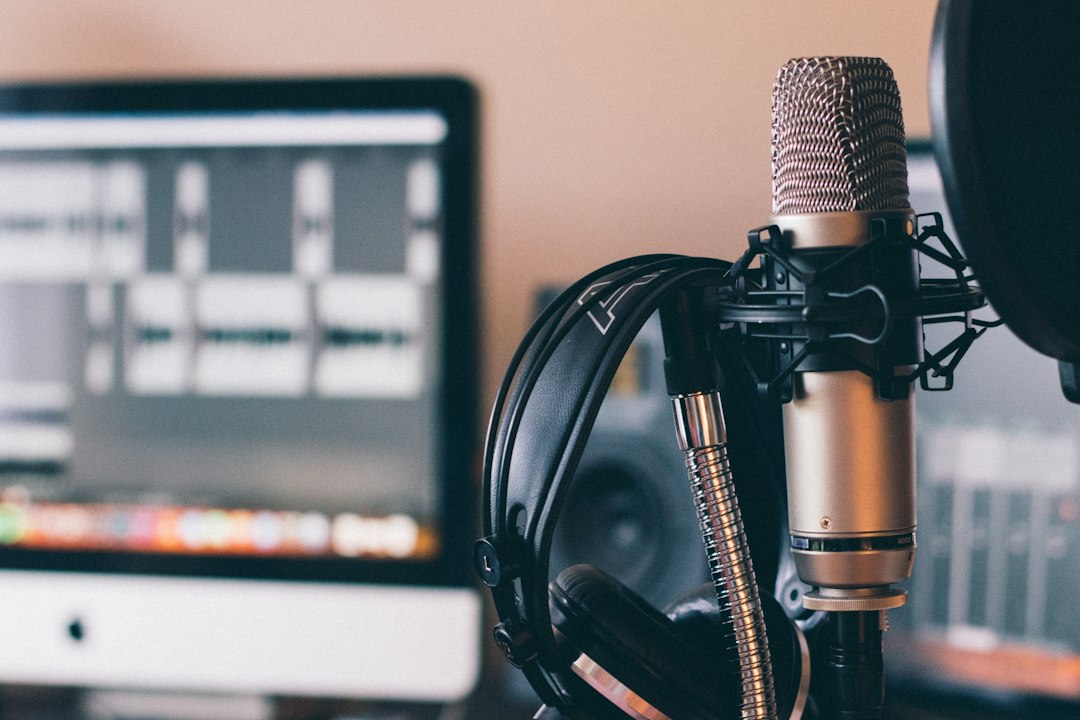
Photo by Will Francis - AI & Marketing on Unsplash
Wild Lines: Recording Dialogue Without the Camera Rolling
On a film set, after the director calls cut and the scene is complete, you might hear the sound mixer make one more request: “Can we grab that last line wild?” The actor steps back to the mark, the boom operator repositions the microphone, and everyone goes silent again. But this time, the camera doesn’t roll. The actor delivers the line into empty space, and the sound team captures it in isolation.
This is a wild line, also called a wild track—dialogue recorded separately from picture, often immediately after a take wraps. It’s one of the most practical tools in production sound, a small insurance policy that can save a scene in the editing room.
Why Record Without Picture
The primary reason for wild lines is audio quality. During a take, the camera might be too far away for optimal sound, background noise might spike unexpectedly, or another actor might overlap dialogue at a critical moment. A plane passes overhead mid-sentence. A truck rumbles by on the street outside. The dolly squeaks during the one perfect take.
Rather than lose the visual performance, the sound team captures a clean audio version after the fact. If the production recording has issues, the editor can swap in the wild line, syncing it to the actor’s mouth movements. Because it’s recorded moments after the take with the same microphone position and room acoustics, it matches far better than ADR recorded weeks later in a studio.
The Timing Advantage
Wild lines are recorded while everything is still in place—the same acoustics, the same microphone, the same emotional state. The actor is still in character, still holding the energy of the scene. Their breath pattern, their vocal tension, their pacing all match what the camera just captured.
This timing makes wild lines vastly preferable to ADR when possible. An actor trying to recreate a performance in a recording booth weeks or months later faces an uphill battle. The wild line captures the moment while it’s still alive.
Common Wild Line Scenarios
Sound teams request wild lines in predictable situations. Any time an actor delivers a key line while moving away from the microphone, they’ll likely grab it wild. When someone speaks while walking up stairs, getting into a car, or turning their back to camera, the boom operator loses optimal positioning. Recording the line again with the mic perfectly placed gives the editor options.
Off-screen dialogue is another frequent candidate. If a character shouts from another room or speaks while out of frame, the production team might record it wild even if the on-set version sounds fine. The isolated recording gives the mix more flexibility.
Physical scenes also generate wild line requests. If actors are running, fighting, or performing any action that creates noise, their dialogue often gets captured clean afterward. The scene plays with full physicality during the take, and the lines get recorded once everyone catches their breath.
How It Works on Set
The process is fast. The actor returns to roughly the same position, the boom operator repositions for optimal pickup, and the set goes quiet. The sound mixer rolls the recorder, slates the take verbally—“Scene 14, take 3, wild line”—and the actor delivers the dialogue. Usually it takes one pass, maybe two if the mixer wants options.
Actors appreciate wild lines. It’s a known quantity, a brief task, and it happens while they’re still warm. The alternative—being called back for ADR—means returning to the studio long after production wraps, trying to match a performance they barely remember.
Not a Replacement for Good Production Sound
Wild lines are a backup, not a primary strategy. A professional sound team aims to capture usable dialogue during every take. Wild lines exist for those moments when physics, logistics, or bad luck compromise the recording.
Editors prefer production sound whenever possible. Even the best wild line introduces a potential sync issue, a tiny chance the mouth shapes won’t match perfectly, or a barely perceptible shift in room tone. It’s always better to have the real thing.
But when the alternative is losing a perfect performance to a helicopter flyover or a truck horn, thirty seconds of wild line recording is time very well spent. It’s a small moment of extra effort that can make the difference between a usable scene and an expensive ADR session—or worse, a scene that never quite sounds right.