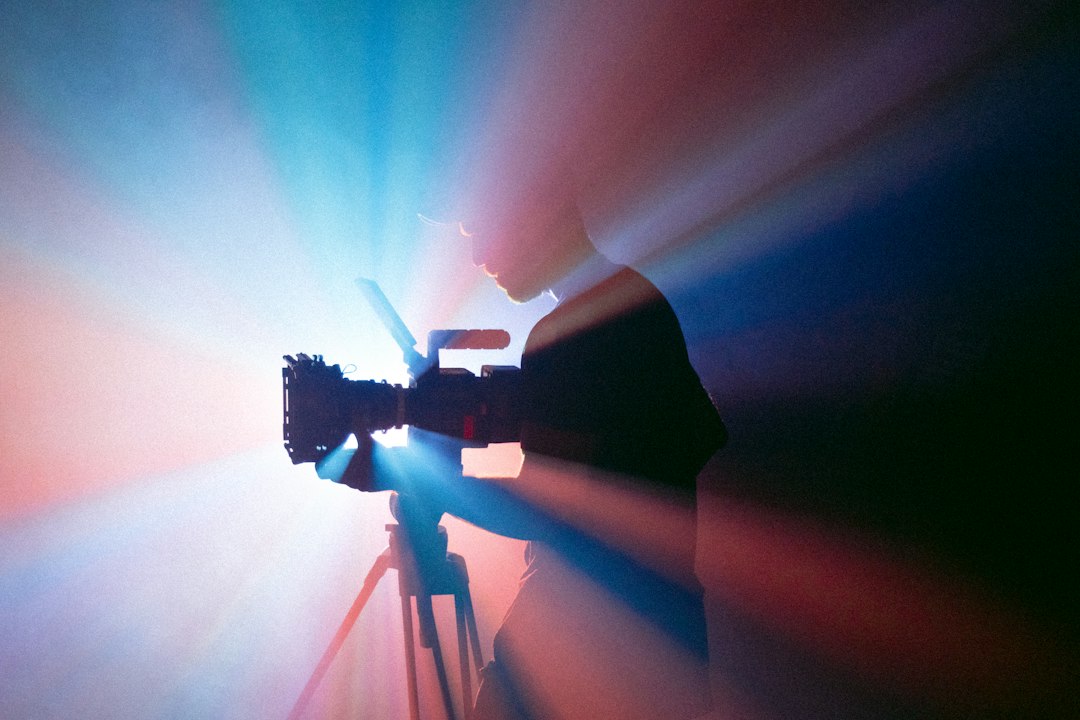
Photo by Jakob Owens on Unsplash
Why Movie Scenes Are Shot Multiple Times from Different Angles
Every scene you watch in a movie was filmed several times. Not because the actors forgot their lines or the director wasn’t satisfied—but because a single angle can never tell the whole story.
This is the principle behind shooting coverage: capturing the same action from multiple camera positions so the editor has options when assembling the final cut. A conversation between two people might be filmed five or six times, each from a different angle. First the wide shot showing both actors. Then a medium shot favoring one character. Then close-ups on each face. Then over-the-shoulder angles from both sides.
It seems wasteful until you understand what happens in the editing room.
Control Over Time and Emotion
An editor doesn’t simply choose the best performance and stick with one angle. They cut between angles to manipulate time and guide your emotional response. A tense argument might begin with a wide two-shot, establishing the physical distance between characters. As emotions escalate, the editor cuts tighter—medium shots, then close-ups. Each cut brings you closer to the characters’ faces, amplifying the intensity.
Without coverage, the editor is locked into a single perspective. They can’t speed up a slow moment by cutting to a reaction shot. They can’t linger on a character’s face during a crucial emotional beat if they only have a wide shot. Coverage gives editors the vocabulary they need to construct rhythm and emphasis.
Hiding Imperfection
Coverage also solves practical problems. An actor might deliver the best line reading in take three but stumble slightly in the middle of the shot. If the editor has a close-up of the other actor from take five, they can cut away at the moment of the stumble, using the audio from take three under a different visual. The audience never sees the mistake.
This is why production sound mixers record room tone and why sets go quiet after “cut” is called. Clean audio from multiple takes can be stitched together invisibly if the background sound matches.
The Master-Coverage System
Most narrative filmmaking follows a master-coverage approach. The master shot is a wide angle that captures the entire scene from start to finish. It serves as a safety net—if nothing else works, the editor can always fall back on the master. Then the crew shoots coverage: tighter angles, inserts, and reaction shots that provide editorial flexibility.
Some directors shoot minimal coverage, trusting their initial framing and giving editors fewer choices. Others shoot exhaustive coverage, capturing every possible angle. The difference reflects their working philosophy and how much control they want to retain after principal photography ends.
What Coverage Can’t Fix
Coverage protects against many problems, but not all of them. If the blocking is wrong—if an actor crosses to the wrong side of the room—no amount of coverage will salvage the spatial logic. If the lighting changes between setups, cutting between angles will create jarring visual discontinuities. And if the performances in different angles don’t match in energy or tone, the scene will feel fractured.
This is why script supervisors exist: to ensure continuity across multiple takes and setups so that coverage remains usable.
Why You Never Notice
When coverage works, it’s invisible. You don’t consciously register that you’re seeing the same three seconds of action from four different perspectives. Your brain stitches the angles together into a seamless experience. The cutting feels natural because it mirrors how your attention would shift if you were in the room—now focusing on the speaker, now glancing at the listener’s reaction, now pulling back to take in the whole space.
That invisibility is the goal. Coverage isn’t about showing off technique. It’s about giving filmmakers the building blocks they need to shape time, control emphasis, and guide emotion—one cut at a time.