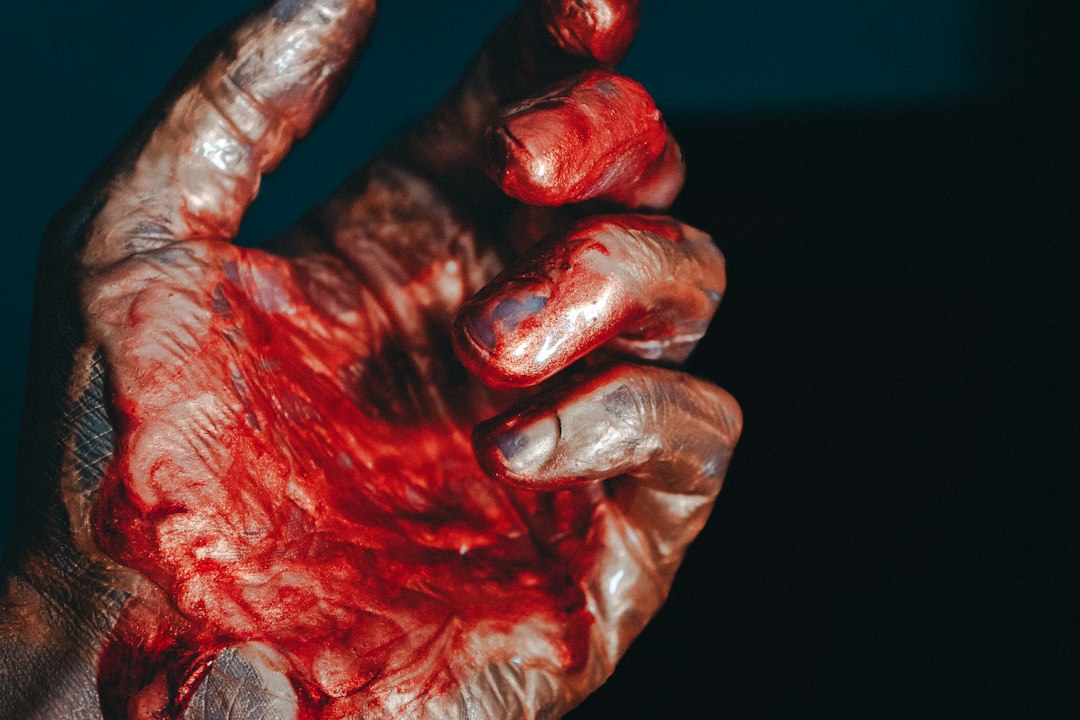
Photo by Max Muselmann on Unsplash
Why Movie Wounds Look Wet: Practical Blood in Continuity
Watch any movie with a wounded character and you’ll notice something odd: injuries stay glistening and fresh-looking for implausibly long stretches of time. A cut on someone’s forehead maintains its wet sheen through an entire action sequence. Blood on a shirt never dries or darkens. It’s not carelessness. It’s necessity.
The Continuity Problem
Films shoot out of sequence, often over weeks or months. A scene showing a character five minutes after getting injured might be filmed days after the scene where they receive the wound. Worse, that five-minute scene itself might take eight hours to shoot from multiple angles.
Real blood dries, darkens, and changes texture within minutes. Stage blood does the same. If the makeup department applied fresh blood at the start of a shooting day and let nature take its course, every angle would show a different stage of drying. The close-up shot at 9 AM would show bright red liquid. The wide shot at 2 PM would show brown crust. The whole scene would fall apart in the edit.
Glycerin and the Wet Look
The solution is glycerin, a clear syrupy liquid that doesn’t evaporate. Makeup artists mix it with stage blood to keep wounds looking perpetually fresh. Between takes, they reapply and adjust. The goal isn’t realism in the sense of matching what a real wound does over time. The goal is maintaining visual consistency so the scene reads as continuous.
This creates a visual language audiences accept without question. Movie injuries exist in a frozen state, always at peak wetness. It’s the same principle behind why rain in movies is always torrential or why practical lights never flicker unless dramatically motivated. Film worlds follow their own physics, calibrated for clarity and visual continuity rather than strict realism.
When Wounds Evolve
Occasionally a story requires showing healing over time. A character bears a scar, or we see a wound in various states across days or weeks of story time. In these cases, the makeup department creates a progression chart, documenting exactly how the injury should look in each scene regardless of shooting order.
These progressions get filed with the script supervisor, who photographs every setup and tracks which version of the wound appears in which scene. It’s meticulous work. A continuity error with a healing wound is glaring because audiences absolutely notice when a scab disappears and reappears.
The Exception: Dried Blood as Storytelling
When blood does appear dried and crusted, it’s a deliberate choice signaling time has passed or care hasn’t been taken. A character waking up after unconsciousness with dried blood caked in their hair tells us hours went by. A prisoner with old, darkened blood on their clothes communicates neglect.
The effect requires the same glycerin-based technique, just with different pigments and texture additives. The “dried” blood still needs to stay consistent through hours of shooting, which means it can’t actually dry.
Practical Limits
Makeup artists carry spray bottles filled with blood and glycerin mixture, touching up between every take. On long days shooting action scenes with bleeding characters, a dedicated crew member might do nothing but maintain wound continuity. It’s invisible labor that disappears into seamless storytelling.
The technique has limits. Extreme close-ups can reveal the artificial sheen. Fast motion makes stage blood behave differently than real blood, sometimes appearing too thick or catching light strangely. But from standard shooting distances under controlled lighting, the glycerin-blood combination reads as convincingly fresh.
Film isn’t about capturing reality. It’s about constructing a consistent reality that holds together across thousands of individual shots. Keeping wounds perpetually wet is just one small piece of that larger architecture, a practical solution to a technical problem that became an invisible convention.