Why Movie Witnesses Always Sit Next to the Aisle
Watch any courtroom drama and you’ll notice a subtle pattern: key witnesses, defendants, and family members almost always sit in aisle seats. It’s not coincidence or accurate reflection of how real courtrooms work. It’s a staging choice driven by the camera’s needs.
The Problem of Showing Reactions
Courtroom scenes depend on reaction shots. When a witness delivers shocking testimony, the camera needs to cut to the defendant’s face, the victim’s family, or the jury’s response. These micro-expressions carry the emotional weight of the scene and guide the audience’s interpretation of what they’re hearing.
But courtroom benches create a visual obstacle. In reality, spectators fill rows from the center outward, leaving aisles as circulation space. If your key character sits in the middle of a packed bench, filming their reaction means either shooting through other people’s heads or using an awkward angle that breaks the scene’s spatial logic.
Aisle Seats Solve Everything
Placing important characters on the aisle opens a clean sightline. The camera can position itself in the aisle or cross-aisle and capture an unobstructed medium shot or close-up. No heads in the way, no complex lighting to separate your subject from background figures, no continuity headaches when extras shift position between takes.
This staging also allows actors to lean forward, stand, or exit the frame without climbing over others—movements that add dramatic punctuation to emotional beats. A mother rushing from the courtroom after hearing terrible testimony works only if she has a clear path out.
The Geography of Film Courtrooms
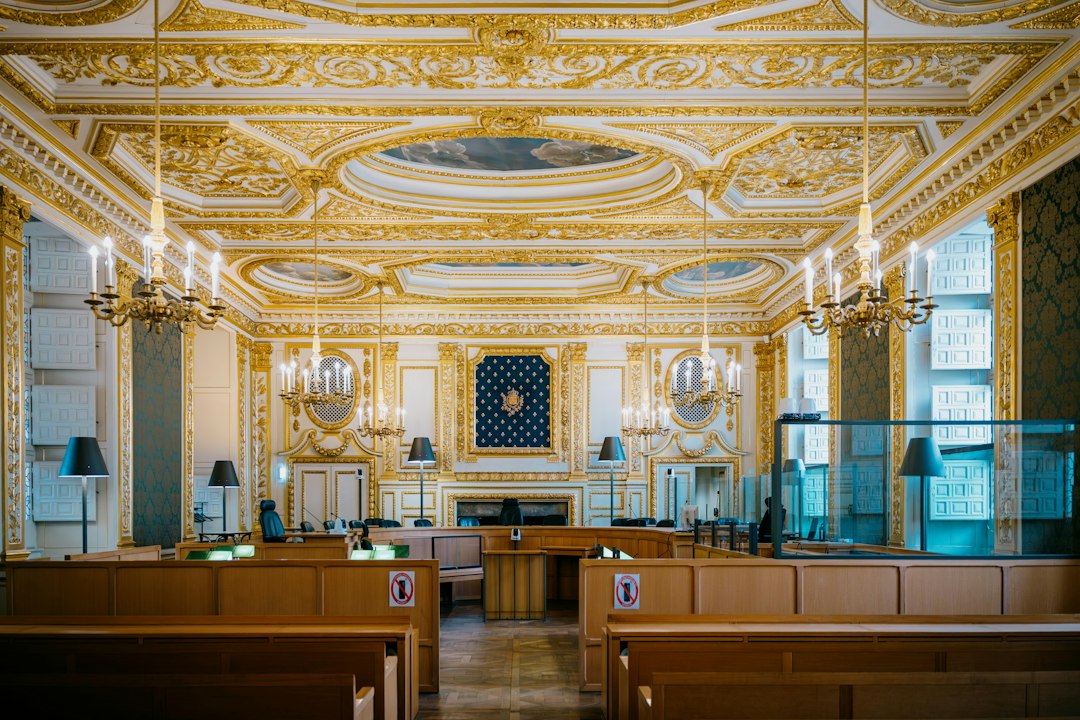
Movie courtrooms bend architecture to serve camera access. Aisles are often wider than in real courthouses, benches have fewer people, and the gallery layout creates more negative space. The witness stand, jury box, and gallery typically form a triangle that allows the camera to move between three points of interest without obstruction.
Production designers know that every element in the frame competes for attention. Filling every seat makes the image busy and dilutes focus. Strategic emptiness—a half-full gallery with key players on the aisles—concentrates viewer attention exactly where the story needs it.
When Realism Takes a Back Seat
Real courtrooms don’t work this way. Security concerns, limited seating, and courtroom decorum mean spectators sit where bailiffs direct them, often tightly packed. Important family members don’t get reserved aisle seats with perfect camera angles.
But film grammar prioritizes clarity over documentary accuracy. The audience shouldn’t struggle to identify who’s reacting or why their reaction matters. Aisle staging is invisible shorthand: if the camera can see them easily, they must be important to the story.
The Wider Pattern
This principle extends beyond courtrooms. Theater audiences in films always have the protagonist centered with empty seats nearby. Diner booths always seat characters on the same side so both faces stay visible. Wedding ceremonies position key guests at aisle-end pews.
Filmmaking constantly negotiates between spatial realism and visual storytelling. The camera’s hunger for clean sightlines shapes blocking, set design, and even background actor placement. Every crowded space in cinema is actually a carefully choreographed arrangement that looks natural while serving the frame’s needs.
That courtroom aisle seat isn’t random luck. It’s the result of a production team solving the fundamental problem of how to show you exactly what you need to see, exactly when you need to see it.