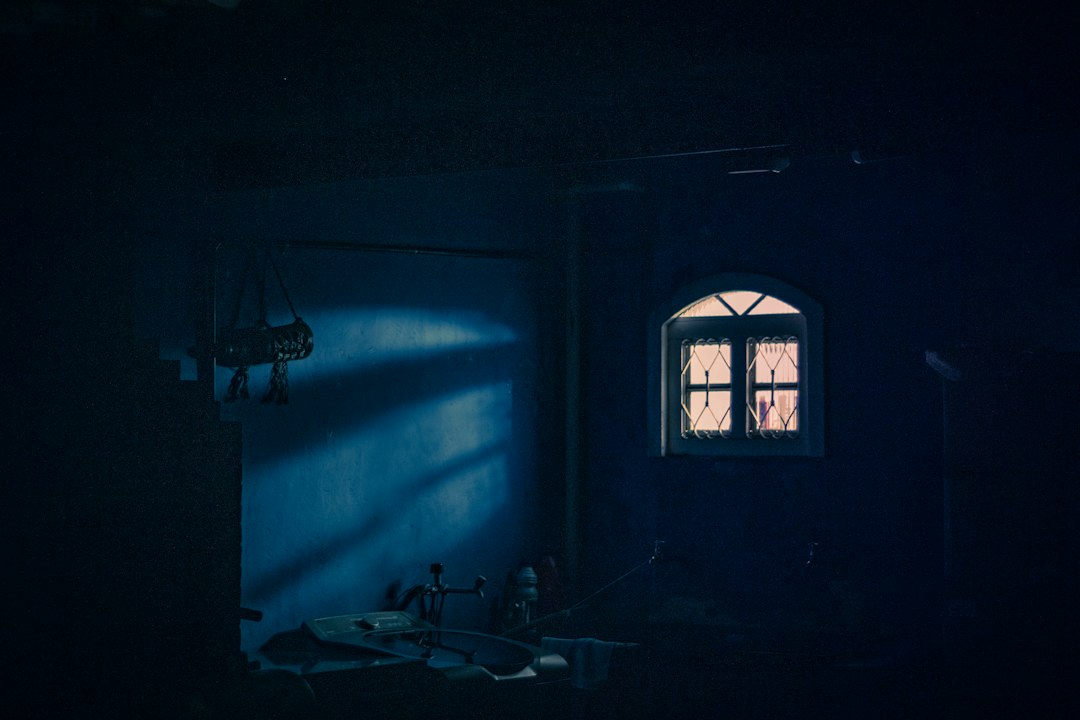
Why Movie Windows Glow Blue at Night
Watch any nighttime interior scene in a film and you’ll notice something curious: the windows glow with a cool blue light, as if moonlight were flooding through the glass. It’s a visual signature so consistent across movies that we accept it without question. But step outside on a clear night and look at the moon. That light is white, maybe slightly warm. So why does cinema insist on painting nighttime windows blue?
The answer has less to do with realism and more to do with the practical challenges of shooting interiors that are supposed to take place at night.
The Day Interior Problem
Filming actual night interiors presents serious logistical headaches. Real nighttime shoots mean paying crew overtime rates, dealing with noise restrictions in residential areas, and losing productive daylight hours. For scenes set inside homes or offices at night, many productions prefer to shoot during the day and make the scene look like night through lighting control.
The core challenge is the windows. During a daytime shoot, sunlight or bright overcast sky pours through every window, immediately telegraphing that it’s afternoon, not midnight. You can’t simply black out the windows—that makes them look like dead black rectangles, which reads as unnatural and visually flat. A nighttime interior still needs to suggest there’s a world outside those windows, even if it’s dark.
Enter Blue Moonlight
The solution cinematographers developed is to gel the windows with blue color correction filters and control the light level carefully. By placing blue gels over the window glass or over lights aimed at the windows from outside, the production creates the illusion of cool moonlight or ambient night glow streaming in.
Why blue specifically? Partly tradition, partly color theory. Warm interior light—incandescent bulbs, firelight, candles—creates orange and amber tones. By making the exterior light blue, cinematographers establish a strong visual contrast. Warm equals interior safety and habitation. Cool blue equals the exterior night world. The color separation helps the eye understand the spatial relationship and reinforces the mood. Blue also reads as “nighttime” to audiences trained by decades of cinema convention.
Controlling the Exposure
Color is only half the battle. The brightness of that blue window light must be carefully balanced. Too bright and it looks like daylight, even if it’s blue. Too dim and the window goes black, losing the effect entirely. Cinematographers aim for a level that suggests ambient environmental light—not strong enough to illuminate the room, but present enough to feel like there’s atmosphere outside.
This often means using neutral density gels in combination with blue gels to knock down the actual daylight intensity while preserving the blue color. Some productions use large frames of diffusion and gel material rigged outside the windows. Others rely on window tinting or post-production color grading to refine the look.
The Practical Alternative
When budgets allow or schedules demand it, some productions do shoot real night interiors. In those cases, cinematographers must bring their own “moonlight” using large HMI or LED fixtures positioned outside the windows, again gelled blue. This gives complete control over the direction, quality, and intensity of that exterior light, but it requires significant grip and electric resources.
Shooting real night also means matching the interior practicals—lamps, overhead lights, screens—across takes without relying on ambient daylight to fill shadows. Every bit of illumination must be intentional and reproducible.
A Visual Language We Accept
The blue window glow has become so embedded in cinematic language that it no longer registers as artificial. We see it and understand immediately: this is night. It’s a cheat, but an elegant one that solves a production problem while creating a visual motif that reinforces mood and separation between interior and exterior space.
Moonlight isn’t blue. But in movies, it always is—and we’re perfectly fine with that.