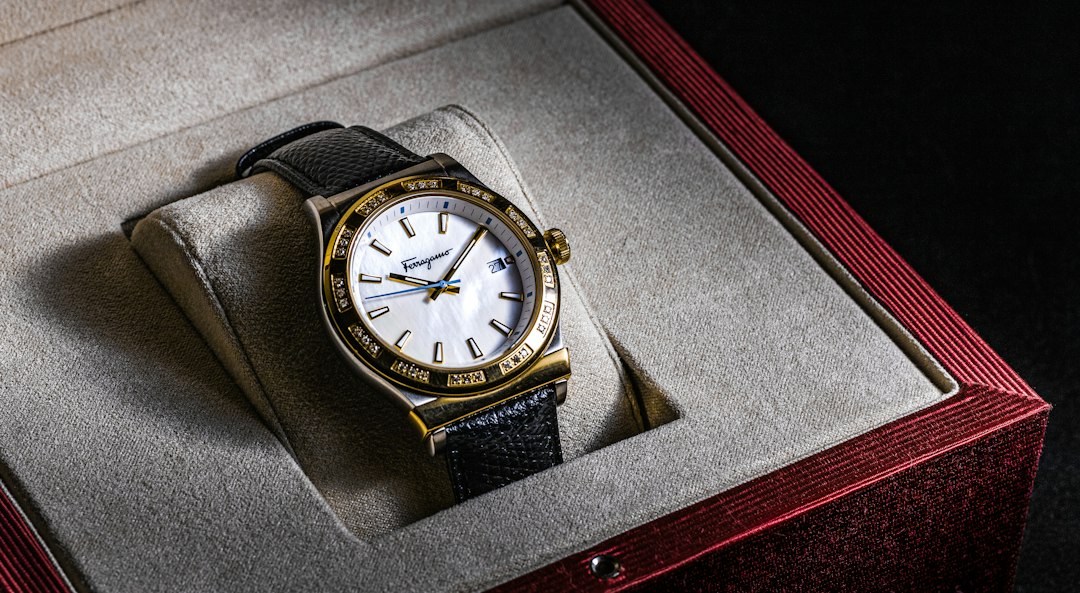
Photo by Duy Tung Tran on Unsplash
Why Movie Watches Always Show the Wrong Time
Watch closely during any film and you’ll notice something odd: when a character checks their watch or a close-up reveals a timepiece, the time shown rarely matches the scene’s context. A character waking up at dawn wears a watch reading 10:10. A tense midnight confrontation features a wristwatch pointing to 1:50. This isn’t carelessness. It’s deliberate craft rooted in practical filmmaking needs.
The 10:10 Default
The most common time displayed on watches and clocks in film is 10:10, and occasionally its mirror image, 1:50. This convention comes straight from product photography and advertising. At 10:10, the watch hands form a symmetrical V-shape that frames the brand logo positioned at 12 o’clock, creates visual balance, and resembles a smile. The position also keeps the hands from obscuring other dial features like the date window or subdials.
When prop masters source watches or set dressing includes visible timepieces, they default to this position because it looks intentional and composed on camera. A random time might appear cluttered or unbalanced in close-up, drawing the viewer’s eye to the wrong part of the frame. The 10:10 position reads as clean and neutral.
Continuity Insurance
Filmmaking happens out of sequence. A scene set at 3 PM might be shot over three days, with close-ups filmed on day one, wide shots on day two, and inserts captured a week later. If the watch shows real time during shooting, continuity becomes a minefield. The watch reads 2:47 in the master shot but 4:15 in the insert. Editors would need to match each shot, and even minor discrepancies become continuity errors that eagle-eyed viewers catch.
Setting all watches to a neutral, non-specific time eliminates this problem. The watch becomes a costume detail rather than a functional prop that must be tracked across every setup. Script supervisors already manage hundreds of continuity points per scene; removing timekeeping from the list keeps the focus on performance and blocking.
Avoiding Unwanted Story Implications
Showing accurate time can create unintended narrative problems. If a character’s watch reads 11:43 AM in one scene and the next scene, meant to follow immediately, shows 2:20 PM, the audience infers a time jump whether the filmmakers intended one or not. Unless the passage of time is a deliberate story point, most films prefer to keep temporal progression vague.
This is especially true in genres like action or thriller, where pacing depends on sustained momentum. A ticking clock can add urgency, but only when it serves the story. Random, inconsistent times just confuse the geography of the plot. By using a default position, the watch remains set dressing that doesn’t impose a timeline the script didn’t call for.
The Legal and Trademark Angle
When a watch appears in close-up with branding visible, that’s often product placement. Watch manufacturers pay for or provide timepieces specifically set to 10:10 because that’s how their marketing photos look. It’s a controlled presentation of their product. If the watch showed an arbitrary time, it might look less polished or fail to meet the brand’s guidelines for how their product appears in media.
Even without formal product placement, using recognizable luxury watches means navigating trademark concerns. Showing a high-end watch in a context that could be interpreted as negative—say, on a villain, or malfunctioning during a key moment—can prompt legal pushback. Keeping the time neutral and aesthetically pleasing reduces the risk of any implication that the watch “failed” or gave incorrect information.
When Time Actually Matters
Of course, when time is a story element, filmmakers break the rule. Countdowns, deadlines, and ticking-clock scenarios require functional, accurate timekeeping. In those cases, the watch or clock becomes a narrative device, and the production tracks its display across every shot. The difference is intention: time either drives the story, or it stays out of the way.
The next time you spot a watch in a film, check the hands. Chances are, they’re telling you it’s 10:10, no matter what time of day the story claims it is.