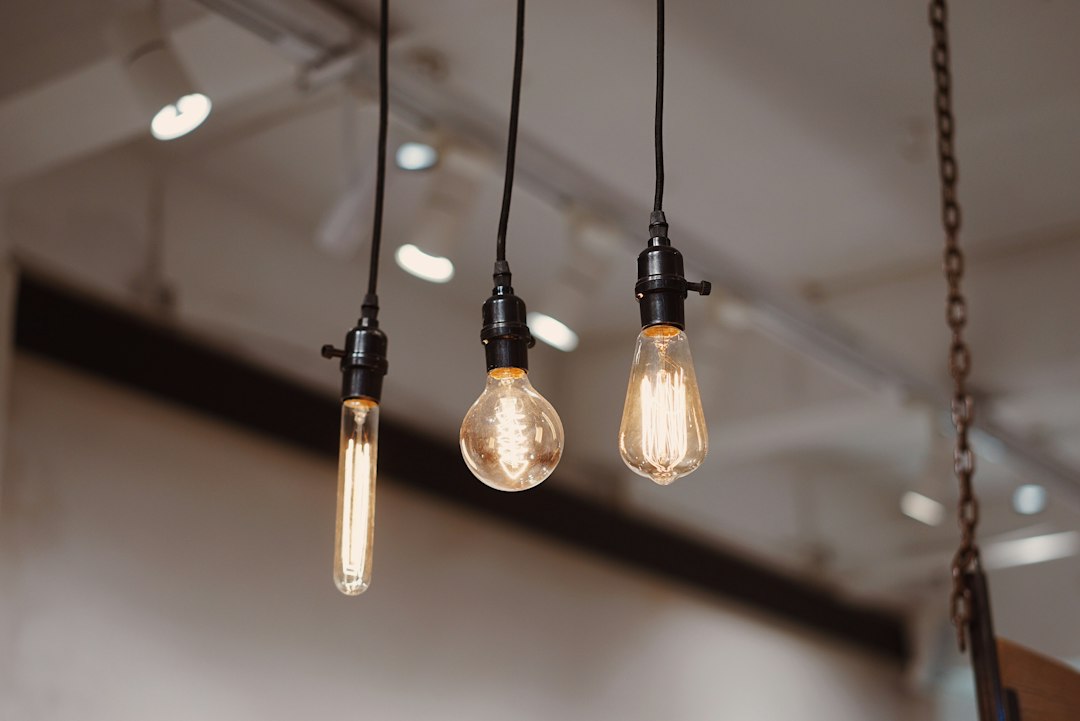
Why Movie Warehouses Always Have a Single Swinging Light Bulb
Walk into any movie warehouse—whether it’s a showdown, interrogation, or secret meeting—and you’ll almost always see the same fixture: a single bare light bulb swinging gently on a cord, casting roving shadows across concrete and corrugated steel. It’s become such a reliable trope that the moment you see that swinging bulb, you know exactly where you are and what kind of scene is about to unfold.
A Practical Lighting Solution
The swinging bulb started as a practical filmmaking choice. Warehouse interiors are notoriously difficult to light: vast, empty, and full of flat surfaces that bounce light unpredictably. A single overhead source creates harsh shadows and high contrast, which is exactly what cinematographers want for tension and drama. The bulb-on-a-cord setup justifies motivated lighting—the light source exists within the scene rather than appearing as an invisible stage light.
The swing itself adds dynamic motion without camera movement or additional equipment. As the bulb sways, shadows shift and stretch across walls and actors’ faces, creating visual interest in what would otherwise be a static, underlit space. It’s kinetic atmosphere on a budget.
Mood and Menace
That swinging light does heavy psychological work. The pendulum motion suggests instability and unease—nothing is fixed or safe. In noir and crime films, it evokes interrogation rooms and police basement holding cells. In action and thriller genres, it signals abandonment, lawlessness, and danger. The bulb becomes a visual metronome counting down to violence.
The quality of light matters too. A bare incandescent bulb produces warm, dim illumination with pronounced falloff, leaving much of the space in shadow. This creates uncertainty: you can’t see into the corners, you don’t know who else is there. The light swings toward a character’s face, briefly illuminating fear or resolve, then swings away, plunging them back into darkness.
Genre Shorthand
Over decades of repetition, the swinging warehouse bulb has become a genre marker. It tells the audience this is not a safe, controlled environment. No one turns on overhead fluorescents in a movie warehouse because fluorescents are mundane and institutional—they belong to offices and schools. The lone bulb signals a space outside normal social order, a place where violence is possible and rules don’t apply.
Production designers lean into this. Warehouses in films are always emptier and more atmospheric than real ones. There’s always room for a confrontation, always a catwalk or stack of pallets for staging, and always that single light source swinging from a beam, sometimes nudged by an actor or a breeze, sometimes swinging for no explained reason at all.
Justifying the Swing
Why is it swinging in the first place? Sometimes a character bumps it. Sometimes an explosion or gunshot sets it in motion. Often the swing is never explained—it’s simply part of the atmosphere, a visual given that no one questions. The swinging bulb has become so embedded in cinematic language that it doesn’t require diegetic justification. It swings because warehouse scenes require unease, and the swinging bulb delivers.
The Enduring Appeal
Despite being overused to the point of parody, the swinging bulb persists because it works. It’s an efficient storytelling tool that combines lighting, mood, and genre signaling in one visible, motivated element. Directors know that when the camera pushes into a dark warehouse and finds that lone bulb swinging in the void, the audience immediately understands the stakes have risen and the rules have changed.
That single light isn’t just illuminating the space—it’s illuminating the danger.