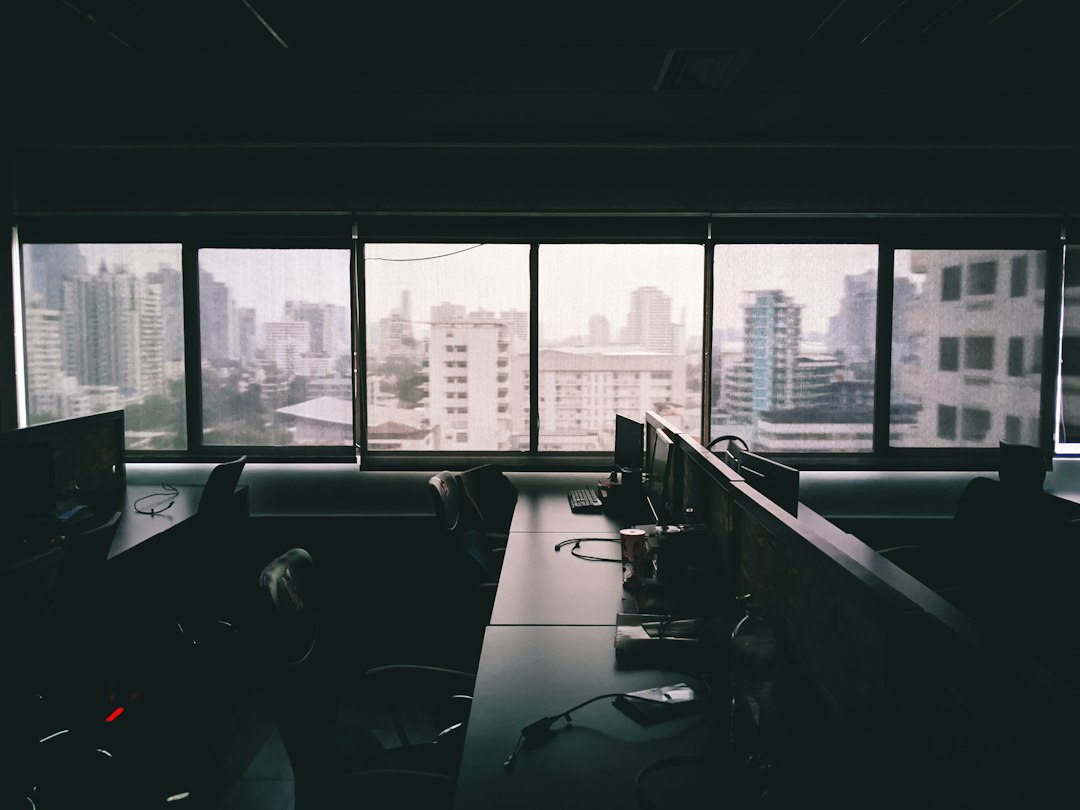
Photo by Nevin Ruttanaboonta on Unsplash
Why Movie Villains Always Work in Dim Lighting
Watch any thriller or action film and you’ll notice a peculiar workplace hazard: villains apparently despise functional lighting. While the hero operates from a sun-drenched office with floor-to-ceiling windows, the antagonist conducts business in a room lit by a single desk lamp, maybe a sliver of window light cutting through Venetian blinds. It’s not that evil masterminds can’t afford electricity—it’s a deliberate production design choice that serves multiple cinematic functions.
Visual Shorthand for Morality
The lighting contrast creates instant visual coding that audiences read unconsciously. Bright spaces signal transparency, openness, and heroism. Dim environments suggest secrecy, moral ambiguity, and danger. This coding runs deep in visual storytelling, rooted in the chiaroscuro tradition of painting where light and shadow defined moral drama.
When a character operates in darkness, we understand they have something to hide. The lighting tells us not to trust them before they’ve spoken a word. It’s efficient storytelling—the production designer and cinematographer establish character alignment through environmental choices rather than relying solely on dialogue or plot exposition.
Practical Production Advantages
Beyond symbolism, dim lighting solves practical problems for filmmakers. Dark environments are far easier to control than bright ones. Cinematographers can precisely shape where light falls, sculpting faces and hiding unwanted elements in shadow. Continuity becomes simpler—small changes in actor position or prop placement disappear in darkness where they’d be obvious in flat, even lighting.
Dim spaces also allow crews to hide equipment more easily. Lights, microphones, and camera rigging can lurk in the shadows outside the frame. On a brightly lit set, every stand, sandbag, and cable becomes a potential continuity problem that needs to be painted out in post-production or carefully avoided during camera moves.
Creating Visual Interest in Static Scenes
Villain headquarters scenes often involve characters sitting at desks, studying monitors, or having conversations—visually static activities. Low-key lighting transforms these potentially boring moments into dramatically charged images. A face half in shadow is inherently more interesting than a face evenly lit.
Cinematographers use this to their advantage, employing hard light sources that create strong shadows, venetian blind patterns that stripe across walls, or a single motivated source like a computer screen casting an eerie glow. These choices turn exposition-heavy scenes into visually compelling moments that hold audience attention.
The Exception That Proves the Rule
Occasionally, filmmakers flip this convention deliberately. A villain operating in a sterile, brightly lit corporate office or a gleaming modernist lair creates a different kind of unease—the banality of evil, the horror of wrongdoing conducted in plain sight. These exceptions work precisely because audiences expect villains to lurk in darkness. When they don’t, the subversion itself becomes meaningful.
Setting Versus Showing Up
The dim villain workspace also creates a spatial hierarchy. Heroes move through the world—bright coffee shops, bustling offices, outdoor locations. Villains tend to remain stationary in their lairs, receiving information rather than gathering it. The lighting reinforces this: the villain’s space feels closed-off, separate from the bright world the hero navigates.
This environmental contrast heightens the climactic confrontation. When the hero finally enters the villain’s domain, they’re literally stepping out of the light and into darkness—a visual representation of danger that needs no explanation. The lighting has been preparing us for this spatial invasion throughout the film.
The next time you watch a villain monologue from behind a shadowy desk, remember: it’s not poor lighting design. It’s a calculated choice that serves character, story, and practical production needs simultaneously. In cinema, even the absence of light tells a story.