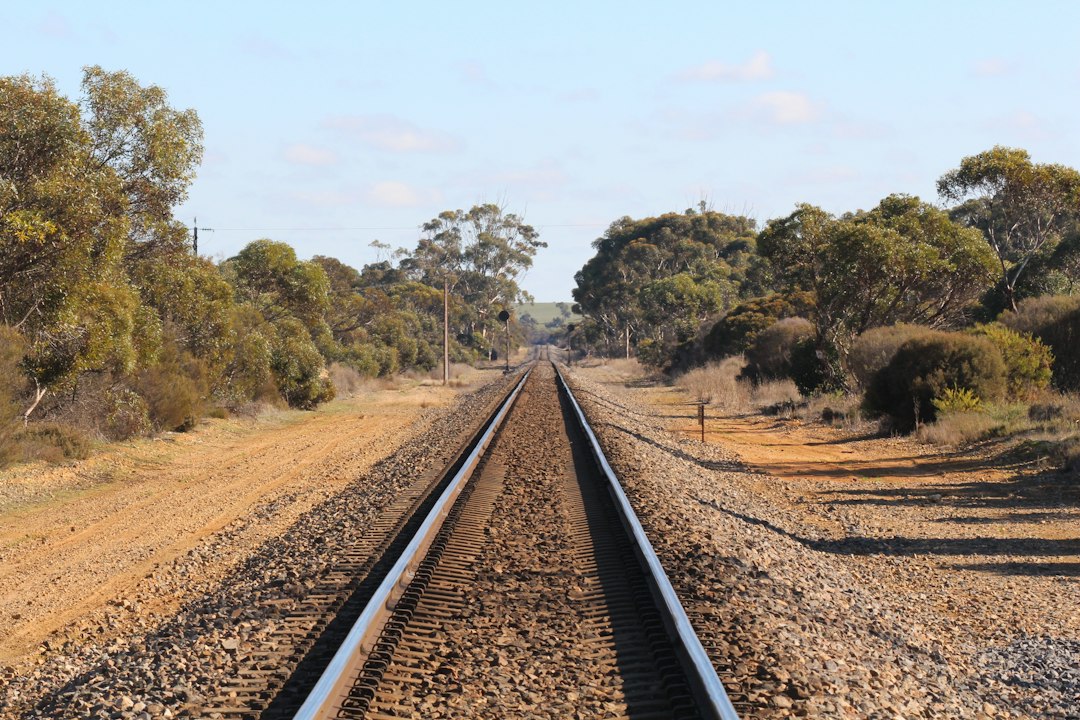
Why Movie Trains Always Whistle in the Distance
The sound of a distant train whistle carries an almost mythic quality in cinema. It surfaces in moments of quiet contemplation, signals a character’s isolation, or establishes a small-town setting with a single audio cue. You’ve heard it in countless films, often when no train appears on screen and the story has nothing to do with railroads. So why do filmmakers reach for this particular sound so often?
The Emotional Shorthand of Distance
A train whistle heard from far away does something specific to a scene’s emotional texture. Unlike a train roaring past on screen—which conveys power, danger, or momentum—the distant whistle registers as melancholy. It suggests something moving through the world while the character remains stationary. The sound creates a sense of elsewhere, of life continuing beyond the frame, of opportunities or connections passing by.
This makes it especially effective in scenes of solitude or transition. A character lying awake at night, staring at a ceiling, thinking about a decision—drop in a distant train whistle and the moment gains a layer of wistfulness without a single word of dialogue. The whistle doesn’t demand attention; it sits in the background, coloring the mood.
Sound Design and Atmospheric Space
From a practical standpoint, the train whistle is a versatile tool for sound designers building a sense of place. It instantly communicates “rural” or “small town” or “industrial outskirts” without requiring visual real estate. A filmmaker can establish setting with a sound cue rather than a wide shot, freeing up screen time for character or story.
The whistle also has an inherent sense of distance baked into its frequency and reverb. The Doppler shift, the way the sound stretches and fades across open space, tells our ears that the source is far away. This creates depth in the sonic landscape. A scene with only close sounds—dialogue, footsteps, rustling—can feel flat. Adding a distant train whistle expands the acoustic space, making the world feel larger and more real.
The Cultural Resonance of Trains
Trains carry cultural weight in American cinema especially, tied to themes of departure, travel, and the passage of time. The whistle evokes an era of cross-country journeys, of leaving home, of possibility and risk. Even in contemporary films, that symbolic freight remains. The sound carries nostalgia for a mid-century past, even when the film isn’t set in that period.
This makes the train whistle useful for period pieces, but also for modern stories that want to tap into a certain emotional register—longing, restlessness, the weight of the past. It’s a sound that suggests narrative movement even in a static moment.
Why It Works Dramatically
The distant train whistle rarely serves the plot directly. It’s not foreshadowing a train crash or signaling a character’s escape route. Instead, it works on the level of tone and subconscious association. It fills silence without overwhelming it, adds texture without distraction, and supports the emotional intent of a scene without announcing itself.
That subtlety is key. The whistle lives in the background, part of the ambient soundscape rather than a featured element. Audiences don’t consciously notice it most of the time, but they feel its effect—the loneliness, the sense of time passing, the ache of distance. It’s a small detail that does quiet, significant work, which is exactly what good sound design should accomplish.
When a filmmaker needs to evoke isolation or transition with economy and emotional precision, the distant train whistle remains one of cinema’s most reliable tools.