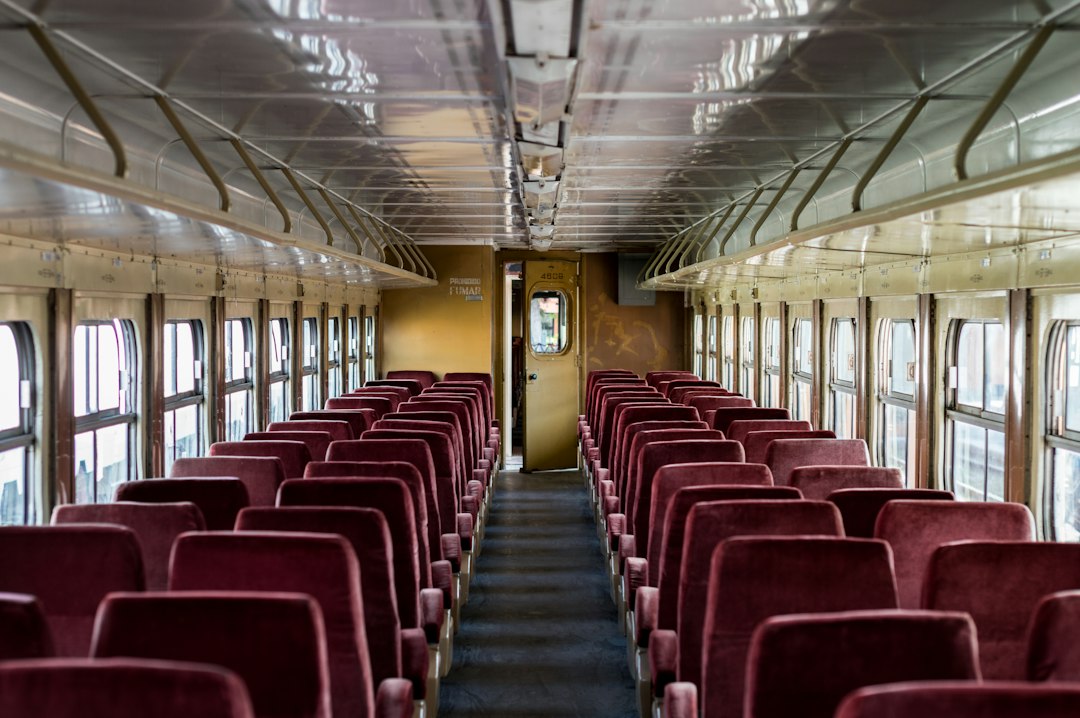
Photo by Uriel Soberanes on Unsplash
Why Movie Trains Always Have Empty Corridors
Watch any thriller or drama set on a train and you’ll notice something odd: the protagonist walks through car after car, passing maybe one or two passengers, encountering long stretches of completely empty corridor. Real trains, especially intercity or commuter routes, are packed with people standing, sitting, blocking aisles. So why does cinema consistently depict trains as nearly vacant?
The answer lies in the collision between spatial storytelling and practical filmmaking constraints.
The Camera Needs Room to Move
Train corridors are narrow by design, typically three to four feet wide. Adding a camera operator, focus puller, sound recordist, and director into that space makes blocking nearly impossible if the corridor is full of background actors. A Steadicam rig alone occupies substantial width, and even handheld setups require the operator to walk backward while filming a moving actor.
Clearing the corridor gives the camera freedom to track alongside or ahead of the character, maintaining focus and framing without constant interruptions. It also allows the crew to reposition quickly between takes without evacuating dozens of extras each time.
Sightlines and Composition
An empty corridor creates a vanishing point. The parallel lines of the walls, windows, and overhead lighting converge toward a distant door, giving the frame natural depth and directing the viewer’s eye toward the character moving through space. This geometric simplicity is visually strong and compositionally clean.
Fill that corridor with people and the frame becomes cluttered. The character loses prominence. The eye doesn’t know where to focus. Unless the scene is specifically about a crowded train—a pickpocket sequence, a chase where the hero shoves through passengers—extras dilute the shot’s impact rather than enhance it.
Audio Clarity
Trains are loud. The ambient rumble of wheels on rails, the mechanical hum of HVAC systems, and the creak of cars swaying all contribute to the soundscape. Add twenty background actors shuffling, murmuring, and moving bags, and the dialogue becomes difficult to isolate.
An empty corridor minimizes unwanted sound. Actors can deliver lines without competing against ambient crowd noise, and the sound team can layer in controlled background atmosphere in post-production. This gives the mix precision that a live recording in a packed space cannot achieve.
Controlled Movement and Blocking
Train scenes often involve confrontations, tense conversations, or moments of realization. These require specific blocking: an actor pauses at a window, another character approaches from behind, eye contact is made through a reflection. Extras complicate this choreography.
Every additional person in the frame is a variable. They need direction, they can drift into the wrong position, they obscure key sightlines. Removing them simplifies the blocking and ensures the scene’s emotional beats land without distraction.
When Crowds Do Appear
Filmmakers do populate trains when the story demands it. A commuter train heist plays with claustrophobia and anonymity. A chase through a packed subway car uses extras as obstacles. But even in these scenes, notice how the crowd is often concentrated in specific pockets—a full car followed by an empty junction, a packed platform leading to a vacant sleeper compartment.
The emptiness is not lazy filmmaking. It’s a deliberate choice that prioritizes clarity, composition, and control. Cinema compresses reality into visual language, and sometimes that language requires subtraction rather than addition. The empty train corridor is a stripped-down stage where character movement, spatial tension, and cinematic geometry can do their work without interference.