Why Movie Trains Always Arrive at Night
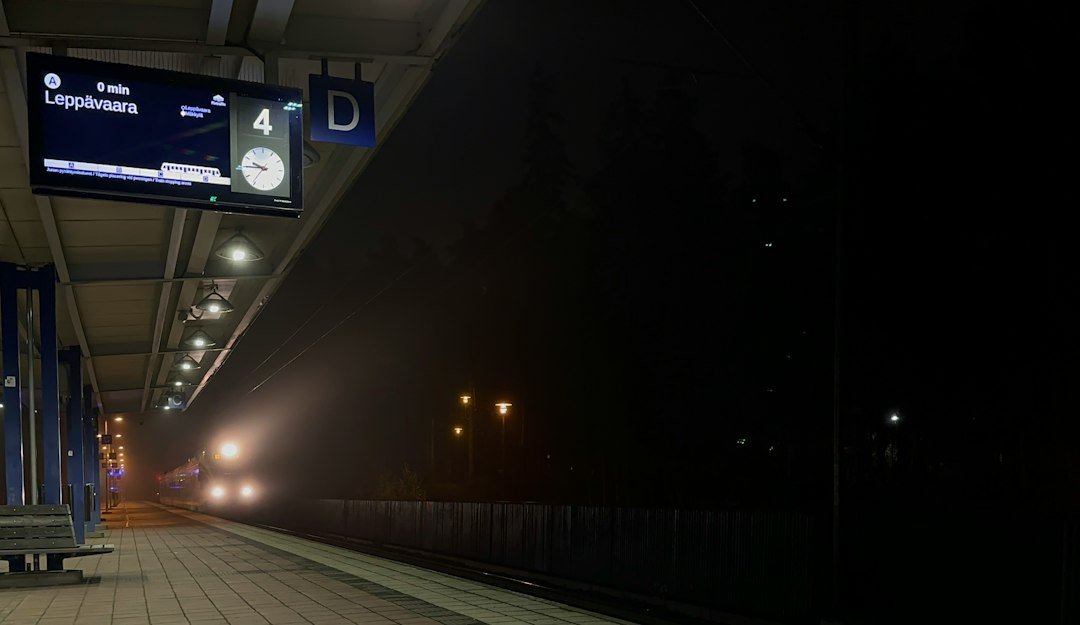
Train stations appear in countless films, and they share a peculiar trait: they almost always happen at night. Characters board sleeper cars under platform lights. They wait on benches wreathed in fog. Steam rises from beneath carriages. The clock glows under a single overhead lamp. Daylight train arrivals exist in cinema, but they are the exception rather than the rule.
This is not an accident of scheduling or convenience. It is a deliberate production choice driven by atmosphere, visual control, and narrative utility.
Night Offers Visual Drama and Depth
Train stations at night give cinematographers something daylight scenes struggle to provide: isolated pools of light against deep shadow. A single overhead lamp on an empty platform creates instant mood. Fog glows under the lights. Steam from the train becomes visible and sculptural. The train itself can emerge slowly from darkness, building tension or anticipation in a way that a daytime arrival cannot match.
Daytime train stations are bright, busy, and cluttered. They are full of commuters, signage, modern distractions. Night erases the clutter. The frame becomes simpler, more controlled, easier to compose. Practical lights—lanterns, station lamps, train windows—motivate the lighting and make the scene feel grounded even when it is heavily stylized.
This visual grammar is borrowed from noir and early Hollywood, where train stations were liminal spaces associated with departure, escape, and suspense. The look became a shorthand for transition and uncertainty, and it has persisted across genres ever since.
Night Shooting Gives Production More Control
Shooting at night, or simulating night on a backlot or soundstage, offers production teams far more control over the environment. Train platforms are public spaces, often crowded during the day. Securing them for a shoot means managing crowds, dealing with noise, and coordinating with transit schedules. Night shoots, especially in smaller stations or period locations, allow crews to work with fewer logistical interruptions.
Night also eliminates continuity problems tied to changing daylight. The sun moves, cloud cover shifts, and color temperature changes throughout the day. Night exteriors or day-for-night setups offer more predictable lighting and fewer weather-related delays. For period films, night hides modern infrastructure—contemporary signage, electric billboards, updated paint—that would otherwise require expensive set dressing or digital removal.
Fog and haze, staples of train station scenes, are far more visible at night. They catch and diffuse artificial light, creating depth and texture. During the day, haze flattens and becomes less photogenic. Night enhances every atmospheric element that production design and cinematography rely on.
Trains at Night Carry Narrative Weight
Narratively, trains at night suggest departure, secrecy, and danger. Characters boarding a night train are often fleeing, chasing, or making a decision they cannot undo. The setting reinforces these stakes. A train leaving at dawn or midday feels mundane, routine. A train leaving at midnight feels like an event.
Night train scenes also isolate characters emotionally. A person standing alone on a platform at night, waiting for a train, is a figure removed from the flow of ordinary life. The darkness around them suggests vulnerability or solitude. The train becomes a symbol of change or escape, and the nighttime setting amplifies that symbolism.
Even in romances, train stations at night carry a bittersweet charge. The goodbye on a foggy platform, the figure disappearing into the train, the red taillight vanishing into the dark—these beats work because night makes them feel final.
The Convention Reinforces Itself
Over decades, the association between trains and nighttime has become self-reinforcing. Audiences expect train stations to look a certain way, and filmmakers deliver that expectation. The visual grammar has been internalized. A train station at night signals transition, drama, and emotion without requiring additional setup.
This does not mean daylight train scenes are ineffective. Films occasionally break the convention to create contrast or subvert expectations. But the default remains night, fog, and a single glowing clock face—because it works, because it is controllable, and because it carries a century of cinematic associations with it.