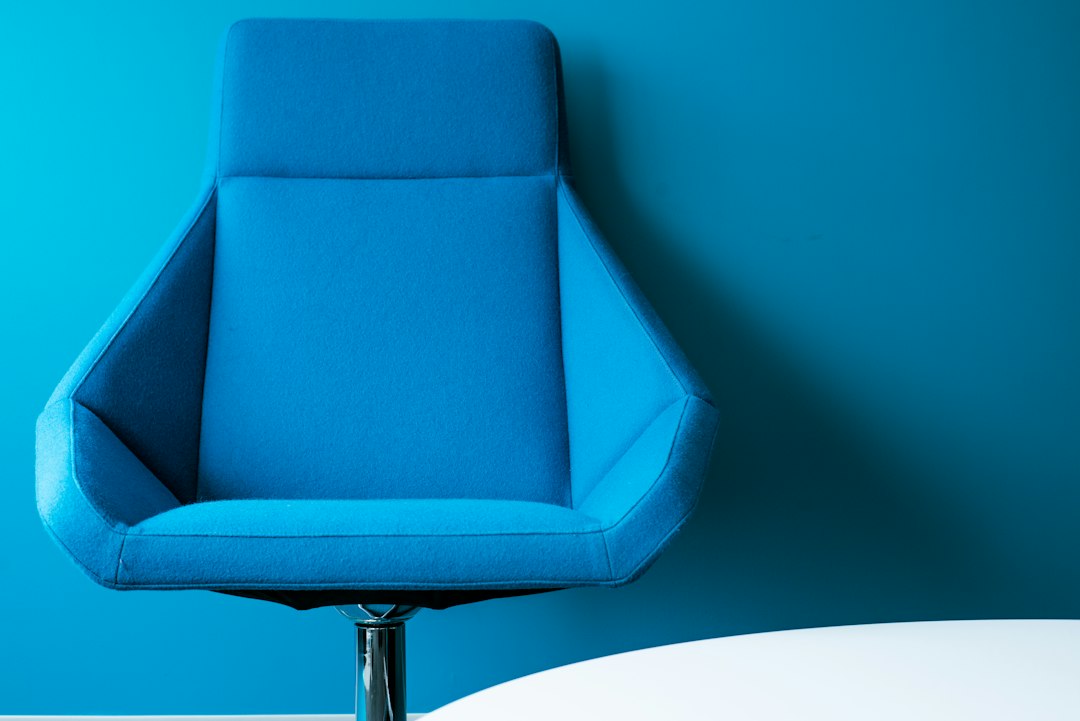
Photo by Pacific Office Interiors on Unsplash
Why Movie Therapists Always Sit in Fancy Chairs
Watch enough movies and you’ll notice a pattern: therapists always seem to practice in impossibly beautiful offices filled with mid-century modern furniture, designer lighting, and chairs that belong in an architectural magazine. Real therapy offices tend toward IKEA bookshelves and standard-issue waiting room seating. So why does cinema consistently upgrade the psychiatrist’s furniture budget?
The Visual Hierarchy Problem
Therapy scenes present a unique staging challenge. Two people sit relatively still and talk. No car chases, no dramatic blocking, no environmental variety. The camera needs to hold on these characters for extended periods, which means the frame itself must carry visual interest.
Production designers solve this by making the therapist’s chair a deliberative compositional element. A distinctive chair with clean lines, interesting negative space, or sculptural form gives the eye something to anchor on besides just the actor’s face. It establishes visual hierarchy within the frame without competing for attention with the performance.
The therapist’s chair also serves a practical function: it signals authority and expertise. In a scene where power dynamics matter—one person paying another to listen and guide—the furniture literalizes that relationship. The more impressive chair suggests professional success, years of experience, credibility. It’s shorthand character development that happens in production design rather than dialogue.
The Neutrality Requirement
Real therapy offices often feature personal items, family photos, diplomas, cluttered bookshelves. But film therapy offices trend toward deliberate emptiness. This isn’t about realism; it’s about keeping the audience focused on the patient’s interiority rather than getting distracted by the therapist’s life.
The carefully curated minimalism serves the same purpose as shallow depth of field: it isolates what matters. A striking but impersonal chair fits this aesthetic perfectly. It’s visually interesting enough to avoid boring framing, but neutral enough that it doesn’t introduce narrative questions the scene isn’t meant to answer.
Aspirational Set Dressing
There’s also a simpler explanation: movies tend to make professional spaces more attractive than they are in reality. The same way movie apartments are impossibly spacious and movie newsrooms are full of exposed brick, movie therapy offices get the prestige treatment.
This connects to how cinema uses production design to signal genre and tone. A thriller’s therapist might practice in a cold, modernist space with leather and steel. A drama about healing might choose warm wood and soft textiles. The chair becomes part of the emotional palette, contributing to how the audience reads the scene before anyone speaks.
When Productions Break the Pattern
Some filmmakers deliberately reject the fancy chair convention. A therapist practicing in a cluttered, shabby office can signal financial struggle, system overload, or a deliberately unglamorous approach to mental health care. The choice to show realistic furniture becomes its own storytelling decision—a visual cue that this narrative is opting out of Hollywood shorthand.
The Eames lounge chair and similar iconic designs appear in therapy scenes so frequently they’ve become visual clichés, instantly recognizable signifiers of “this is a therapy scene.” Audiences may not consciously register the furniture, but the production design is working beneath the surface, using objects to establish space, character, and tone without requiring exposition.
The Economics of Frame Composition
Film sets are temporary constructs built for camera angles, not human comfort. Production designers choose every object visible in frame knowing it will be scrutinized in close-up. A visually distinctive chair serves multiple purposes at once: it fills space elegantly, it photographs well from multiple angles, and it subtly characterizes the person who sits in it.
The fancy chair isn’t really about therapists. It’s about giving cinematographers and production designers a tool that solves several visual problems simultaneously while supporting the scene’s emotional and narrative work. That’s why the pattern persists: it’s a small piece of craft that quietly does its job, scene after scene, film after film.