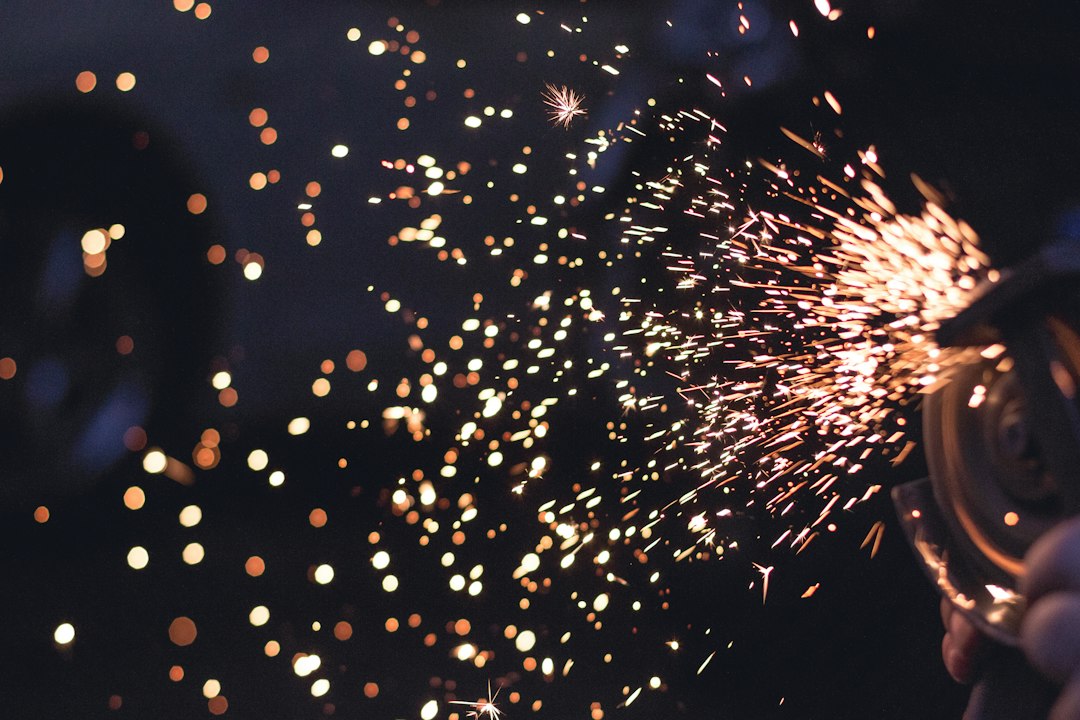
Photo by Jakub Skafiriak on Unsplash
Why Movie Swords Spark When They Clash
Watch any medieval battle scene or samurai duel on screen, and you’ll see it: swords clashing with bright sparks flying off the blades like tiny fireworks. It looks visceral and dangerous. It also has almost nothing to do with how metal weapons actually behave.
Real swords don’t spark when they strike each other. Steel-on-steel contact can produce friction and heat, but the shower of sparks you see in movies requires something extra. Those visual pyrotechnics are a deliberate theatrical choice, added to make fight choreography more dramatic and visually readable.
The Physics of Real Blade Contact
When two properly forged steel blades meet, they might produce a brief flash if the angle and force are just right, but nothing like the cascading sparks in film. Historical swordsmanship also didn’t involve much blade-on-blade contact at all. Swords were meant to cut or thrust at opponents, not to be smashed together repeatedly. Edge-to-edge parries would damage both weapons quickly.
The persistent movie image of sparking swords comes from a combination of theatrical tradition and practical filmmaking. Stage combat has long exaggerated the visual and auditory elements of fighting to ensure the audience can follow the action. Film inherited these conventions and amplified them with special effects.
How the Effect Is Created
Productions use several techniques to generate sword sparks on camera. The most common involves applying a thin coating of a pyrotechnic compound to the blade edges before filming. When the coated sections make contact during choreographed strikes, the friction ignites the compound and produces visible sparks.
Another method involves attaching small battery-powered spark generators to the weapons, triggered by contact or remotely. These devices are particularly useful for extended fight sequences where reapplying coatings between takes would slow production.
Some films add sparks digitally in post-production, giving editors precise control over timing and intensity. This approach has become more common as visual effects tools have improved, allowing sparks to be layered onto footage without requiring any practical effects during shooting.
Why Filmmakers Keep Using Sparks
The effect persists because it serves clear storytelling purposes. Sparks provide instant visual feedback that contact has occurred, helping viewers track the flow of fast-paced fights. They add energy and intensity to combat scenes, signaling danger and force.
Sparks also function as a kind of punctuation in fight choreography. Each flash marks a beat in the rhythm of the sequence, similar to how sound effects emphasize punches or gunshots. Without these visual accents, sword fights can appear flat or difficult to follow, especially in darker lighting conditions common to medieval or fantasy settings.
The convention has become so ingrained that its absence can feel wrong to audiences. A “realistic” sword fight without sparks might seem less exciting or less authentic, even though it would be closer to historical truth. Cinema has created its own visual language for violence, and sparks have become part of that vocabulary.
When Realism Wins
Some filmmakers consciously avoid the spark effect, particularly in projects aiming for historical accuracy or grounded fight choreography. These productions treat weapons as lethal tools rather than theatrical props, focusing on technique and consequence rather than spectacle.
But even in realistic films, the choice to eliminate sparks is usually paired with other departures from movie convention: shorter fights, visible exhaustion, and an emphasis on how quickly real violence ends. Removing one unrealistic element means rethinking the entire approach to combat.
The sparking sword remains a practical compromise between visual clarity and authenticity, a small fabrication that helps sell the larger illusion of cinematic combat.