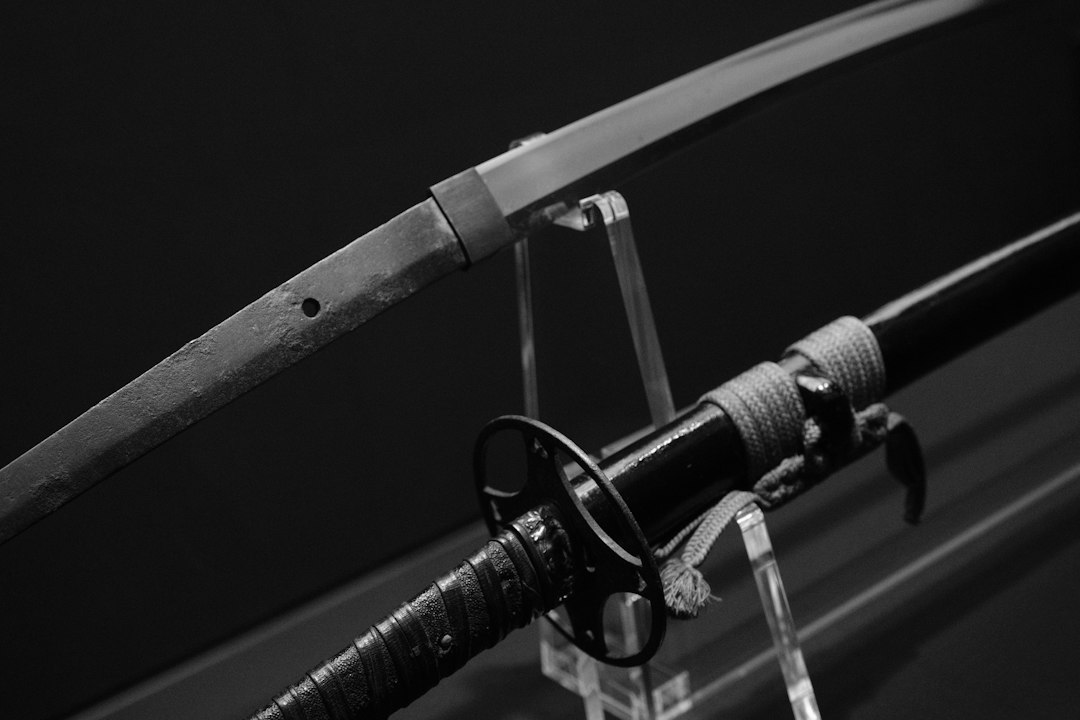
Photo by Seiya Maeda on Unsplash
Why Movie Swords Make That Metallic Ring When Sheathed
Watch any period drama, fantasy film, or samurai epic and you’ll hear it: that clean, resonant metallic ring as a character slides their sword back into its scabbard. The sound is so ubiquitous that it’s become part of the grammar of cinema, a sonic punctuation mark signaling the end of a confrontation or the calm before violence. But if you’ve ever handled a real sword, you know the truth: sheathing a blade is nearly silent.
The Reality of Scabbards
Real scabbards are designed to protect the blade and keep it secure, not to produce sound. Historical scabbards were lined with wood, leather, or fleece—materials chosen specifically because they grip the blade gently and prevent it from rattling. A properly fitted scabbard holds the sword snugly. The act of sheathing produces a soft whisper at most, sometimes a faint wooden creak, but never the bright metallic chime we hear on screen.
Metal-on-metal contact, which would be required for that signature ring, would quickly damage both the blade edge and the scabbard’s throat. No warrior in history wanted their weapon to announce itself with every movement or to dull from constant scraping.
Why the Sound Exists
The ringing sheath sound is a deliberate fabrication by sound designers, and it serves a specific narrative purpose. Film is a medium that compresses and heightens reality, and sound is one of the most powerful tools for guiding audience perception. A silent sheathing offers no emotional payoff, no sense of finality. The ring gives weight to the moment. It tells us the sword is sharp, dangerous, and ready. It signals a shift in tone—from tension to resolution, or from peace to imminent threat.
Sound designers create the effect by recording metal blades sliding against each other, or by using metal rods, kitchen knives, and even swords drawn across steel plates. The result is then layered and tuned to match the on-screen action. The sound is less about realism and more about fulfilling an expectation the audience has internalized over decades of cinema.
The Convention Reinforces Itself
Once a sound becomes standard, it’s nearly impossible to remove. Audiences expect swords to ring. A silent sheath might read as a mistake, a poorly mixed scene, or a cheap production that couldn’t afford proper sound design. Filmmakers who choose silence risk breaking immersion, not because silence is wrong, but because the audience has been trained to hear something else.
This is the same reason movie swords spark when they clash, guns click ominously when aimed, and arrows whistle through the air. These sounds are not authentic, but they are correct within the language of film. They communicate information quickly and viscerally in a medium where every second counts.
When Silence Works
Some films do choose silence, but it’s always a deliberate choice. A samurai film might let the sheathing happen without sound to emphasize discipline and control, or to create a stark contrast with the violence that preceded it. In these cases, the absence of the expected sound becomes its own kind of commentary, a refusal to punctuate the moment with false drama.
But these are exceptions. The default remains the ring, because it works. It satisfies. And in a craft built on illusion, the question is never whether something is real—it’s whether it feels right.
The Broader Pattern
The ringing sword sheath belongs to a larger family of cinematic fabrications: enhanced fight sounds, exaggerated footsteps, and the wet crunch of a punch that never landed. These are the invisible scaffolding of film sound, the layer of artifice that makes the image feel more real by being, paradoxically, less accurate. Sound design doesn’t document reality—it manufactures it, one metallic ring at a time.