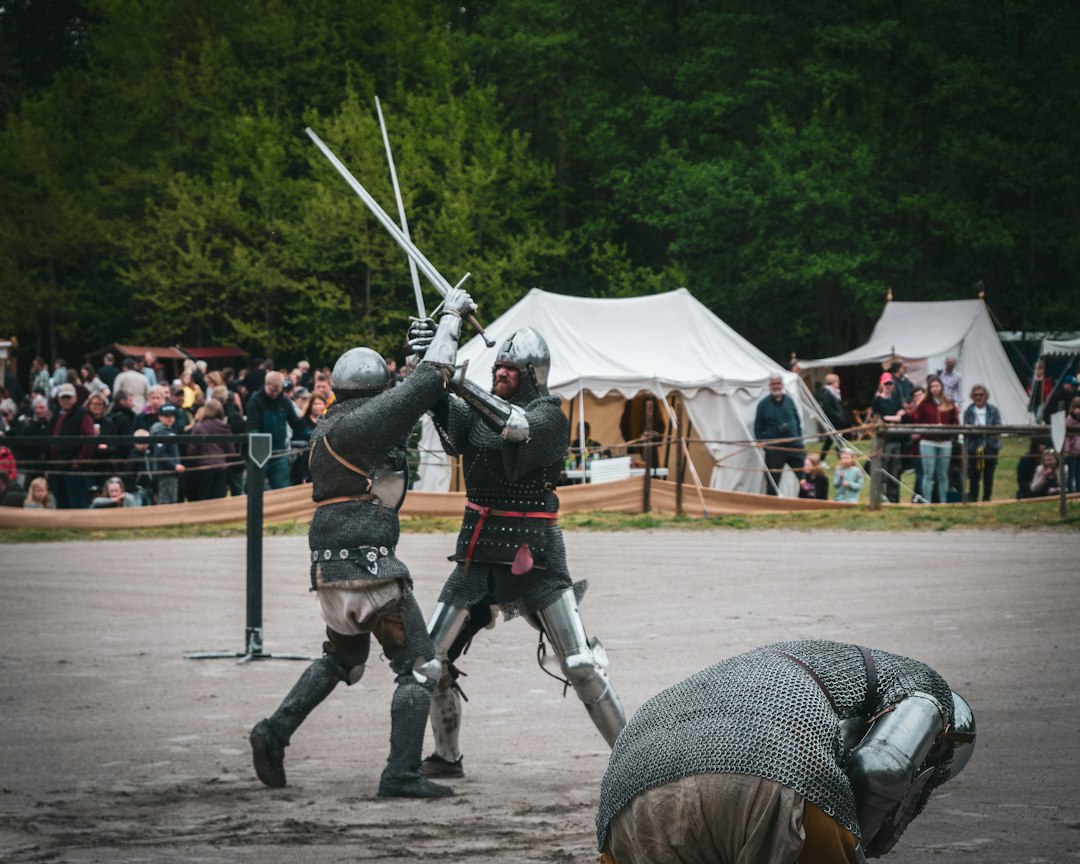
Photo by Casper Johansson on Unsplash
Why Movie Swords Never Show Blood
Watch any swashbuckling adventure or historical epic and you’ll notice something odd: swords slice through enemies, but the blades stay pristine. Even after a dozen combatants fall, the hero’s sword gleams without a trace of blood. This isn’t an oversight. It’s a deliberate choice shaped by ratings boards, practical filmmaking concerns, and visual storytelling priorities.
The Ratings Problem
Blood on a weapon creates a persistent visual reminder of violence that ratings boards scrutinize carefully. A sword that stays clean allows a film to depict combat without dwelling on its consequences. The MPAA and international ratings boards distinguish between impact violence—the moment of a strike—and aftermath violence. A blood-streaked blade carried through subsequent scenes keeps the gore visible longer, potentially pushing a PG-13 film into R territory.
Filmmakers who want broader audiences learn to imply lethality without lingering evidence. The strike happens, the opponent falls, but the weapon itself remains neutral. This isn’t about squeamishness; it’s about control. A clean blade lets the story move forward without forcing every frame to carry the weight of what just happened.
Practical Production Realities
Maintaining blood continuity on a prop sword is a nightmare. Fight choreography requires dozens of takes from multiple angles. If blood appears on the blade in take one, it must match exactly in every subsequent shot, even if those shots are filmed hours apart or on different days. Any variation breaks continuity.
Applying stage blood to a sword also creates safety issues. Film swords, even dulled ones, move at speed. Adding liquid makes grips slippery and increases the risk of losing control during choreography. Stunt coordinators already manage complex safety protocols for weapon work; introducing a substance that affects handling adds unnecessary risk.
Some productions use digital blood effects, but adding CGI to a moving, reflecting metal surface frame-by-frame becomes expensive. For background fighters or wide shots, the cost often outweighs the benefit.
Visual Clarity in Fight Choreography
Sword fights rely on the audience tracking blade position and movement. A clean, reflective surface catches light and remains visible against costumes, backgrounds, and other fighters. Blood streaks muddy the visual read, making it harder to follow the action.
Cinematographers light sword fights to emphasize the weapons—glints off metal create dynamic visual punctuation. Blood dampens that effect, turning a gleaming edge into a matte, darker surface that recedes visually. In fast-paced editing, that loss of contrast makes choreography harder to parse.
When Blood Does Appear
Films that do show blood on blades typically use it as a specific narrative beat. A character might look down at their bloodied sword in horror, registering what they’ve done. The blood appears for that moment of realization, then the shot cuts away. The blood serves the story rather than existing as a persistent practical detail.
Grittier films aiming for realism sometimes commit to the effect throughout, but even then, continuity demands limit how much blood accumulates. A blade that looks like it’s been dipped in paint reads as excessive rather than authentic.
The Suspension We Accept
Film violence operates on agreed-upon abstractions. We accept that gunfights rarely show bullet wounds, that fistfights rarely break hands, and that swords stay clean. These aren’t failures of realism—they’re choices about which details serve the story and which become distractions.
The clean blade keeps focus on choreography, performance, and narrative momentum. It’s one more invisible decision in the craft of making violence watchable, controlled, and dramatically useful rather than overwhelming. The audience accepts the convention because the alternative would slow everything down, force constant continuity management, and make every fight scene about aftermath rather than action.
Cinema’s swords gleam because the story needs them to, and because keeping them that way makes better films.