Photo by Nik Shuliahin 💛💙 on Unsplash
Why Movie Swords Never Cut Through Armor
In nearly every medieval or fantasy film, swords cleave through metal armor with a single swing. A hero strikes an armored opponent and the blade passes clean through breastplate, chainmail, and body as if cutting through fabric. It looks dramatic. It also bears almost no resemblance to how swords and armor actually worked.
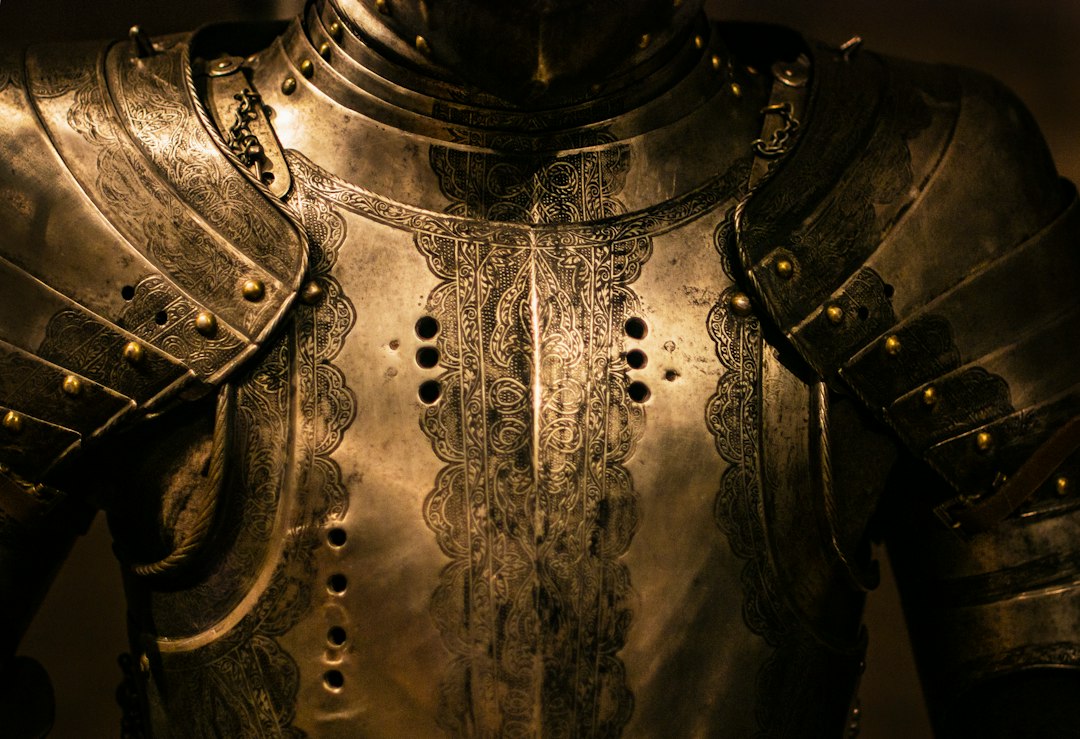
Real plate armor was designed specifically to defeat sword strikes. A well-forged breastplate could turn aside a blade completely, redirecting the force of the blow rather than absorbing it. Knights didn’t fear being cut through their armor because it simply didn’t happen. The physics don’t support it. A sword edge striking hardened steel will deflect, chip, or at best leave a shallow scratch.
What Actually Happened in Armored Combat
Medieval combatants knew their weapons couldn’t cut through plate. So they adapted. Against a fully armored opponent, fighters aimed for gaps: the armpit, the back of the knee, the visor slot, the groin. These small unprotected areas became the primary targets.
Alternatively, they changed how they used the sword itself. The technique called half-swording involved gripping the blade partway down its length and using the sword as a lever or thrusting weapon, trying to force the point into a joint or gap. Some fighters would flip the sword entirely and use the pommel or crossguard as a bludgeon, aiming to dent the armor or concuss the person inside.
Specialized weapons emerged for armored combat: warhammers, maces, poleaxes. These were designed to deliver blunt force trauma through armor or to pierce it with a spike. The sword remained a symbol of status and a versatile tool, but on the battlefield against armor, it was often a secondary option.
Why Film Takes a Different Approach
Cinema prioritizes visual clarity and emotional impact over historical accuracy. A sword cutting clean through armor reads immediately as power and dominance. It requires no setup or explanation. The audience understands the stakes in a fraction of a second.
Showing a fighter carefully probing for gaps or half-swording to work a point into an armpit takes more screen time and more cinematic language to communicate. It can look tentative or technical in a way that undercuts the heroic momentum of the scene. Blunt force weapons deliver impact, but they don’t have the elegance or the cultural weight of a sword.
The sword also carries symbolic freight. It represents the hero’s skill, their nobility, their right to victory. Having that sword rendered ineffective by simple steel plate undermines the visual metaphor. The weapon needs to work, so the armor becomes functionally cosmetic, present for aesthetic reasons but not treated as protective gear.
When Armor Actually Matters
Some films do acknowledge the realities of armored combat, at least partially. In battle sequences where combatants use hammers, axes, or grappling, the armor is treated more respectfully. Occasionally a character will thrust a dagger into a gap rather than swinging at plate.
But these moments remain exceptions. The default cinematic grammar treats armor as a costume element that conveys period and status, not as a functional object that changes how fights unfold. It’s a choice that favors pacing and iconography over material accuracy.
This isn’t a flaw so much as a translation. Film condenses, simplifies, and heightens. Real medieval combat was exhausting, cautious, and often ended with grappling in the mud. Movie combat needs to be legible and emotionally coherent in a matter of seconds. The sword that cuts through armor is a storytelling tool, not a historical claim. Understanding the gap between the two doesn’t diminish the filmmaking. It just reminds us that cinema operates by its own rules.