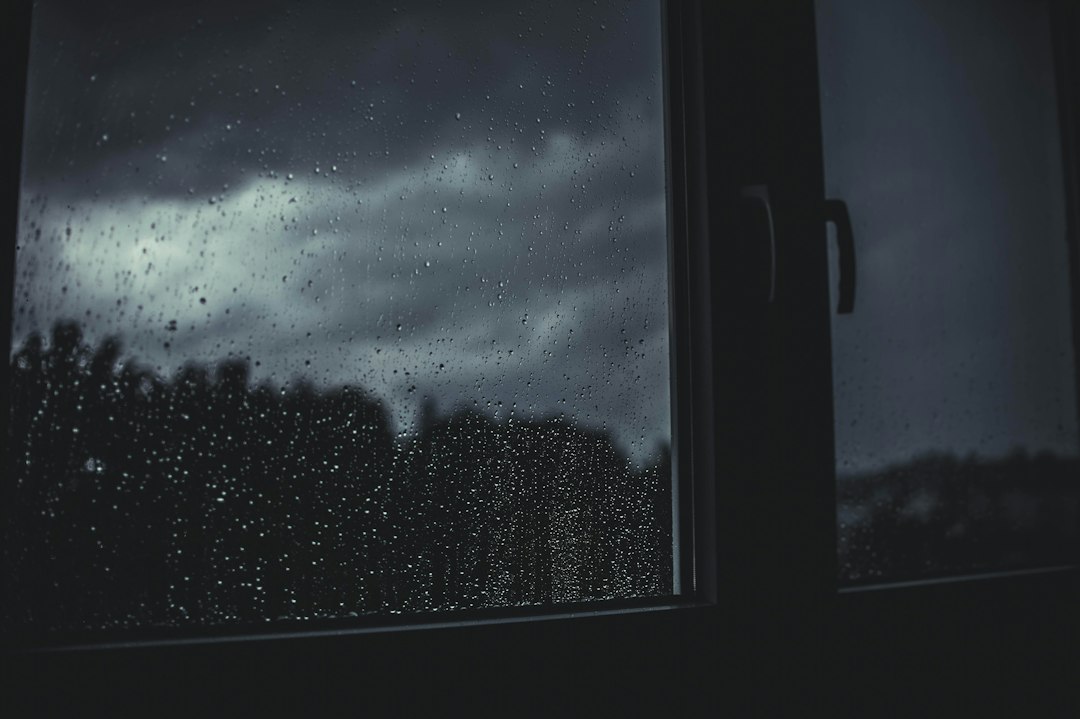
Photo by Glenn Carstens-Peters on Unsplash
Why Movie Storms Always Have Lightning Without Thunder
Watch a dramatic scene play out in a darkened room during a movie storm, and you’ll notice something odd: lightning flashes through the windows every few seconds, illuminating faces at crucial moments, but the thunder never comes. Or if it does, it’s a single rumble placed precisely for effect, not the chaotic, overlapping cacophony that follows real lightning strikes.
This isn’t lazy sound design. It’s a deliberate choice that prioritizes clarity, emotional control, and the mechanics of how film audio works.
The Dialogue Problem
Thunder is loud, unpredictable, and sustained. A real thunderclap can last several seconds, rolling and echoing across different frequencies. In a film scene where characters are talking, that creates an immediate problem: audiences need to hear every word of dialogue clearly, but a realistic thunderstorm would drown out entire lines.
Unlike ambient rain or wind, which can be mixed underneath dialogue at lower volumes, thunder demands to be heard. It occupies the same sonic space as human voices—the midrange frequencies where speech intelligibility lives. Film mixers can’t simply turn it down without making it feel fake, so the solution is to use it sparingly or skip it entirely.
Lightning, meanwhile, gives all the visual drama of a storm without any of the audio drawbacks. Each flash can be timed to punctuate a line of dialogue, reveal a character’s expression, or create a moment of visual suspense. It’s a lighting cue disguised as weather.
Emotional Precision Over Realism
Thunder changes the emotional texture of a scene in ways that don’t always serve the story. It’s inherently startling, pulling focus away from character moments and redirecting attention to the environment. A well-placed thunderclap can underscore a reveal or a moment of shock, but constant, realistic thunder creates a sense of chaos that works against intimate, controlled drama.
Silent lightning, by contrast, functions more like a visual motif. It can feel ominous, melancholy, or tense depending on context, without imposing its own emotional agenda. Directors use it the same way they use a flickering lightbulb or passing headlights—as a rhythmic visual element that enhances mood without overpowering performance.
When thunder does appear in films, it’s almost always a single, deliberate beat. A character says something devastating, and a thunderclap answers. It’s not meteorologically accurate—real storms don’t time themselves to human speech—but it works because film sound is always constructed for meaning, not realism.
Practical Production Realities
Most dialogue scenes are shot with production audio, meaning the sound recorded on set is what you hear in the finished film (or forms the basis for it, before ADR and mixing). Adding realistic thunder would mean either playing it back loudly on set during takes—which makes actors strain to be heard and forces costly ADR later—or leaving it out during shooting and adding it in post, where it then competes with the carefully recorded dialogue.
The path of least resistance is to treat storms as primarily visual. Rain, wind, and distant rumbles can be layered in during the mix, but the sharp, intrusive sounds get left out unless they serve a specific narrative purpose.
Lightning also reads better on camera than thunder reads in a mix. A bright flash is unmistakable, even in a brief cutaway. Thunder, especially if it’s mixed quietly enough to preserve dialogue, can feel like a vague rumble that doesn’t register as clearly as intended.
The Grammar of Storm Scenes
Over decades of filmmaking, silent lightning has become part of the visual grammar audiences understand instinctively. We accept it the same way we accept that movie rain is always backlit and visible, or that storms always arrive exactly when the scene needs them. It’s a storytelling convention, not a documentary choice.
The next time you watch a storm scene, pay attention to how the lightning is used. It’s rarely random. Each flash is a decision, a moment of punctuation in the scene’s rhythm, timed to faces, revelations, or beats of silence. Thunder, with all its unruly power, would only get in the way.