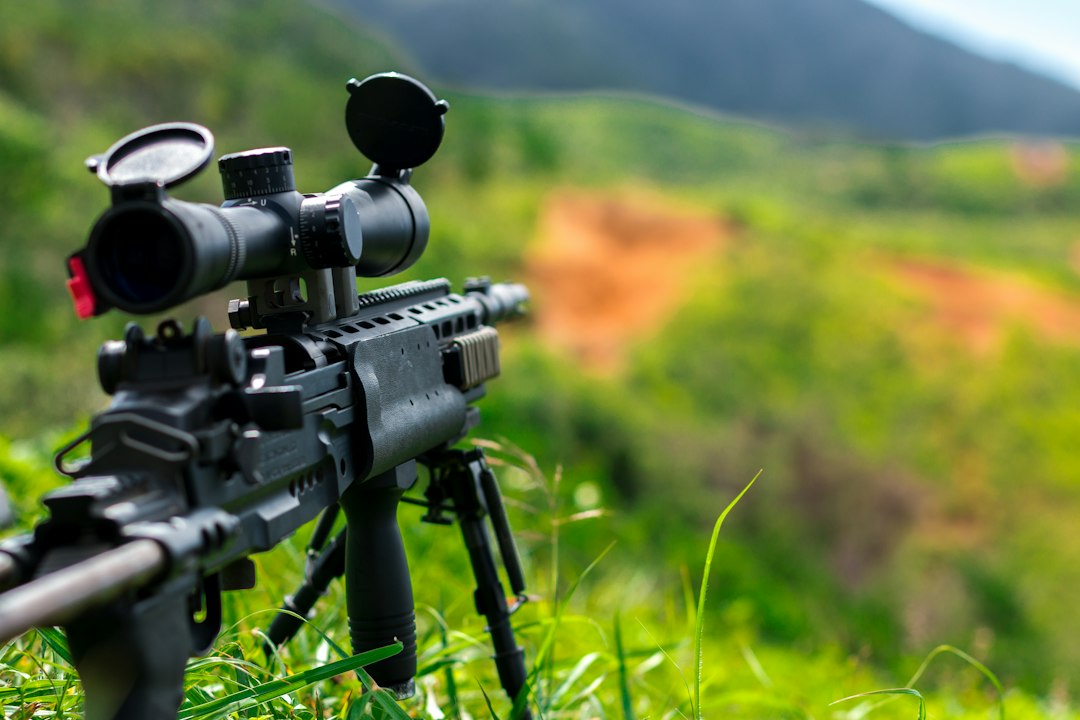
Photo by Thomas Tucker on Unsplash
Why Movie Snipers Always Chamber a Round Before Shooting
You’ve seen it a hundred times: a sniper lies in position, target in the crosshairs, finger hovering over the trigger. Then, just before the critical moment, they pull back the bolt and chamber a round with that distinctive metallic clack-clack. It’s dramatic. It’s tense. And it makes absolutely no tactical sense.
In reality, a sniper would arrive at their position with a round already chambered. Exposing yourself at the last second to perform a loud, movement-heavy action defeats the entire purpose of stealth and preparation. But cinema isn’t interested in tactical realism here—it’s interested in building tension through ritual.
The Language of Lethal Commitment
The chambering gesture functions as a visual and auditory declaration: this is happening. It’s the sniper equivalent of a cowboy’s hand dropping to his holster or a samurai’s fingers wrapping around the hilt. These moments don’t show preparation—they show the psychological threshold being crossed.
Film grammar thrives on making internal decisions external. A character can’t simply be ready to kill; the audience needs to see them become ready. The bolt action becomes a physical manifestation of intent, transforming abstract resolve into concrete action. It’s the moment hesitation ends and commitment begins.
Sound Design’s Favorite Punctuation
That metallic snap serves the soundtrack as much as the plot. Silence broken by a sharp, mechanical sound creates instant focus. It’s a non-verbal countdown, a warning that something irreversible is about to happen.
Sound designers love the bolt-action rifle for this reason. Unlike the muffled click of a safety or the subtle slide of an already-chambered round, the full chambering motion gives them a crisp, recognizable sound beat. It punctuates the tension, giving both the character and the audience a moment to breathe before the shot.
The silence-sound-silence pattern mirrors the structure of suspense itself. The quiet of the sniper’s wait, the sharp intrusion of the bolt, then the held breath before the shot. It’s rhythmic storytelling compressed into two seconds.
Showing the Audience What’s at Stake
The chambering action also serves a practical narrative function: it tells the audience a gun is about to be fired. In a scene already thick with cross-cutting and multiple storylines, that sound cue focuses attention. We know exactly which gun matters and exactly when it’s going live.
This is especially useful when the sniper is hidden or the target is unaware. The bolt action gives the audience information the characters don’t have, creating dramatic irony. We see the round loaded, we see the target walking into frame, and we’re caught between hoping they’ll move and dreading that they won’t.
The Ritual of the Kill Shot
Chambering a round has become a micro-ritual in cinema, a beat that separates snipers from other shooters. It lends a sense of ceremony to the act, elevating it from simple violence to something more deliberate. The sniper isn’t spraying bullets—they’re taking the shot, singular and final.
This formality reinforces the sniper archetype: patient, controlled, lethally precise. The bolt action becomes part of their professional identity, a signature move that distinguishes them from the run-and-gun heroes elsewhere in the film.
When Realism Takes a Back Seat
Filmmakers know the truth—any trained sniper would have that round chambered long before settling into position. But they also know that realism without dramatic clarity is just noise. The chambering beat exists because it works, because it communicates something essential about timing, intention, and stakes in a language the audience already understands.
Cinema borrows from reality, then adjusts the timing. The bolt doesn’t chamber when it tactically should—it chambers when the story needs it to, right at the edge of the moment, when tension peaks and the point of no return arrives. That’s not a mistake. That’s filmmaking.