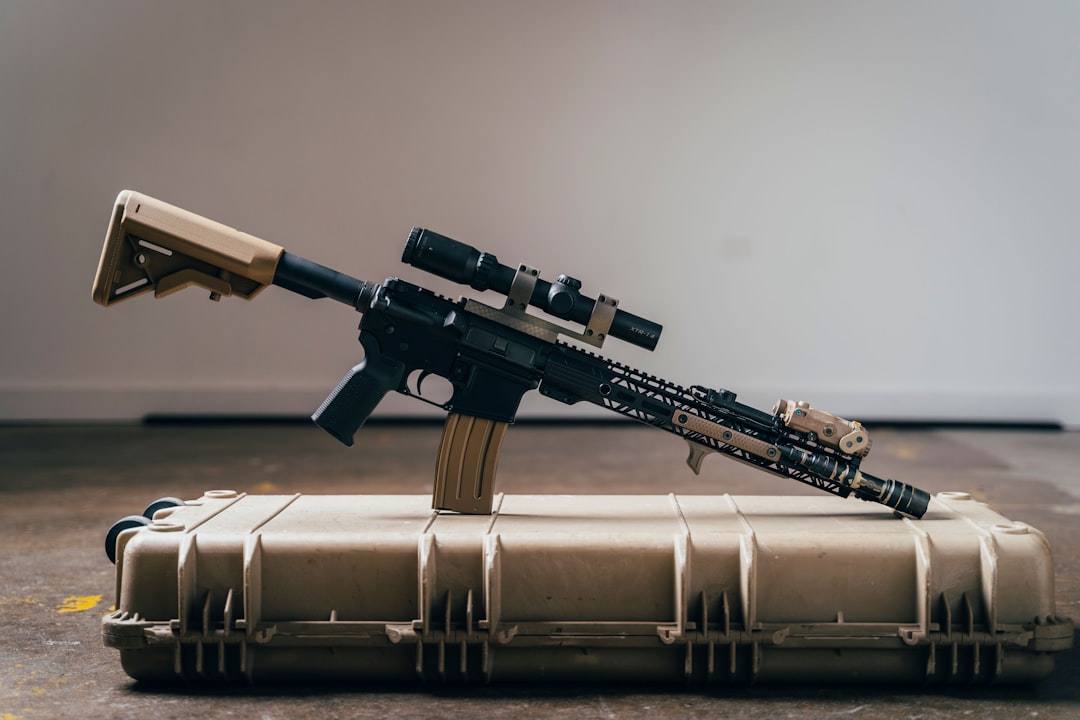
Photo by Bexar Arms on Unsplash
Why Movie Silencers Sound Like Whispers
In countless spy thrillers and action films, an assassin screws a cylindrical attachment onto a pistol and the weapon transforms into a near-silent killing tool. The gunshot becomes a polite pfft—quieter than a cough, barely louder than a champagne cork. Guards stand ten feet away, oblivious. It’s one of cinema’s most persistent lies.
Real firearm suppressors—the proper term, though “silencer” has stuck in popular culture—don’t work this way at all. A suppressed gunshot still produces around 120 to 140 decibels, roughly equivalent to a chainsaw or a jet engine at takeoff. Hearing protection remains necessary. The device reduces the sound signature and eliminates some of the sharp crack, but nothing about the result could be called stealthy in an indoor environment.
The Physics Cinema Ignores
A gunshot generates noise from multiple sources: the mechanical action of the firearm, the bullet breaking the sound barrier, and the explosive expansion of gases escaping the barrel. A suppressor only addresses the last part, trapping and slowing those gases through a series of baffles. It makes the gun safer for the shooter’s hearing and harder to pinpoint from a distance, but it doesn’t render the weapon silent.
Subsonic ammunition—rounds that travel below the speed of sound—can eliminate the supersonic crack, bringing the noise down further. Even then, the result sounds like a loud hand clap or a heavy book dropped on a hard floor. Distinctive. Alarming. Nothing like the gentle thwip sound editors have trained audiences to expect.
Why Films Choose the Fantasy
The cinematic silencer serves narrative economy. Directors need to show an assassination without alerting every character in the building, allowing the plot to continue along a specific path. A realistic suppressor would force writers to construct elaborate explanations for why no one investigates, bogging down pacing with logistical problems.
Sound designers have settled on a universally recognized audio shorthand: the exaggerated pfft instantly communicates “suppressed weapon” to audiences worldwide. It’s efficient storytelling, trading accuracy for clarity. The moment viewers hear that soft pneumatic hiss, they understand the genre, the stakes, and the character’s intent to remain undetected.
The Rare Exceptions
A handful of films have attempted more realistic suppressor sounds, typically in grounded thrillers aiming for authenticity. These productions record the actual report of a suppressed firearm—still loud, still sharp—and place it in the mix at a level that conveys danger without undermining the scene’s geography. Characters might react to the noise, or the sequence might be staged in an isolated location where the reduced sound signature genuinely matters.
But even in these cases, filmmakers often split the difference, presenting a suppressed gunshot that’s louder than the Hollywood whisper but quieter than reality. Complete accuracy would require rethinking the way suppressed firearms are used in screenplays, since most scenes depend on their supposed silence.
The Enduring Appeal
The movie silencer persists because it’s become a visual and audio icon, as recognizable as the red wire on a bomb or the ominous countdown clock. Audiences don’t watch spy films for ballistics lectures—they watch for tension, style, and the elegant brutality of a character eliminating a target with surgical precision. The hushed gunshot supports that fantasy.
Cinema has always chosen emotional truth over literal accuracy, and the silencer is just one more place where the craft of filmmaking bends physics to serve story. The question isn’t whether it’s realistic, but whether it works within the film’s own internal logic. And for decades, that soft, impossible pfft has done exactly what it was designed to do: let the plot keep moving.