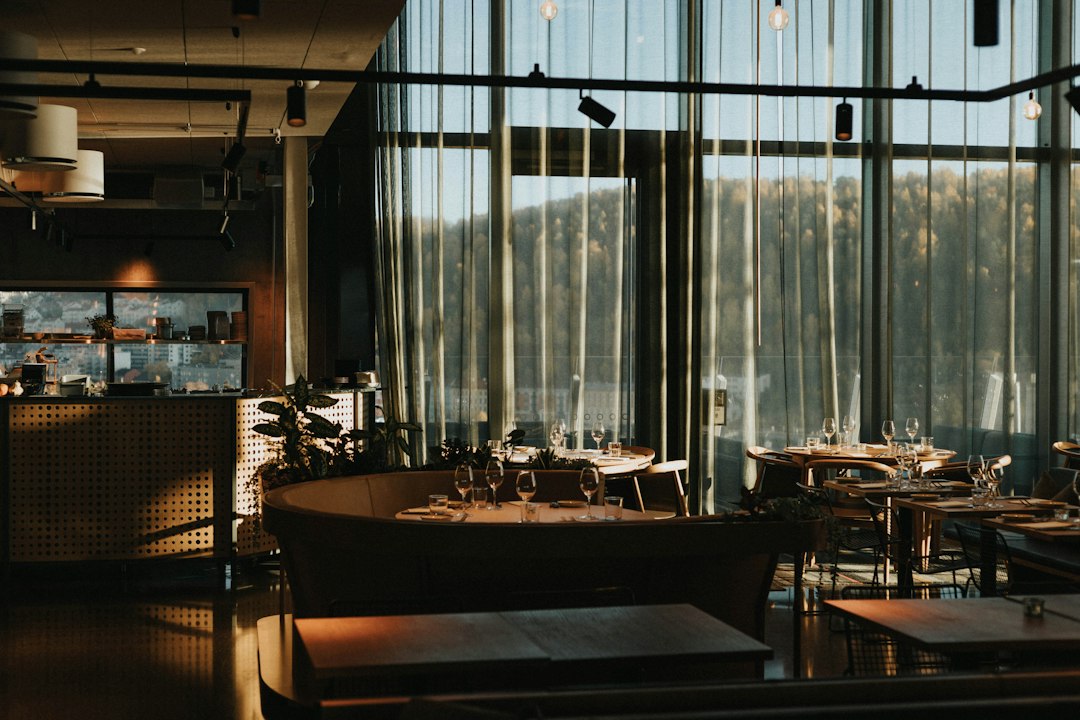
Photo by Antoine Kaelin on Unsplash
Why Movie Restaurants Always Seat Characters at Window Tables
Watch any restaurant scene in a film and you’ll notice a pattern: the main characters almost always sit at a table right by the window. Whether it’s a romantic dinner, a tense negotiation, or a casual lunch between friends, Hollywood consistently positions its actors against a backdrop of glass and street life beyond.
This isn’t an accident. Window seating in film serves multiple overlapping functions that make it an easy default choice for directors, cinematographers, and production designers.
Natural Light and Visual Depth
The most immediate practical reason is lighting. Windows provide a natural source of soft, directional light that cinematographers can control and augment. Daylight streaming through glass creates flattering illumination on actors’ faces without requiring extensive artificial lighting rigs that would be visible in the frame.
Even when shooting night scenes, windows offer opportunities. The glass becomes a canvas for reflections, neon signs, passing headlights, and urban atmosphere. These elements add visual interest to what might otherwise be a static two-person conversation. The cinematographer gets depth and texture without cluttering the frame with foreground objects.
Separation from the Background
Placing characters at window tables creates automatic visual separation. The glass acts as a boundary layer, and the world outside—whether blurred pedestrians, rain-streaked bokeh, or cityscape silhouettes—provides contrast that makes the actors pop in the frame.
This background separation means the production designer doesn’t need to dress as much of the restaurant interior. A few tables with extras in soft focus might appear in the mid-ground, but the heavy lifting of creating a believable environment gets outsourced to whatever’s visible through the window. This saves both time and budget.
Control Over the Environment
From a production standpoint, window seats also offer more control than you’d expect. Crew members can position lights, reflectors, and diffusion outside the window without appearing in the shot. They can dress the exterior with specific props, control traffic flow, or even build a partial street facade on a soundstage.
When filming on location in an actual restaurant, the window table is often positioned so the camera shoots with the window in the background, meaning the rest of the dining room—full of paying customers or logistical complications—stays out of frame.
Cinematic Shorthand for Isolation
Window placement also carries narrative weight. Characters seated at the edge of a space, with the world continuing outside, visually suggests both presence in society and separation from it. This works for intimate conversations where characters need privacy, or for moments where a character’s internal state contrasts with external normalcy.
The glass barrier becomes a subtle visual metaphor: close enough to see the world, separated enough to have a private moment. It’s cinematic shorthand that audiences read intuitively without conscious awareness.
Blocking and Camera Angles
Window tables make shot composition and blocking simpler. The table can be positioned parallel to the window, giving the cinematographer clean profile shots, over-the-shoulder angles, and two-shots without the camera getting trapped in a corner or fighting with the architecture of the room.
The window ensures there’s always an “open” side to the frame, avoiding the claustrophobic feeling that can come from shooting in the middle of a crowded dining room. Camera operators have more freedom to move and adjust without bumping into set pieces or extras.
The Result
Next time you watch a restaurant scene, notice where the characters sit. Chances are, they’re right by that window—not because the fictional restaurant’s host seated them there, but because every technical and creative consideration pointed the filmmakers toward that exact spot.