Photo by Pylyp Sukhenko on Unsplash
Why Movie Restaurants Have Visible Kitchens
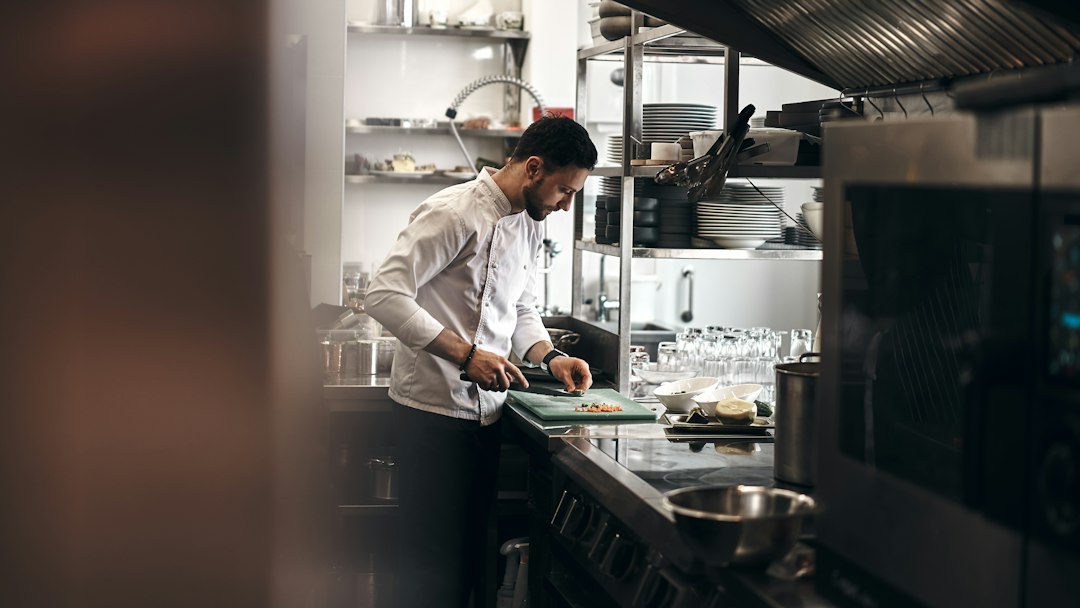
Walk into a movie restaurant and you’ll notice something that doesn’t match your average dining experience: you can see straight into the kitchen. Whether it’s a romantic dinner scene or a tense confrontation over pasta, filmmakers love placing characters where the kitchen action is visible in the background. The choice isn’t about replicating trendy open-concept dining. It’s a production design solution that solves several storytelling problems at once.
Visual Depth and Movement
Restaurant scenes risk feeling static. Two people sitting across a table, talking. The frame needs life beyond the conversation, and an open kitchen delivers exactly that. Chefs moving in the background, flames rising from pans, servers shuttling plates through a pass window—all of this creates dynamic compositions without distracting from the dialogue. The kitchen becomes a controlled layer of activity that cinematographers can keep slightly out of focus, providing texture and energy while the foreground characters remain the clear focal point.
This kind of depth separates a scene from feeling like it was shot on a soundstage. Real restaurants hum with activity, and an open kitchen layout gives production designers a way to stage that authenticity without the chaos of filming in an actual working restaurant during service.
Narrative Access
An open kitchen layout gives screenwriters options they wouldn’t have otherwise. Need the protagonist to overhear something important? A kitchen argument becomes audible. Want to foreshadow danger? A character can notice someone suspicious entering through the kitchen entrance. Looking for a quick exit during an action sequence? The kitchen provides a clear path that the audience has already been shown.
The visible kitchen also allows filmmakers to establish the restaurant’s character. A gleaming stainless steel setup suggests fine dining. A cramped, chaotic kitchen with peeling paint tells a different story. That information shapes how the audience reads the scene, providing context without a single line of exposition.
Production Logistics
From a practical standpoint, open kitchen layouts make filming easier. Building a restaurant set with sight lines into the kitchen means the crew can use that space for lighting equipment, camera positions, or additional setups without breaking the reality of the location. If the kitchen is visible as part of the scene’s world, it doesn’t need to be hidden or worked around—it becomes part of the production’s toolkit.
Closed kitchens create visual dead ends. An open layout gives directors more blocking options, more ways to move actors through the space, and more opportunities for camera movement that feels motivated rather than arbitrary. It turns a single location into something more versatile without requiring an additional set build.
The Real-World Shift
Open kitchens have become more common in actual restaurants over recent decades, but cinema adopted the convention long before it became a mainstream design trend. Filmmakers weren’t predicting the future—they were solving immediate visual and narrative problems. The fact that high-end restaurants eventually embraced glass walls and exhibition cooking just made the movie version feel more plausible over time.
When you spot an open kitchen in a film now, you’re seeing a choice that serves the frame, the story, and the production schedule simultaneously. It’s functional filmmaking disguised as set dressing, turning a potential limitation of the medium into an advantage that most viewers never consciously notice.