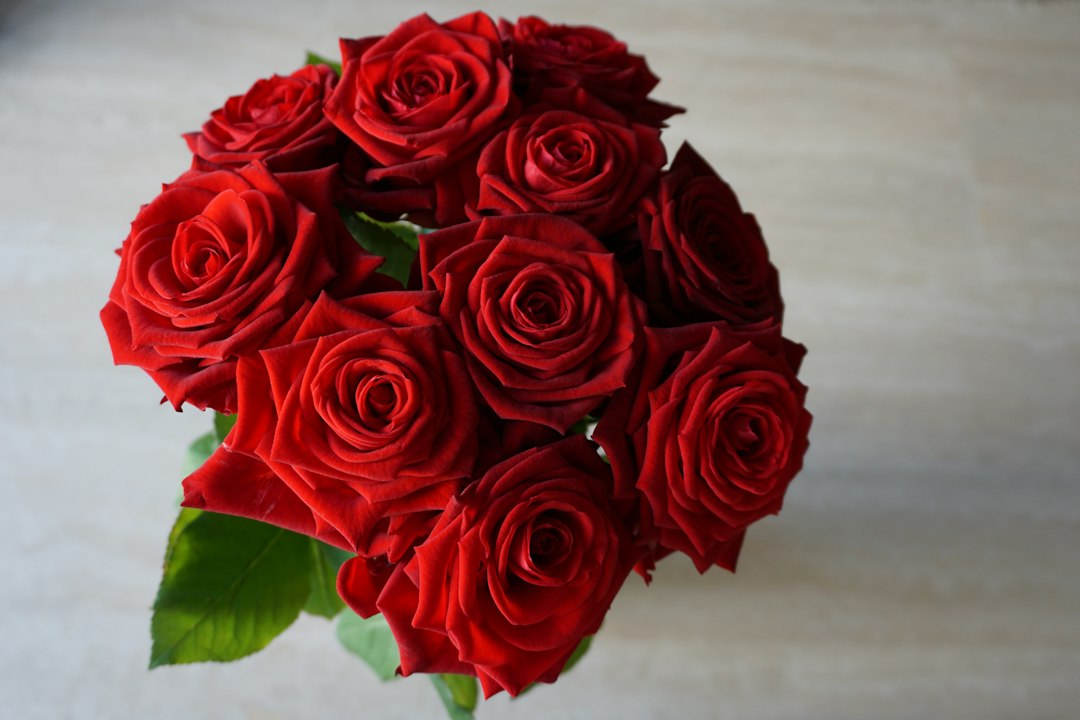
Photo by Sandra Wei on Unsplash
Why Movie Restaurants Always Have Single Red Roses on Tables
Watch any film with a restaurant scene and you’ll notice a pattern: nearly every table sports a single red rose in a slender vase. Whether it’s a high-stakes business dinner, a romantic date gone wrong, or a tense confrontation over dessert, that lone flower sits there like a visual punctuation mark. It’s become so automatic that production designers reach for it almost reflexively. The question is why this particular prop has colonized nearly every cinematic dining room.
Visual Shorthand for Intimacy and Intent
The single rose does heavy lifting with minimal screen real estate. Production designers need objects that telegraph atmosphere instantly, especially in scenes where the location itself might only appear for thirty seconds. A lone red rose signals romance, formality, or special occasion without requiring dialogue or backstory. It tells the audience this isn’t a casual meal at a chain restaurant—it’s a moment that matters to the characters, even if they’re about to argue or break up.
The color matters too. Red reads clearly on camera under the warm tungsten or LED lighting typical of restaurant interiors. White flowers can blow out or vanish against pale tablecloths, while pink or yellow lose visual punch. Red creates a focal point that draws the eye without competing with the actors’ faces or the food. It’s a controlled accent in an otherwise neutral palette of white linens, dark wood, and candlelight.
Practical Constraints of Blocking and Framing
Cinematographers and directors need clean sightlines across the table for shot-reverse-shot dialogue. A full floral arrangement becomes a visual barrier, blocking faces or forcing the camera into awkward angles. The single stem in a narrow vase solves this problem elegantly—it provides visual interest and atmosphere without cluttering the frame or interrupting eyelines.
The rose also helps with depth of field. In a shallow-focus shot, that vertical element in the foreground or mid-ground creates layering and dimension. It can sit slightly out of focus while the actors remain sharp, adding cinematic texture without distracting from the performance. A sprawling bouquet would dominate the frame and pull focus in ways the scene doesn’t need.
Set Dressing Efficiency Across Multiple Takes
Film shoots run long, and restaurant scenes often involve dozens of takes from multiple angles. A single rose is easy to reset and maintain. It won’t wilt noticeably over a twelve-hour shooting day the way a full arrangement might. If continuity requires the rose to look identical across coverage shot over several days, the prop department can swap in fresh stems between setups without worrying about matching the exact placement of twenty different flowers.
Multiplication matters too. A restaurant scene might show a dozen tables in the background, all needing to look dressed and lived-in. Buying or sourcing one hundred single roses is cheaper and faster than creating one hundred unique centerpieces. It’s a production design strategy that scales efficiently while maintaining visual consistency.
The Real-World Restaurant Disconnect
Here’s the irony: upscale restaurants rarely use single red roses in real life. They favor seasonal arrangements, sculptural branches, or no flowers at all. The single-rose look is a Hollywood convention that persists because audiences accept it as the visual language of “nice restaurant,” even though it’s largely a fiction created by decades of repetition on screen.
This gap between cinematic shorthand and reality doesn’t bother viewers because the rose isn’t about realism—it’s about clarity. Film compresses space and time, and every object on screen needs to justify its presence. The single red rose earns its place by doing multiple jobs at once: setting mood, framing faces, adding color, and signaling occasion. It’s efficient storytelling through production design, which is exactly what cinema requires.