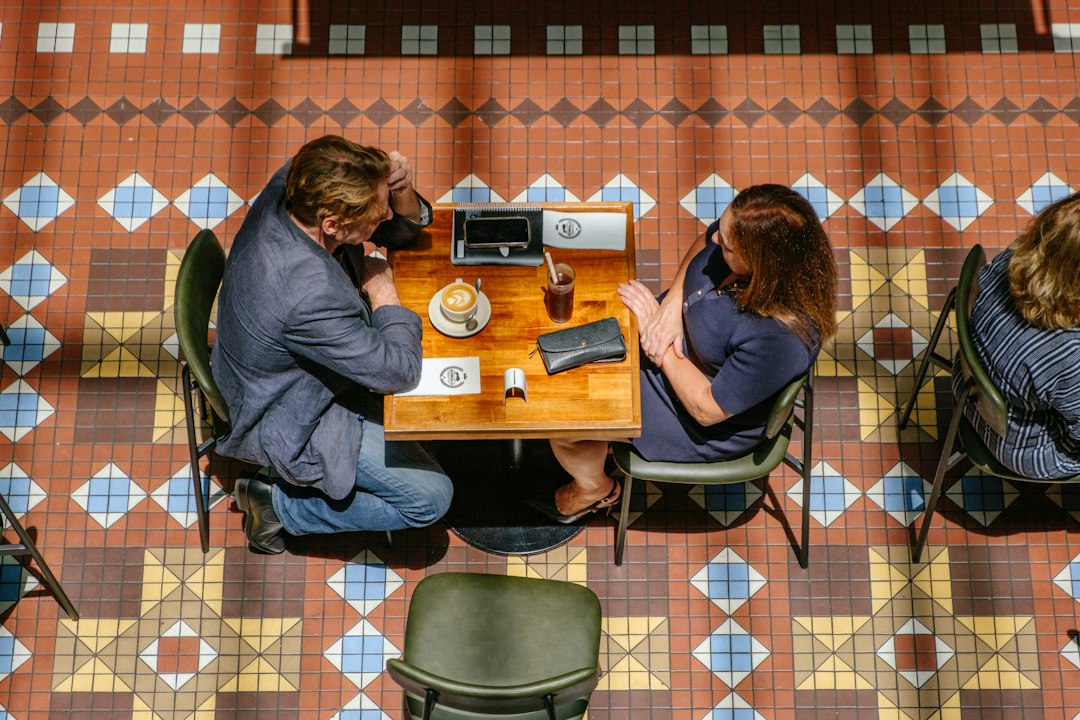
Photo by Johan Mouchet on Unsplash
Why Movie Restaurants Seat Strangers at Adjacent Tables
Watch any restaurant scene in a film and you’ll notice something strange: the host seats a new party directly next to occupied tables, even when the room is half-empty. Characters lean over to eavesdrop, overhear crucial plot information, or lock eyes with a stranger across two feet of space. No real maître d’ would do this, but cinema needs it.
The choice comes down to blocking and frame composition. A restaurant with realistic spacing—tables six or eight feet apart—creates dead zones the camera can’t use. When the director wants to show both the protagonist’s conversation and the suspicious figure listening in, they need both parties in the same shot or in clean alternating frames. Packing tables together makes this possible without complex camera moves or cutting away from the emotional center of the scene.
Eavesdropping as Narrative Engine
Film restaurants are stages for accidental information exchange. A character overhears a name, a location, a confession meant for other ears. This only works if tables are close enough for dialogue to carry. Real restaurants manage acoustics to give diners privacy. Movie restaurants do the opposite: they’re designed so every whispered secret reaches the right person at the right time.
The adjacent-table setup also creates spatial tension without requiring characters to move. Two people who shouldn’t interact can share the frame, building anticipation. The camera can rack focus between foreground and background, turning a simple dinner into a game of watching and being watched.
The Production Reality
Dense table arrangements solve practical problems on set. A tightly packed restaurant section requires fewer background extras to look full. It also reduces the amount of decorated space the production designer needs to build or dress. Why light and furnish a 3,000-square-foot dining room when you can make 800 square feet feel busy?
Tighter blocking also gives the script supervisor and continuity team less to worry about. When tables are separated by distance, maintaining consistent background action becomes exponentially harder. An extra’s drink glass, posture, or gaze direction changes between takes, and it’s visible. Cluster everyone together, keep them slightly out of focus, and small inconsistencies disappear.
Sound and Sight Lines
Dialogue recording depends on proximity. Boom operators need to stay just outside the frame, and lavalier microphones—the small wireless mics hidden on actors—pick up voices best within a limited range. If characters sit far apart, production sound becomes difficult. The room tone, the clatter of dishes, and ambient conversation compete. Tighter staging keeps focus on the scripted dialogue.
Directors of photography also frame restaurant scenes for maximum visual information. They want the lens to capture faces, reactions, background intrigue, and environmental detail simultaneously. Spreading tables across a realistic floor plan forces choices: either you lose the background action or you go wider and lose facial detail. Compress the space, and you keep both.
When Distance Matters
Some films deliberately use realistic spacing to create isolation or emphasize a character’s solitude. A single diner in a vast, empty restaurant communicates loneliness. But when the story needs two strangers to connect, collide, or conspire, the camera demands they share breathing room.
The adjacent-table convention is invisible until you notice it. Then it’s everywhere: the mob boss two feet from the undercover cop, the ex-lovers seated back-to-back, the stranger who interrupts a marriage proposal because they’re close enough to hear every word. It’s not realism. It’s geometry in service of drama.