Photo by Trương Tuyết Ly on Unsplash
Why Movie Restaurants Seat Characters Facing Each Other Across the Table
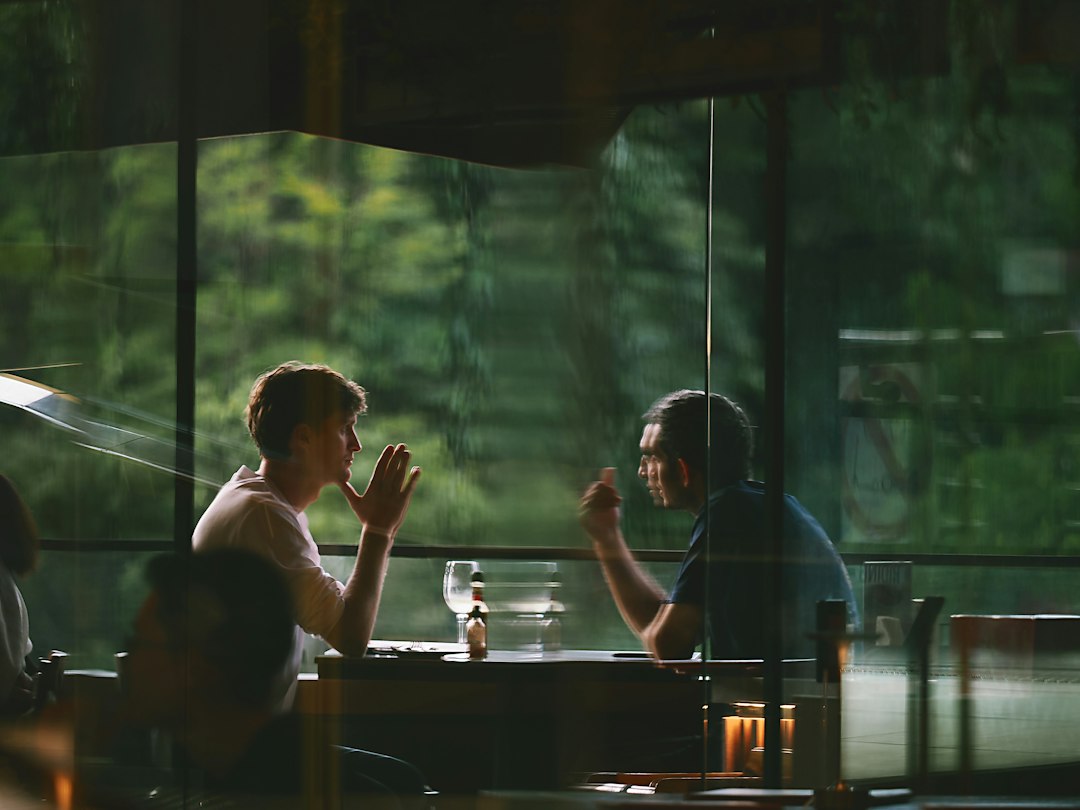
Walk into any real restaurant and you’ll notice couples sitting side-by-side on banquettes, friends clustered around circular tables, dates angled toward each other at forty-five degrees. But in films, nearly every dining scene positions characters in perfect opposition: one person faces the camera over the left shoulder of their companion, who sits with their back partially to us.
This isn’t how humans naturally arrange themselves to eat. It’s how cameras need them arranged to make the scene work.
The Shot-Reverse-Shot Demands It
Restaurant scenes rely almost entirely on shot-reverse-shot coverage—the fundamental grammar of filmed conversation. The camera sits just behind one character’s shoulder, capturing the face of the person across from them. Then it flips to the opposite angle for the reverse.
This pattern requires stable geometry. Both characters need to maintain consistent eyelines and screen positions throughout the exchange. Seating them directly across from each other creates a clean 180-degree line that the camera can work along without confusion. Anything else—a corner booth configuration, an L-shaped arrangement, characters at adjacent sides of a square table—introduces spatial complexity that breaks the audience’s mental map of who’s where.
The technique is so embedded in film language that we don’t register how unnatural it is. Real restaurant seating prioritizes intimacy, comfort, and shared views. Cinematic seating prioritizes the camera’s ability to see both faces clearly from two fixed positions.
The Lighting Problem
Restaurants are notoriously difficult to light for film. They’re often dim, with practical sources like candles or overhead pendants that create harsh shadows. When characters sit across from each other, the lighting department can position their key lights in predictable zones—usually cheating slightly to camera-side so each actor’s face reads clearly in their close-up.
If the actors sat beside each other, both would need to be lit from roughly the same direction, making it nearly impossible to create flattering, directional light on both faces simultaneously. One would end up underlit or weirdly shadowed. The cross-table configuration solves this by letting each actor have their own dedicated lighting setup that only needs to look good from one camera angle.
Why It Feels Wrong in Real Life
Try sitting directly across from someone at a small table for an extended conversation. It’s confrontational. You’re locked in eye contact with nowhere to rest your gaze without seeming rude or distracted. There’s no comfortable neutral position.
That’s why real people instinctively sit at angles—beside each other on a booth, or at a round table where everyone’s slightly offset. It reduces the intensity of direct facing and makes conversation feel less like an interrogation.
Films exploit this tension deliberately. A cross-table setup reads as formal, focused, sometimes adversarial. It’s perfect for first dates, business meetings, tense confrontations, or any scene where emotional stakes run high. The staging itself communicates that this conversation matters.
The Blocking Cheat
Watch closely and you’ll notice another trick: characters often lean in or shift their bodies slightly off-center during the scene. This “cheating to camera” keeps their face visible while maintaining the illusion of natural interaction. A true face-to-face conversation would have actors looking directly at each other along the line of the table. Film actors angle themselves just a few degrees outward so the camera can see more of their face in profile.
The table itself becomes a compositional tool. It’s almost always smaller than a real restaurant would use for two people—a tiny two-top that forces physical proximity and keeps both faces in the frame without requiring a wider lens. Wider lenses introduce distortion and make it harder to capture clean close-ups.
When Films Break the Rule
Some filmmakers deliberately reject this arrangement. Characters seated side-by-side create a different emotional texture—collaborative rather than oppositional, intimate rather than formal. But it forces the director to find new solutions: shooting from the front to catch both faces together, using profile shots, or letting one character dominate the frame while the other’s voice plays off-screen.
These choices cost coverage. You lose the flexibility of standard shot-reverse-shot and commit to a specific visual approach. That’s fine for a deliberate stylistic moment, but impractical for routine dialogue scenes where the editor needs options.
The cross-table setup persists because it’s efficient, repeatable, and legible. It turns an ordinary restaurant into a controlled stage where the camera can move, the lighting can work, and the audience always knows who’s talking to whom. Real life can keep its side-by-side booths. Cinema has different priorities.