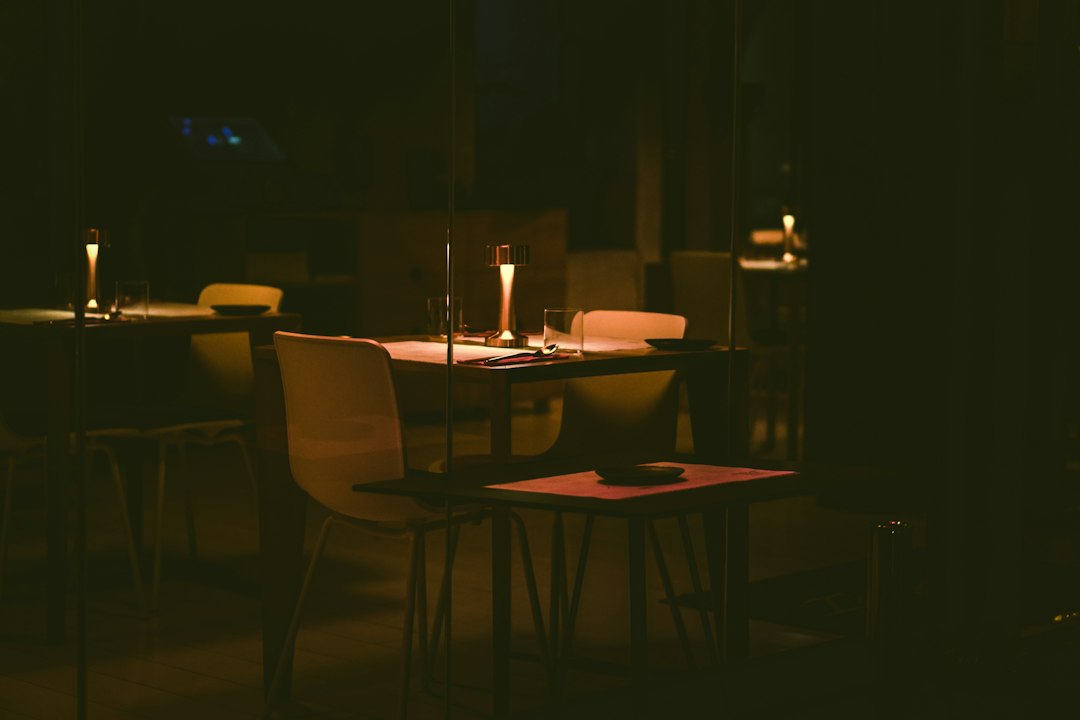
Photo by Ivan Benets on Unsplash
Why Movie Restaurants Are Always Dimly Lit
Watch any dinner scene in a film and you’ll notice something immediately: the restaurant is dark. Not pitch black, but significantly dimmer than any establishment hoping to stay in business. Candles flicker on tables, overhead lights glow amber and warm, and the characters’ faces emerge from shadow like Renaissance portraits. Meanwhile, real restaurants blast enough lumens to read a contract by, because diners want to see their food and restaurateurs want an energetic atmosphere.
This disconnect isn’t an accident or a budget constraint. It’s a deliberate cinematographic choice driven by three overlapping priorities: visual drama, technical control, and narrative focus.
Contrast Creates Drama
Low-key lighting—where shadows dominate and highlights are selective—gives cinematographers extraordinary control over what the audience sees and feels. A dimly lit restaurant scene naturally draws the eye to faces, particularly eyes, which catch and reflect available light. The surrounding darkness falls away, isolating the characters in their moment of intimacy, conflict, or revelation.
Bright, even lighting flattens an image. It reveals everything equally, which is exactly what you want in a cafeteria but poison for a scene that needs emotional weight. Shadows sculpt faces, create depth, and signal mood. A conversation about betrayal or a first date confession doesn’t land the same way under fluorescent tubes.
Practical Light Sources as Storytelling
Film lighting that appears to come from visible sources within the scene—practicals like candles, table lamps, or bar lights—feels more naturalistic than unmotivated brightness. Even when augmented by off-camera fixtures, these dim practicals establish a visual logic the audience accepts without question.
A dark restaurant also allows cinematographers to motivate selective lighting. They can place a candle exactly where it will rim-light an actor’s profile, or position a character near a window where moonlight (actually a carefully controlled studio lamp) can define their silhouette. Brightness eliminates these choices. When everything is already visible, you can’t use light as a sculpting tool.
Controlling the Frame
A brightly lit restaurant set reveals every background detail: extras at nearby tables, exit signs, the edges of the set itself. Darkness hides imperfections and confines the viewer’s attention. Background actors recede into soft bokeh or shadow, becoming anonymous presence rather than distraction.
This is especially valuable when shooting in real locations. A dim environment allows the crew to control what’s in focus and what disappears. Unwanted details—a modern fixture in a period piece, an unattractive wall, the wrong brand of signage—vanish into underexposure. The scene becomes more about the actors and less about set dressing logistics.
The Reality Check
Real upscale restaurants do use mood lighting, particularly in the evening. But film exaggerates this tendency into something more theatrical. The difference is that actual dining establishments need enough light for service, safety, and reading menus. Movies need none of those things. The restaurant exists purely as a stage for human drama, and dim lighting transforms it into exactly that.
There’s also a feedback loop at work. Audiences have been trained by decades of dimly lit film restaurants to associate that look with sophistication and intimacy. Bright restaurant scenes now read as casual, comedic, or intentionally flat—think diner scenes or fast-food meetings. The darkness has become a genre signifier, a visual shorthand for “this conversation matters.”
Film lighting prioritizes emotion over documentation. In that framework, a dark restaurant isn’t unrealistic—it’s hyperreal, distilled to its essential emotional function. The darkness isn’t about what you can’t see. It’s about making what you do see impossible to look away from.