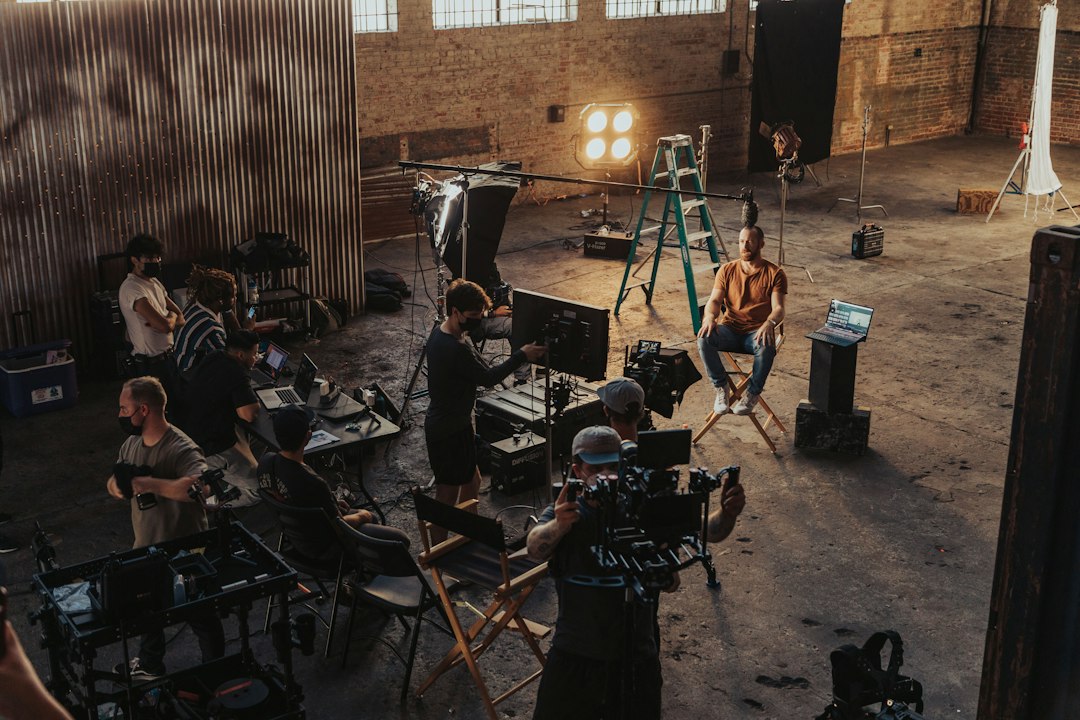
Photo by Jakob Owens on Unsplash
Why Movie Restaurants Are Always Too Loud
Watch a film scene set in a busy restaurant and you’ll notice something odd: the characters converse easily, their dialogue clear and intimate, while the background hum of the dining room sits at just the right level—present but never intrusive. In reality, restaurants are acoustic nightmares. Conversations overlap, silverware clatters, chairs scrape, and the general din makes it nearly impossible to hear someone across the table without leaning in. Yet movies make it look effortless.
This disconnect isn’t an accident. It’s the result of a careful balancing act between realism and intelligibility, and it reveals one of the fundamental tensions in film sound design.
The Dialogue-First Imperative
Film sound operates under a hierarchy. Dialogue sits at the top. No matter how authentic the ambience, if the audience can’t understand what characters are saying, the scene fails. This priority shapes every decision in a restaurant scene, starting on set.
When shooting in a real restaurant, production sound mixers face an immediate problem: actual restaurant noise is far too loud to record usable dialogue. The solution is to clear the space. Background actors mime conversation without speaking, or speak at whispers. Plates and glasses are handled with exaggerated care. The kitchen stays silent. What the microphones capture is dialogue in a nearly silent room, with just enough ambient texture to suggest life.
The “real” restaurant sound gets built later.
Constructing Believable Noise
In post-production, sound designers layer in the restaurant atmosphere track by track. They start with a general ambience—often called “walla”—a murmur of indistinct voices that suggests a crowd without competing with the foreground dialogue. Foley artists add specific sounds: the clink of a wine glass, the scrape of a knife on a plate, footsteps from a passing server.
Each element is placed deliberately in the mix, with volume and stereo positioning controlled to keep it from masking the actors’ voices. The result sounds like a restaurant, but it’s a stylized version—one where every sound knows its place and stays there.
The technical term for this approach is “hyper-real”: more controlled than reality, but subjectively authentic. Audiences accept it because it aligns with their expectation of what a restaurant should sound like while still delivering the story.
When Silence Feels Wrong
Occasionally a scene calls for near-silence in what should be a noisy space, and that choice becomes narratively meaningful. A character experiencing emotional shock might perceive the restaurant going quiet, the ambience dropping away to isolate them in their moment. This works because we understand the convention: normal restaurant scenes have sound, so the absence signals something wrong.
But without that narrative justification, a silent restaurant feels cheap or unfinished. Viewers may not consciously register the problem, but the scene loses texture and presence. The space stops feeling real.
The Loudness Paradox
Here’s the strange part: if you actually mixed a film restaurant scene with accurate levels—voices straining over noise, dialogue half-buried in clatter—audiences would perceive it as bad sound design. They’d assume the mixers made a mistake. Film trains viewers to expect clarity, and violating that expectation reads as technical failure, not realism.
This is why even gritty, naturalistic films rarely push restaurant ambience to true-to-life levels. The few that do—often in brief moments meant to convey chaos or disconnection—use it as a deliberate stylistic choice, not a default.
The Invisible Craft
The best restaurant ambience in film is the kind you don’t notice. It supports the scene without drawing attention, creating a sense of place while staying out of the way. It’s a magic trick: making audiences believe they’re hearing reality when they’re actually hearing something far more carefully orchestrated.
Next time you watch a restaurant scene, listen for the edges of the illusion. Notice how clearly you hear every word, how perfectly the background noise stays in the background. That’s not luck. That’s dozens of hours of work convincing you that movie restaurants sound exactly like real ones—even though they never do.