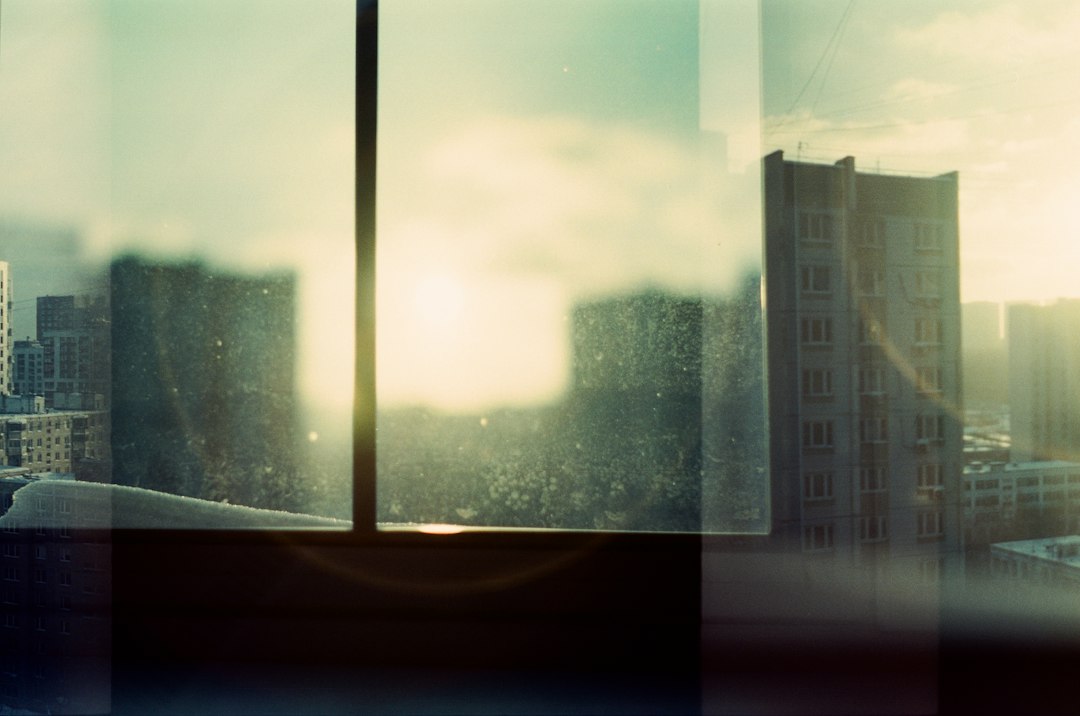
Photo by Maksim Zinchenko on Unsplash
Why Movie Protagonists Always Live on the Top Floor
Pay attention the next time a film establishes where its main character lives. Chances are good they’re climbing stairs or riding an elevator up, up, up to a unit with a view. The struggling writer, the detective with a drinking problem, the young professional starting over—they all seem to occupy apartments on the highest floors their buildings allow.
This isn’t about real estate preferences. It’s about what filmmakers need from a location.
Light and windows
Upper-floor apartments offer something that ground-level units rarely can: natural light from multiple angles and minimal obstructions. When you shoot interiors, lighting through windows is one of your most valuable tools. It looks realistic, it’s motivated (the source makes visual sense), and it gives the cinematographer a reason to place the camera in ways that reveal depth.
Ground-floor apartments come with practical problems. Windows face alleys, ground-level foot traffic, or parking lots. You have to dress the exterior or control what appears outside. Upper floors give you sky, distant buildings, and the ambient light of a city or landscape. The frame gains scale and context without extra work.
Visual storytelling through verticality
Height has metaphorical weight in cinema. Moving upward through a building implies aspiration, isolation, or a remove from street-level reality. A character at the top of a walk-up is separated from the world below—physically tired from the climb, socially or economically distant, emotionally alone in their eyrie.
When a character looks out a high window, the camera can show what they see: the city spread below, ant-sized people, traffic patterns, weather moving in. That view gives the audience a literal perspective on the character’s relationship to the world. They’re observing, removed, above it all—or they’re trapped up there while life happens elsewhere.
Roof access and exteriors
Top-floor apartments often come with roof access, and rooftops are one of the most useful locations in film production. They provide open sky for day or night shooting, 360-degree sightlines, and a stage for confrontations, escapes, or quiet moments of reflection. If your character lives on the top floor, you have a built-in reason to get them up there.
The same logic applies to fire escapes. Upper-level fire escapes read as cinematic set pieces—a liminal space between inside and outside, safety and danger, private and public. They’re visually interesting, they add dimension to the exterior of a building, and they give characters a place to smoke, argue, or flee.
Controlling the background
Shooting on location means controlling what appears in the frame. Ground-floor windows show sidewalks, passersby, parked cars, and storefronts—all of which require management, permits, or careful timing. Upper floors show sky, rooftops, and distant architecture. The background becomes abstract, less specific, easier to manage across multiple shooting days.
This is especially true for productions that need to cheat time or location. If your character’s window shows only sky and the tops of buildings, the view won’t betray the fact that you’re shooting in a different season or a different city altogether.
The practical climb
Ironically, the one thing filmmakers don’t love about upper-floor locations is getting the crew and equipment up there. But that inconvenience is outweighed by what the location provides once everyone arrives. The walk-up becomes a character detail (the protagonist is young, broke, or stubborn enough to take the stairs daily), and the elevator becomes a set piece in its own right.
In the end, movie characters live on the top floor because filmmakers need them there. The light is better, the view tells a story, and the verticality gives the frame a geometry that ground-level apartments can’t match. Real people optimize for convenience. Cinema optimizes for the frame.