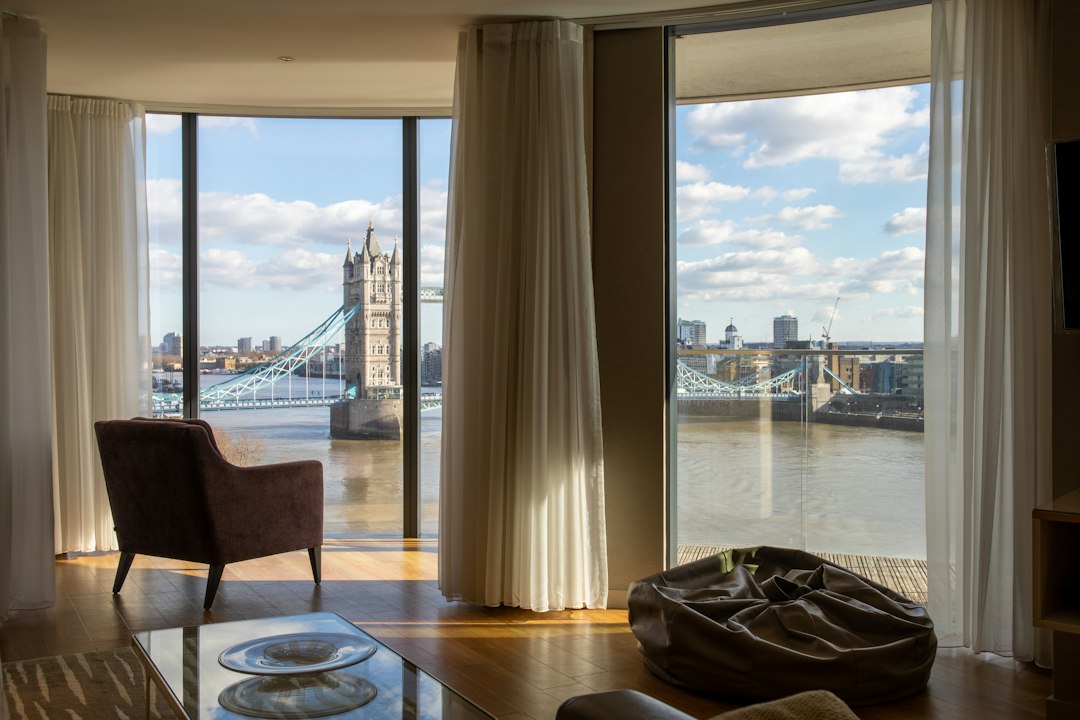
Photo by Robbie Duncan on Unsplash
Why Movie Protagonists Live in Corner Apartments
Pay attention to where your favorite movie characters live and you’ll notice a pattern: they occupy corner apartments at a rate that defies urban housing statistics. The detective, the writer, the architect, the struggling artist—they all seem to have secured the most coveted unit in the building, the one with windows on perpendicular walls.
This isn’t about realism. It’s about light, sightlines, and the practical needs of a film crew working inside a constructed or real interior space.
Two Windows Are Better Than One
The corner apartment solves cinematography’s fundamental challenge indoors: how to light a scene naturally while giving the camera freedom to move. A standard apartment unit typically has windows on only one wall. This creates a single light source and limits the directions a DP can shoot without pointing the camera directly at a window or facing into a dark wall.
Corner units offer windows on two adjacent walls, usually at a ninety-degree angle. This means the cinematographer can achieve soft, directional cross-light from multiple angles. One window might provide key light while the other offers fill or backlight. The space gains dimension and depth. Faces can be lit from the side, characters can move through pools and gradients of natural light, and the camera can reposition without losing source consistency.
Visual Geography and Depth
Windows aren’t just light sources—they’re portals to the world outside, and they tell the audience where a character exists in space. A corner apartment places the character at the intersection of two streets, two views, two perspectives. One window might face a busy avenue, the other a quieter side street or courtyard. This duality creates visual interest and allows the production designer to control what the audience sees beyond the glass: traffic, pedestrians, neighboring buildings, a fire escape, a sliver of sky.
It also means the set or location has more walls that aren’t exterior-facing, which gives the crew places to position lights, equipment, and crew members out of frame. You can’t hide a C-stand behind a window.
Blocking and Staging Flexibility
Directors stage dialogue and action in relation to architecture. A corner apartment provides more planes to work with. A character can move from one window to another, shifting the emotional or visual tone of a scene. They can look out one window during a tense phone call, then cross the room to the other during a moment of reflection. The two-window setup creates natural blocking beats and gives actors physical geography to inhabit.
Standard apartments with a single window wall often force scenes into a narrow range of staging options. Characters end up sitting on a couch facing the camera, or standing near the one source of natural light. Corner units break that monotony.
The Iconography of Independence
There’s also a subtle psychological dimension. Corner apartments feel more expansive, more autonomous, more like a vantage point than a cell. They suggest a character who occupies a unique position, who sees more than one angle. In a medium where spatial metaphor carries weight, giving your protagonist the corner unit signals that they’re not just another tenant—they’re someone worth watching, someone at the crossroads.
Of course, in real life, corner apartments are rare and expensive. But in movies, where every location choice is a deliberate craft decision, the corner unit is the most filmable apartment in the building. And once you notice it, you’ll see it everywhere.