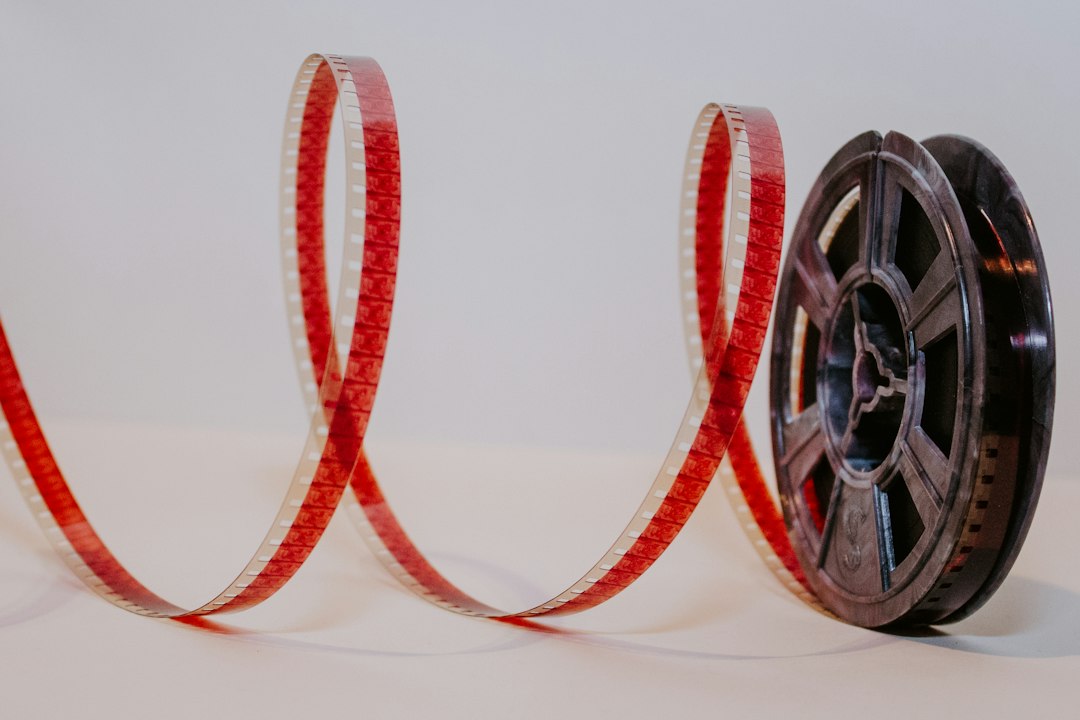
Photo by Denise Jans on Unsplash
Why Movie Projectionists Thread Film by Hand
For most of cinema history, getting a movie onto the screen required a skilled technician to physically thread thousands of feet of film through a mechanical labyrinth. The projectionist’s booth wasn’t just a room with a button marked “play”—it was a workshop where craft, timing, and mechanical intuition determined whether the audience saw a seamless show or a disaster.
The Threading Ritual
A 35mm film print for a two-hour movie weighed around 50 pounds and came on multiple reels. The projectionist had to lace the film through a precise path: from the feed reel, through a series of sprockets and gates, past the lamp house where light would blast through each frame, around tensioning rollers, through the sound head, and finally onto the takeup reel. One missed loop or improper tension could mean the film jumping out of the gate mid-show, melting under the heat of the bulb, or tearing entirely.
The process demanded a feel for the material. Film stock is flexible but fragile. Too much tension and the sprocket holes tear. Too little and the image wobbles or the soundtrack drifts out of sync. Projectionists learned to judge the right give by touch, threading quickly enough to hit showtimes but carefully enough to protect prints that might screen hundreds of times across multiple theaters.
Why Manual Threading Mattered
Unlike digital files that play identically every time, film prints were physical objects with quirks. Splices between reels could be rough. Sections damaged during shipping needed to be nursed through the projector. A projectionist might need to trim a torn frame, adjust tension mid-reel, or compensate for a warped section. The threading process was also the first quality check—a chance to inspect the print for scratches, missing frames, or color shifts before the audience sat down.
Automation existed, but it wasn’t universal. Some theaters used platter systems where the entire film was spliced into one enormous reel that fed horizontally through the projector, eliminating reel changes. But even platter systems required build-up—manually threading the film onto the platter and inspecting every splice. In smaller theaters or art houses, traditional reel-to-reel systems remained standard, and the projectionist’s skill directly determined show quality.
The Changeover
In multi-reel systems, the projectionist had to execute changeovers—switching from one projector to another mid-movie without the audience noticing. Small cue marks in the upper right corner of the frame signaled when to start the next reel and when to make the switch. Miss the cue by even a second and the screen would go dark or show a flash of white. The best projectionists could execute changeovers so smoothly that even regular filmgoers never realized two projectors were alternating throughout the show.
This wasn’t just mechanical precision. It required understanding the rhythm of the film itself—knowing where the cues would land, anticipating problem reels, and staying alert for two hours while the movie played in the booth behind you.
The Shift to Digital
When digital cinema arrived in the 2000s, threading disappeared. Digital projectors play from hard drives or satellites. There’s no film to touch, no tension to adjust, no changeovers to execute. The transition made projection more consistent and less labor-intensive, but it also eliminated a craft that had existed since the beginning of cinema.
Projectionists who spent decades threading film often describe it as a physical relationship with the movie. You handled the same print the lab produced from the original negative. You could see grain structure, color density, and optical effects embedded in the emulsion. Threading wasn’t a barrier between the film and the audience—it was the final step in a chain of craftsmanship that started in the camera and ended in the booth.
The manual threading era is over for most theaters, but it remains essential in archives, art houses, and festival screenings where 35mm prints still circulate. In those spaces, the projectionist’s skill is still what makes cinema happen.