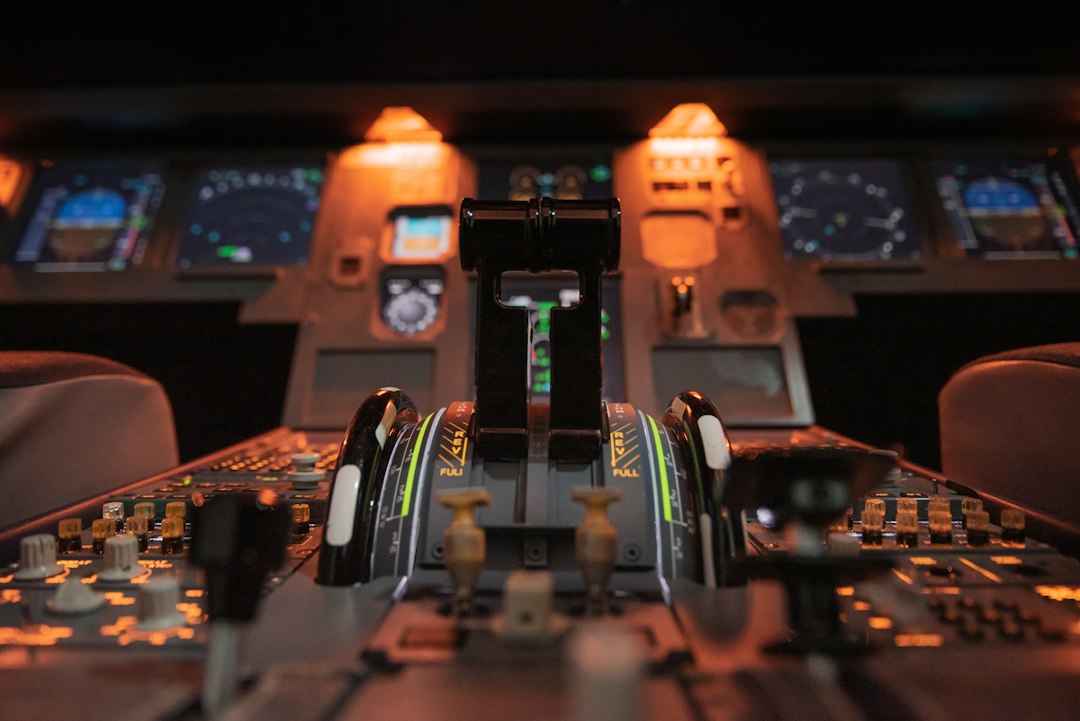
Photo by Moritz Mentges on Unsplash
Why Movie Pilots Always Say "Roger" and "Copy That"
Every aviation scene in film seems to follow the same script. A pilot receives instructions over the radio, then responds with a crisp “Roger that” or “Copy that.” The co-pilot flips switches. Someone says “We’re going in.” The phrases have become so embedded in movie dialogue that they’ve calcified into a kind of cinema shorthand for professionalism and military precision.
But real pilots don’t talk like that. At least, not exactly.
The Vocabulary of Efficiency
Aviation radio communication developed around a single principle: eliminate ambiguity. When you’re coordinating metal objects traveling hundreds of miles per hour through shared airspace, misunderstandings kill people. So pilots use a standardized phraseology designed to be unmistakable even through static, poor reception, and high-stress situations.
“Roger” does exist in real aviation. It’s a brevity code from the International Civil Aviation Organization’s phonetic alphabet, confirming that a message was received and understood. It does not mean agreement or compliance. If air traffic control tells you to climb to 10,000 feet and you reply “Roger,” you’ve acknowledged hearing the instruction but haven’t confirmed you’re actually doing it. The correct response is “Climbing to one-zero-thousand” or simply repeating back the instruction with your call sign.
“Copy” or “Copy that” comes from military radio culture and means roughly the same thing: I heard you. In tactical aviation and military operations, “copy” is common. In commercial aviation, it’s almost never used. A United Airlines pilot responding to ATC with “copy that” would sound like someone who learned to fly from watching Top Gun.
Why Movies Get It Wrong
Film dialogue prioritizes two things real radio communication doesn’t: drama and brevity. A pilot accurately reading back a complicated clearance—“N2745X cleared to Boston via the PANZE2 departure, climb and maintain five thousand, expect flight level two-three-zero ten minutes after departure, departure frequency one-two-four-point-niner, squawk three-two-one-five”—would grind a scene to a halt.
So screenwriters compress. They reach for the phrases that sound like pilot talk without requiring the audience to parse actual aviation procedure. “Roger” and “Copy that” do the job in two syllables. They signal competence, they’re instantly recognizable, and they keep the story moving.
The result is a Hollywood version of aviation speech that has almost nothing to do with the highly regimented language real pilots use. Movies add “that” to “Roger” and “Copy” to make them feel more colloquial, more human. Real radio discipline omits every unnecessary word.
The Cinematic Cockpit
This extends beyond single phrases. Film cockpits are places where crew members narrate their actions aloud, announce problems in full sentences, and say things like “We’re losing altitude!” to each other instead of executing the memory items for an emergency checklist in silence.
Real pilots in a crisis go quiet. They run procedures, make callouts in clipped aviation shorthand, and coordinate through practiced brevity codes. There’s no room for “I can’t hold her much longer!” because that sentence communicates no useful information and wastes time.
But a silent cockpit doesn’t work on screen. Film needs the audience to understand what’s happening in real time, and the easiest way to do that is to have characters speak their situation aloud. So movie pilots talk constantly, using radio terminology as set dressing rather than functional communication.
The Self-Reinforcing Loop
The strangest part of this evolution is how the cinematic version has looped back into popular culture. People who’ve never sat in a cockpit know to say “Roger that” because they’ve heard it in a hundred war movies. Some student pilots pick up the phrasing from films before they learn the correct procedures. Flight instructors have to actively correct the habit.
In that sense, Hollywood’s aviation dialect has become a real dialect—not of pilots, but of people performing the idea of what a pilot sounds like. It’s a language built for an audience, not for altitude, and it works because the goal was never realism. The goal was recognition. Two syllables, maximum impact, and everyone knows exactly what kind of scene they’re in.