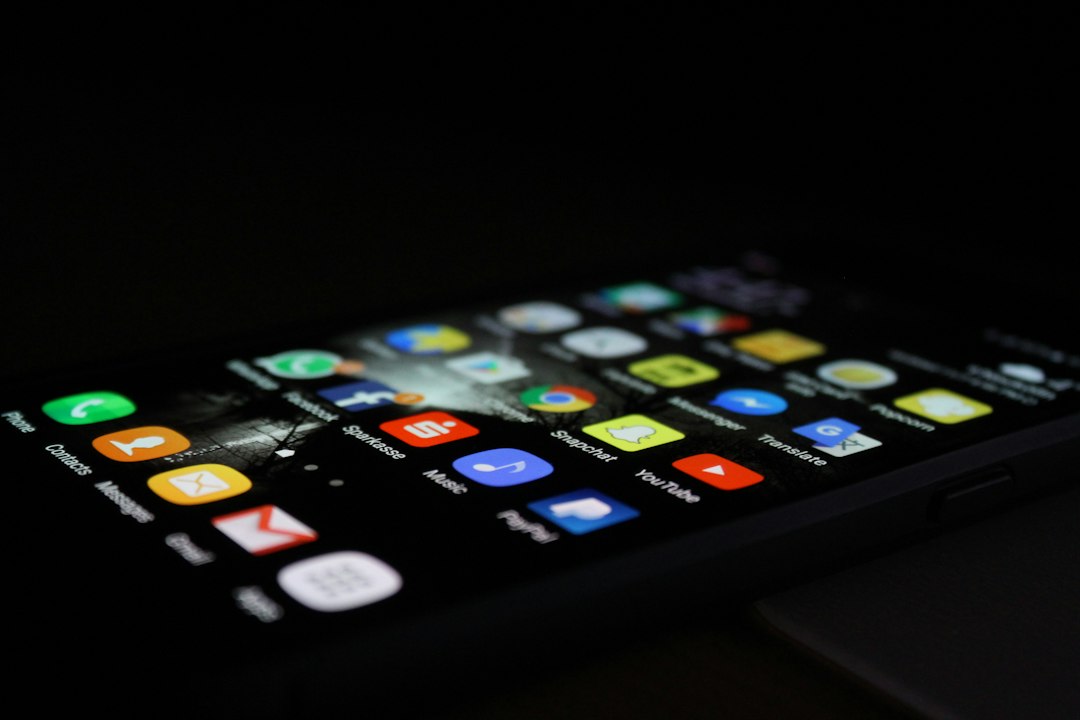
Photo by Rami Al-zayat on Unsplash
Why Movie Phones Never Use Touchscreens in Close-Ups
Watch any contemporary thriller where a character frantically dials for help, and you’ll notice something odd: they’re pressing physical buttons that don’t exist on modern smartphones. The phone looks like an iPhone from across the room, but in close-up it sprouts a keypad, complete with the satisfying mechanical click of buttons being pressed.
This isn’t a continuity error. It’s a deliberate production choice driven by the fundamental incompatibility between touchscreens and film technique.
The Touchscreen Problem
Real smartphones offer directors almost nothing to work with. A finger swiping glass produces no sound, no visible mechanical action, and no guarantee the screen will respond on the first take. Actors can’t feel whether they’ve hit the right spot, and cameras can’t capture the tactile moment of contact that signals intention to an audience.
Worse, touchscreens require the phone to be powered on and functional throughout a scene. That means dealing with real UI, actual apps, battery life, and the risk of an incoming notification ruining a take. A text message from an actor’s friend has killed more than one perfect performance.
Props departments solved this by building what the industry calls “hero phones”—non-functioning replicas fitted with physical buttons in place of a touchscreen. From a distance they read as contemporary smartphones, but up close they operate like a 2005 Blackberry. The buttons click, they can be pressed reliably take after take, and the sound team can layer in button tones in post.
Why Physical Buttons Work on Camera
Cinema relies on visible cause and effect. A character’s action must produce a clear result the audience can track. When someone turns a doorknob, we see the hand rotate, hear the latch disengage, and watch the door swing open. Every step is legible.
Physical phone buttons deliver that same clarity. The finger moves, the button depresses, the click confirms the action. It’s a complete mechanical sentence. A touchscreen offers only the first beat—the finger moves—and then nothing. The screen might change a frame later, but the causal link is invisible.
This matters most in moments of tension. A character dialing 911 under a desk while a killer searches the room needs the audience to track every digit. Physical buttons let the actor perform each press as a distinct, visible action. A touchscreen reduces the entire sequence to vague finger waving.
The Workarounds
When productions must show a real smartphone interface—a character scrolling through texts or photographs—they use one of several techniques. The most common is to shoot the phone screen separately as an insert, controlling the UI in post-production. The actor mimes the gesture, and an editor composites in clean screen footage that responds exactly on cue.
For wider shots, some productions use dummy phones with pre-recorded screen animations triggered by a hidden button. The actor presses the side of the phone, and the screen plays a looped video of scrolling, typing, or an incoming call. It looks interactive from three feet away.
The low-tech solution is simply to avoid showing the phone up close. Frame the actor’s face, let the phone stay slightly out of focus in their hand, and let context do the work. We don’t need to see the screen to understand someone is calling for help.
The Broader Pattern
This same principle explains why movie computers beep with every keystroke and why car dashboards in close-up are covered in satisfyingly clicky analog switches long after real cars went digital. Cinema defaults to mechanical interfaces because they provide sound, movement, and tactile feedback—all things cameras can capture and audiences can read.
Touchscreens are elegant and efficient in real life, but they’re narrative dead zones on film. They turn action into stillness and remove the physical texture that makes moments feel concrete. So productions quietly swap them out for technology that’s a decade obsolete, because in cinema, a button will always outperform a piece of glass.