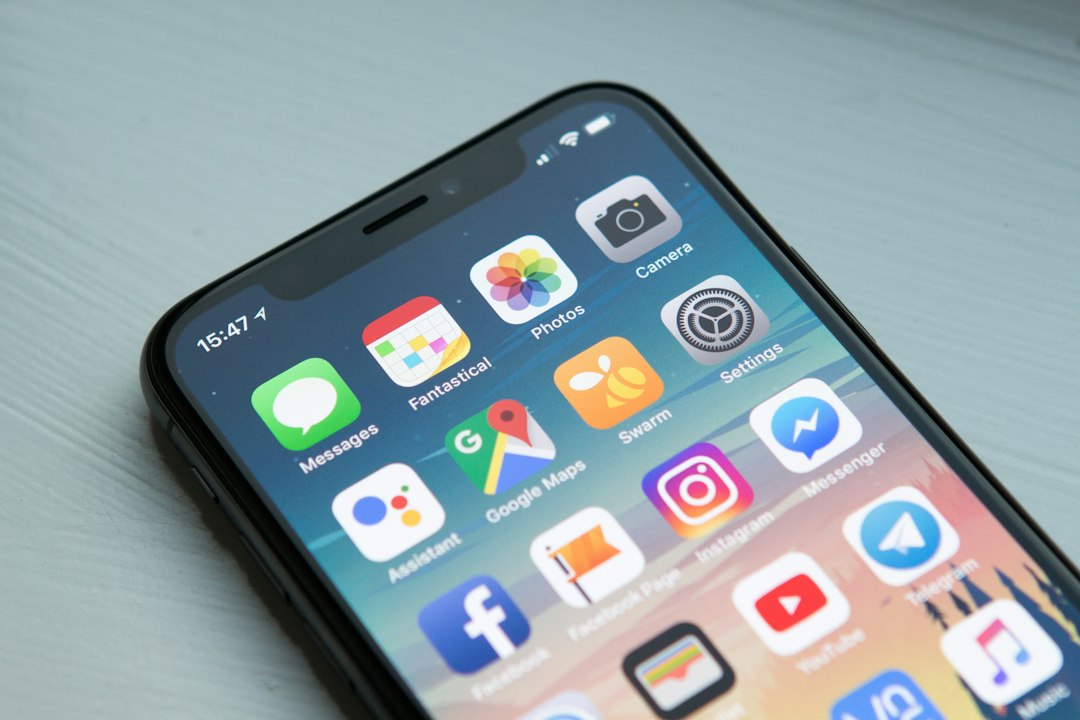
Photo by William Hook on Unsplash
Why Movie Phones Never Show Real UI
Watch any contemporary film or TV show and you’ll notice something odd: the phones don’t look quite right. The text messages arrive in generic blue bubbles with no carrier name. The home screens show unfamiliar app icons. The incoming call interface uses fonts and buttons you’ve never seen on your own device.
This isn’t an accident or a budget limitation. It’s a deliberate choice that solves several problems at once.
The Legal Minefield
Real phone operating systems are trademarked products. iOS and Android have distinctive visual identities that Apple and Google control tightly. Showing an iPhone interface in a scene where a character commits a crime, receives bad news, or behaves unethically creates potential legal and brand-protection issues.
Apple is particularly known for restricting how its products appear on screen. Villains famously don’t use iPhones in major productions—a detail sharp-eyed viewers have learned to use as a storytelling tell. Rather than navigate these restrictions for every scene, production designers create custom interfaces that sidestep the problem entirely.
The same principle applies to apps. A character opening Instagram, WhatsApp, or Twitter means clearing those appearances with each company. A fictional messaging app that looks plausible but belongs to no one? No clearance needed.
Control Over the Story
Real interfaces are designed for utility, not narrative clarity. A genuine text thread includes timestamps, battery indicators, carrier signal bars, and notification badges—visual noise that pulls focus from the dialogue or emotional beat the scene is trying to land.
Custom UIs let filmmakers strip away everything except what matters to the story. The text message fills the screen in large, readable type. The contact name is prominent. There’s no three-dot menu, no emoji bar, no autocorrect suggestion tray. The interface becomes invisible scaffolding rather than a co-star.
This control extends to pacing. In real life, typing indicators appear and messages arrive with variable timing. In a scripted scene, the production needs the message to arrive exactly when the actor’s expression shifts or the music cue hits. A designed interface means the timing is never fighting the platform’s real behavior.
Future-Proofing the Scene
Operating systems update constantly. iOS 18 looks different from iOS 15, which looked different from iOS 12. A film released today that shows a current iPhone interface will look dated in three years when that design has been replaced.
Fake UIs age more gracefully because they signal “generic smartphone” rather than a specific version tied to a specific year. They’re intentionally bland in a way that helps the film feel less anchored to the moment of production.
This is especially important for prestige TV shows that take years to produce and release. A show that shoots in 2023, edits in 2024, and airs in 2025 can’t afford to lock itself to a UI that will look outdated halfway through its run.
The Craft of Plausible Fakery
The best fake phone UIs don’t call attention to themselves. They borrow just enough visual language from real platforms—rounded buttons, familiar color schemes, standard icon placement—to feel correct at a glance, while remaining legally distinct and narratively obedient.
Prop departments and graphic designers keep libraries of these custom interfaces, rendering them as video files that play back on real devices during shooting. Actors interact with functional screens, not green rectangles that will be added later. The interfaces respond to touch, scroll, and animate, giving performances a tangible anchor.
Occasionally a production will use a real interface when the scene demands it—a tutorial, a specific app’s functionality as plot point, or a documentary-style aesthetic. But the default has become the fake UI, invisible by design, doing its job precisely because you didn’t stop to notice it.
The next time you watch a character pull out their phone on screen, look closely. That unfamiliar interface is a small, deliberate piece of craft—solving legal problems, serving the story, and quietly making sure the scene works exactly as intended.