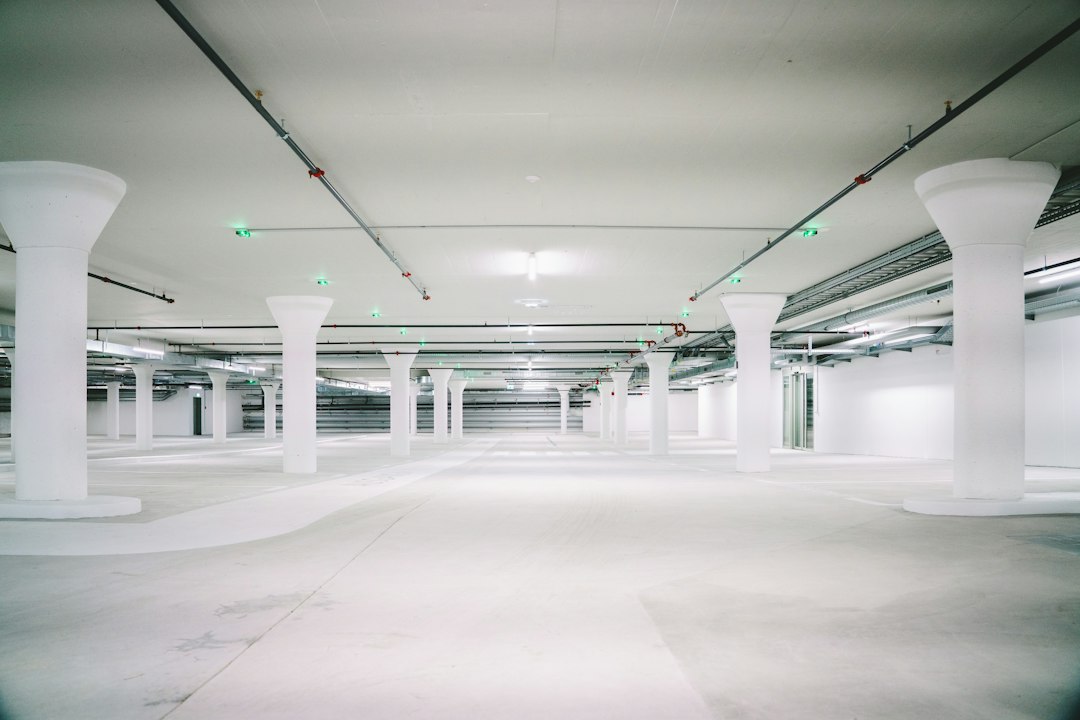
Photo by Claudio Schwarz on Unsplash
Why Movie Parking Garages Have Perfect Tire Squeals
Every chase sequence or tense confrontation set in a parking garage features the same sonic signature: tires screaming against concrete with piercing clarity, echoing off bare walls in tight, repeating layers. It’s so consistent across films that it feels like a convention. But unlike many movie sound effects that exaggerate reality, this one is rooted in genuine acoustic physics—then carefully enhanced to maximize dramatic impact.
The Architecture Is an Instrument
Parking garages are unintentional echo chambers. Low ceilings, parallel concrete surfaces, minimal sound absorption, and repetitive structural columns create an environment where every noise reflects, multiplies, and sustains. When a tire skids on polished concrete, the friction generates a high-frequency squeal that bounces between floor and ceiling dozens of times within seconds. The sound doesn’t dissipate the way it would outdoors—it builds.
Filmmakers recognize this and choose parking garages specifically for their acoustic properties. The same chase through an open street wouldn’t deliver the same visceral punch. Concrete parking structures turn ordinary driving maneuvers into sonic events, and sound designers lean into that natural amplification rather than fighting it.
Tire Composition and Surface Interaction
The squeal itself comes from the tire rubber’s stick-slip behavior against smooth concrete. As the tire rotates under braking or hard turning, it alternates rapidly between gripping and releasing the surface, vibrating at frequencies the human ear registers as a high-pitched scream. Smooth, sealed concrete—common in garages—maximizes this effect compared to rougher asphalt.
On set, stunt drivers often perform real maneuvers to capture authentic tire sounds. But the raw recording rarely delivers the intensity the scene demands. The sound may be directionally inconsistent, masked by engine noise, or simply too short. That’s where post-production takes over.
Layering and Sweetening in Post
A single tire squeal in a finished film is usually a composite. Sound designers layer multiple recordings: the original production sound, clean library squeals recorded specifically for tire effects, and pitch-shifted or time-stretched variations to extend duration and tonal range. They’ll often add a slight reverb tail tuned to the specific dimensions of the garage, even if the location sound already has natural echo, to ensure the effect reads clearly in a theater mix.
The goal isn’t realism in the strictest sense—it’s clarity and emotional impact. A squeal that lasts two seconds on set might be stretched to four in the final cut, giving the audience time to process the danger and tension. The pitch might be nudged higher to cut through dialogue and score. These adjustments are subtle enough that viewers don’t notice the manipulation, but bold enough to make every tire movement feel consequential.
Why It Works Dramatically
Tire squeals in parking garages function as auditory punctuation. They signal sudden changes in speed, direction, or intent—moments when control is tested or about to be lost. The echo reinforces spatial claustrophobia: the sound surrounds you, suggesting there’s nowhere to escape. It’s a visceral reminder that concrete and steel are unforgiving materials, and the confined space leaves no room for error.
This is why action directors return to parking garages again and again. The location does half the sound design work for them, providing a ready-made sonic texture that feels both real and heightened. The audience accepts it instantly because they’ve heard similar sounds in real parking structures, even if the movie version is louder, longer, and more polished.
The Convention Reinforces Itself
After decades of films using garage tire squeals as shorthand for danger and speed, the sound has become part of the cinematic language. Audiences expect it. A chase through a parking garage without prominent tire squeals would feel muted, undersold. Filmmakers now design action beats around the acoustic environment as much as the visual geography, knowing that the sound will carry as much narrative weight as the image.
The result is a filmmaking technique that blends architectural reality with intentional sonic craft. The garage provides the foundation, and the sound team builds the drama on top of it—one perfectly layered, extended, echo-drenched squeal at a time.