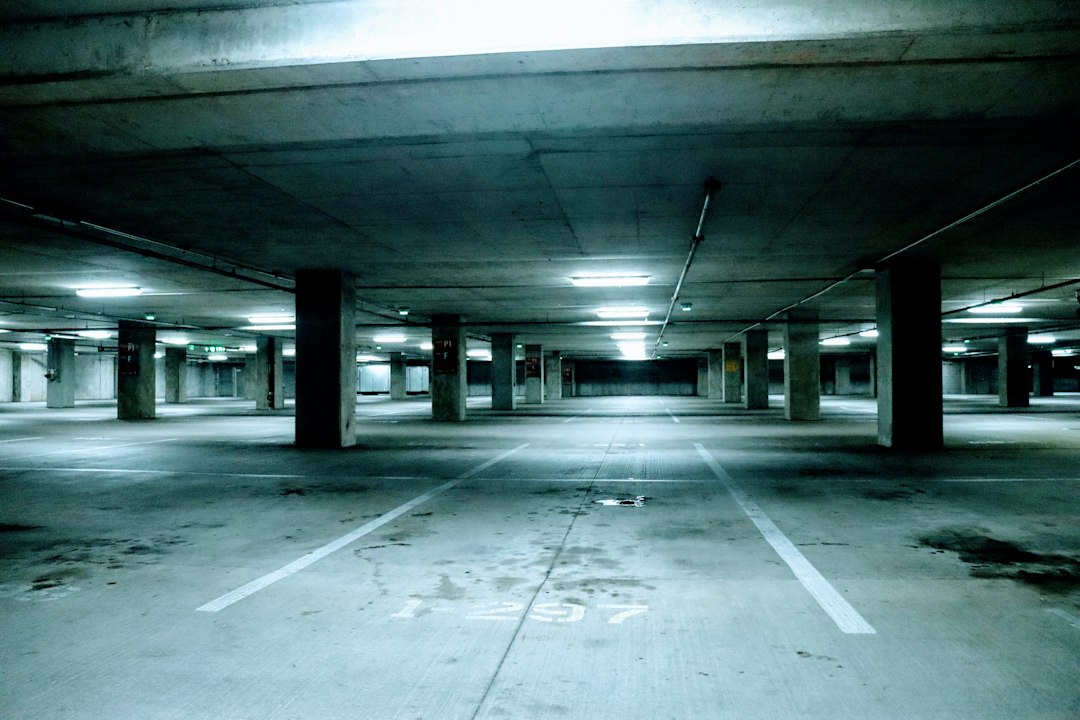
Photo by Brice Cooper on Unsplash
Why Movie Parking Garages Are Always Empty and Echoey
Watch any thriller, crime drama, or horror film and you’ll notice something strange about parking garages: they’re always nearly empty, bathed in harsh fluorescent light, and filled with an unnatural echo. Real urban parking structures are crowded, chaotic spaces where sound gets absorbed by hundreds of cars and concrete. So why does cinema consistently depict them as vast, abandoned echo chambers?
The Acoustic Signature of Menace
Parking garages in film are engineered for sound as much as visuals. The exaggerated reverb and metallic echo serve a specific narrative function: they amplify every footstep, car door slam, and whispered threat into an acoustic warning system. Sound designers deliberately strip these spaces of the ambient noise and sound-absorbing clutter found in real garages, leaving only hard surfaces that bounce audio back with clinical precision.
This emptiness transforms ordinary sounds into tension builders. A character’s hurried footsteps become a countdown. A car engine turning over becomes a beacon announcing vulnerability. The lack of acoustic dampening means every noise travels farther and lasts longer, stretching seconds into subjective minutes for both character and audience.
Isolation Within the City
The movie parking garage exists as a liminal space, technically part of the urban fabric but functionally removed from help or witnesses. By clearing out the cars and people, filmmakers create an urban desert island, a pocket of isolation inside a dense city. It’s a location where the rules of public safety temporarily suspend, where a character can be surrounded by thousands of people just floors above yet remain utterly alone.
This manufactured emptiness also serves practical blocking needs. Sparse car placement gives actors room to move, allows cameras to track and dolly freely, and provides clear sightlines for choreographed chases or fights. The minimal set dressing keeps focus on the characters while maintaining a recognizable real-world location.
Lighting as Threat Geometry
The harsh, overhead fluorescent lighting in film parking garages does more than illuminate; it creates pockets of high contrast that segment the space into zones of visibility and shadow. Real parking garages are unevenly lit and visually cluttered, but movie versions exaggerate the grid of light fixtures to create alternating bands of exposure and concealment.
This lighting design allows filmmakers to play with what the audience can and cannot see. A figure can emerge from darkness between light pools. A pursuer can be glimpsed only in flashes as they move through the grid. The overhead angle of the lights also casts shadows downward, hollowing out faces and adding a layer of visual unease to even neutral moments.
The Convention as Shorthand
Over decades of repetition, the empty, echoey parking garage has become visual and acoustic shorthand for danger. Audiences have learned to read these spaces as threat zones the moment they appear on screen. The convention allows filmmakers to generate unease without exposition, relying on a shared vocabulary of cinematic space.
The unrealistic emptiness isn’t a mistake or oversight. It’s a deliberate distortion of reality in service of atmosphere, a recognition that film spaces don’t need to be accurate to be effective. The movie parking garage strips away the mundane details of actual urban infrastructure and keeps only the elements that serve suspense: echo, isolation, harsh light, and the sound of footsteps that seem to come from everywhere at once.