Photo by Aurora Song on Unsplash
Why Movie Kitchens Are Always Unrealistically Large
Watch any film or television show set in a modest apartment or middle-class home, and you’ll notice something odd: the kitchen is enormous. Characters circle islands, pace while talking on the phone, and move freely around each other during conversations. In real life, those same spaces would force people to squeeze past one another just to reach the refrigerator.
This isn’t an accident or a failure of production design. It’s a deliberate choice driven by the physical demands of filmmaking.
The Camera Takes Up Space
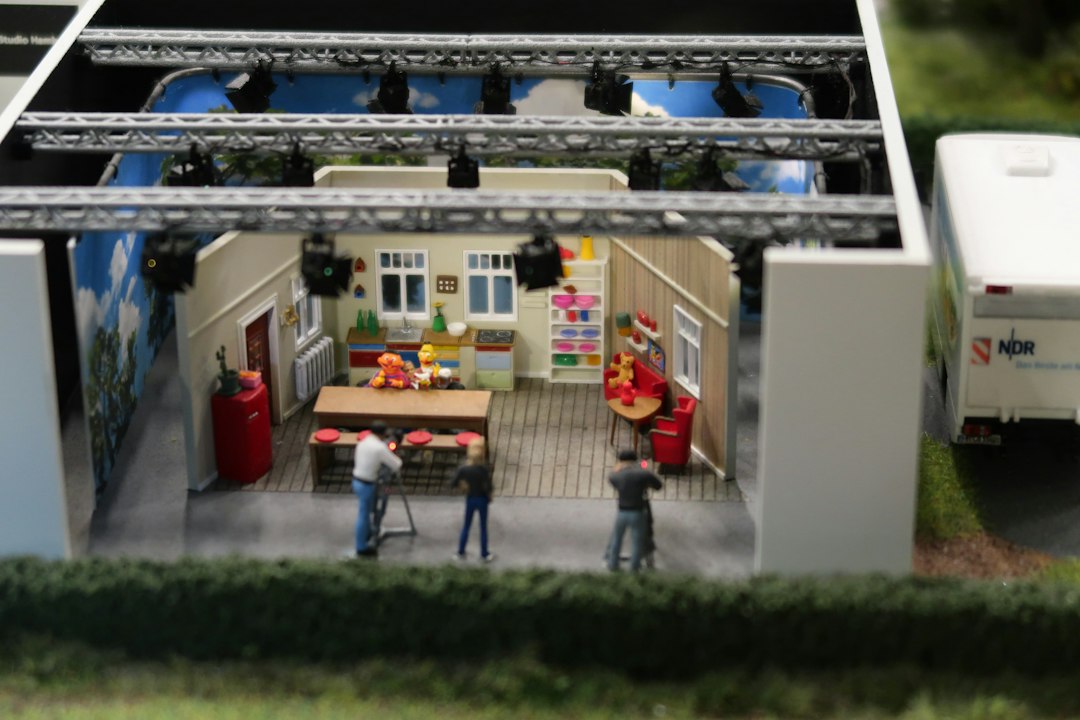
A film crew doesn’t just place a camera in the corner and hit record. A single scene might require a dolly track for smooth movement, a camera operator, a focus puller, a boom operator holding a microphone just out of frame, and a script supervisor taking notes. Even a stripped-down setup with a handheld camera still needs room for the operator to move and capture coverage from multiple angles.
Real kitchens—especially in apartments or older homes—are built for efficiency, not for hosting a crew of five to ten people. Counters sit close to stoves, cabinets hang low, and doorways narrow the flow of traffic. That works fine for cooking dinner. It doesn’t work when you need to shoot a master shot, two singles, and an over-the-shoulder without moving walls.
Production designers solve this by building sets that mimic the look of a real kitchen while providing the spatial breathing room a crew needs. On a soundstage, walls can be “wild”—removable panels that slide out to accommodate a camera position. But even with that flexibility, the kitchen itself is usually designed larger from the start.
Blocking Requires Distance
Actors need space to move naturally. A conversation between two characters in a kitchen isn’t just two people standing still. One might open the fridge, another might chop vegetables, a third might enter through a doorway. These movements—called blocking—give scenes energy and visual interest.
In a cramped kitchen, blocking becomes a logistical puzzle. Actors end up shoulder-to-shoulder, limiting the editor’s options for cutting between coverage. A wider space lets the director stage moments where characters occupy different planes of depth within the frame, creating a more dynamic composition. It also allows for character movement that conveys emotion: someone retreating to the far counter signals distance, while moving closer to another character suggests intimacy or confrontation.
Lighting Demands Room
Cinematographers light scenes with precision, often using multiple sources to shape mood and direct the viewer’s eye. A key light might sit just outside the frame to the left, a fill light softens shadows from the right, and a backlight separates the actor from the background. Practical lights—the lamps and fixtures visible on screen—add realism, but they rarely provide enough illumination on their own.
All of this equipment needs space. In a real kitchen, a lighting setup would block sightlines, cast unwanted shadows, or simply not fit. Larger sets give the crew room to position lights where they’re most effective without compromising the shot. It also allows the cinematographer to use longer lenses, which compress space and create a more controlled, cinematic look.
The Viewer Rarely Notices
Here’s the strange part: audiences almost never question it. We’ve seen so many oversized kitchens on screen that they’ve become part of the visual grammar of film and television. A kitchen that feels true to life on screen would look oddly spacious in person, but we accept it because the alternative—a kitchen that matches real-world dimensions—would feel cramped and claustrophobic on camera.
This isn’t about fooling the audience. It’s about creating an environment that serves the story. A kitchen is a setting for conversation, conflict, and character moments. Making it large enough to shoot effectively ensures those moments land with clarity and emotional weight. Realism, in this case, takes a back seat to craft.