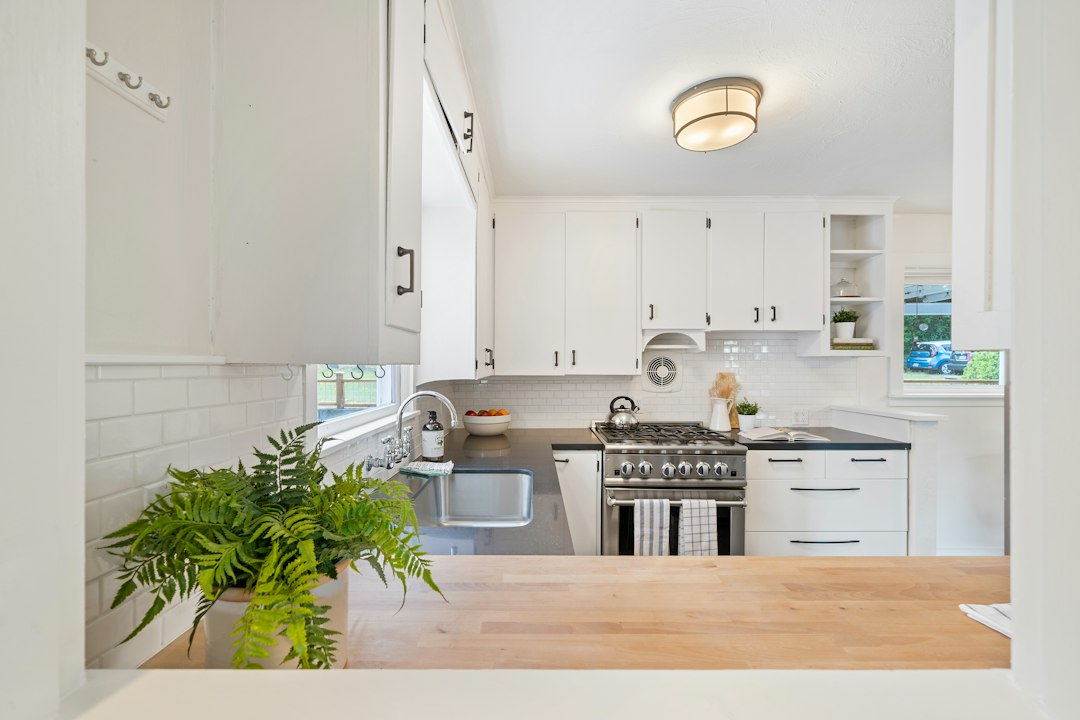
Photo by Im3rd Media on Unsplash
Why Movie Kitchens Never Have Upper Cabinets
Look closely at the next kitchen scene you watch. Chances are you’ll notice something missing: upper cabinets. Where real kitchens line their walls with storage from counter to ceiling, movie kitchens often feature long stretches of open wall, maybe some open shelving, or a single row of cabinets that stops well short of where a homeowner would actually put them.
This isn’t an aesthetic trend borrowed from interior design magazines. It’s a calculated production design choice driven by the camera’s needs.
Faces Over Function
The primary reason is simple: upper cabinets block faces. When actors stand at a kitchen counter preparing food, washing dishes, or having a conversation, their faces sit at roughly the same height as upper cabinet doors. A standard wall-mounted cabinet puts a physical barrier directly between the actor and the camera, forcing awkward angles or limiting coverage options.
Removing those cabinets opens the frame. The camera can shoot from the opposite side of the kitchen and capture both actors in a two-shot without cabinet doors bisecting the composition. It allows for clean profile shots, over-the-shoulder angles, and wider framing that keeps everyone’s faces visible. In ensemble scenes where multiple characters occupy the kitchen, the absence of upper storage means the cinematographer can see straight across the room.
The Practical Reality of Shooting
Real kitchens are dense, enclosed spaces. Cabinets, appliances, and walls create natural barriers that make it difficult to position cameras, lights, and crew. Film kitchens are built on soundstages or chosen as locations specifically because they provide working room.
Upper cabinets would also cast shadows and create reflection problems. Every surface in frame is a potential light bounce or a place where the camera crew might accidentally appear in a reflection. Fewer surfaces mean fewer complications. Open walls give the lighting team more control, allowing them to position practicals, bounces, and key lights without cabinets blocking the path.
The Shelving Compromise
When production designers do want some sense of kitchen storage, they often use open shelving instead. A few floating shelves with neatly arranged dishes, glassware, or cookbooks provide visual texture and a sense of domesticity without creating the same sightline problems. The shelves are usually placed high or to the side, out of the critical zone where actors’ heads will be.
This compromise lets the kitchen feel lived-in while preserving the openness the camera needs. It’s also easier to dress and control. A few carefully chosen props on a shelf read as “kitchen” without the clutter and randomness of a real person’s cabinet contents.
When Cabinets Do Appear
Upper cabinets aren’t universally absent. In wide establishing shots, or in scenes where characters aren’t standing at the counter, cabinets can appear without causing problems. Some productions use shorter cabinets, stopping them at shoulder height rather than extending them to the ceiling. Others place them on walls that won’t be in the primary line of sight during dialogue scenes.
But when the scene calls for two characters to cook together, argue over breakfast, or have a heart-to-heart while making coffee, the upper cabinets quietly disappear. The audience doesn’t consciously register the absence because the scene works. The faces are clear, the framing is open, and the story moves forward. That’s the trade: a less realistic kitchen in exchange for a more watchable scene.
Film kitchens aren’t designed to store groceries. They’re designed to let the camera see.