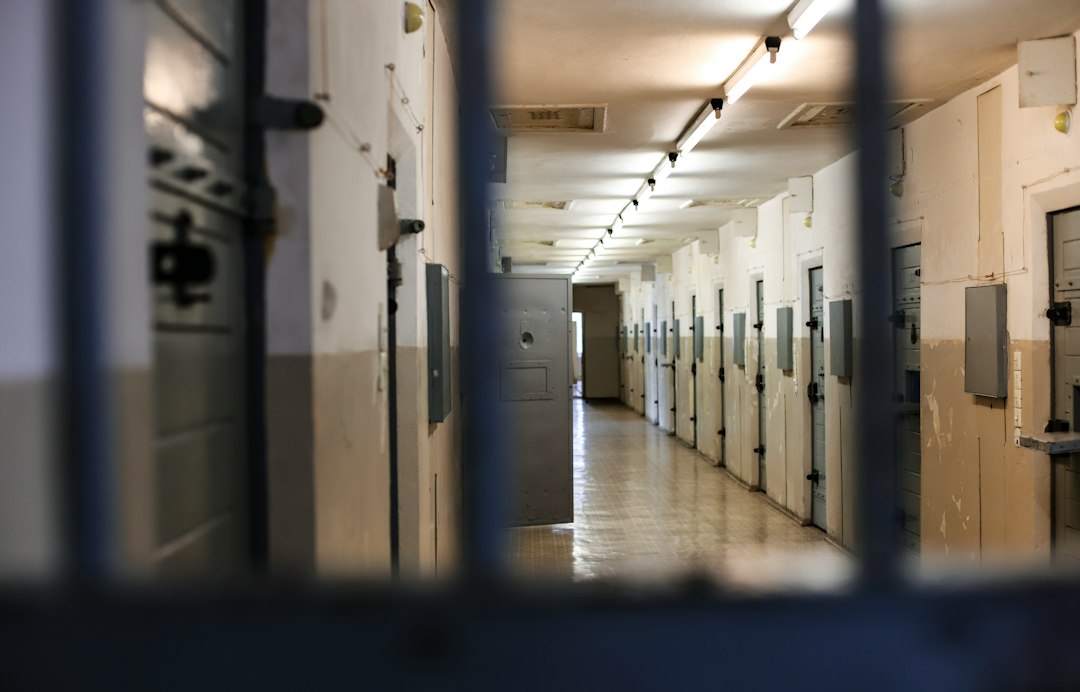
Photo by Matthew Ansley on Unsplash
Why Movie Jail Cells Always Have Dramatic Shadow Bars
You’ve seen it a hundred times: a character sits in a jail cell, their face dramatically striped with bars of shadow and light. The visual is unmistakable, instantly readable. But here’s the thing—those shadows often come from bars that don’t actually exist in front of the actor.
This is one of cinema’s quiet sleights of hand, a production design and lighting trick that solves a fundamental problem: real jail cell bars get in the way of seeing the actor’s face.
The Problem with Real Bars
Physical bars create genuine obstacles for cinematographers. They obstruct sightlines, fragment the actor’s face, and make it harder to maintain clean focus. Worse, they limit camera placement. You can’t easily push in for a close-up or shift angles without the bars cutting across the frame in unflattering ways.
Bars also create a barrier—literally—between the audience and the character. Film wants emotional access. When you’re trying to convey a character’s despair, fear, or quiet resolve, you need the audience to see their eyes, read their micro-expressions. A grid of metal bars interferes with that connection.
Painting with Shadows Instead
The solution is to create the suggestion of bars using light and shadow. A cucaloris—a panel with slats cut into it, often called a “cookie”—is placed between the light source and the actor. The light passes through the gaps, casting parallel shadow bars across the actor’s face and body. The result reads as confinement without the physical obstruction.
This approach gives the cinematographer complete control. The shadows can be softened or sharpened depending on how far the cookie is placed from the light. They can be angled, widened, or repositioned to frame the actor’s face in the most expressive way. The actor remains fully visible, their performance unobstructed, while the visual language of imprisonment stays intact.
When Real Bars Do Appear
Sometimes you’ll see actual bars in the frame, but they’re usually positioned carefully—placed in the foreground or background, out of focus, or framing the edges of the composition rather than cutting directly across the actor’s face. The bars become compositional elements rather than barriers.
In wide shots, real bars work fine. They establish the space, communicate the reality of the cell. But when the camera moves in close, the lighting trick takes over. The transition is seamless enough that most viewers never register the shift.
The Iconography of Captivity
Striped shadows have become visual shorthand for imprisonment, so much so that they work even in scenes where the logic doesn’t quite hold. A character might be in a modern holding cell with solid walls and a single door, but the shadows still fall across them, borrowed from the iconography of old iron-bar jails. The pattern is more about emotional state than architectural accuracy.
It’s a reminder that film operates in a language of suggestion. The audience doesn’t need to see every literal detail—they need to feel the confinement. Shadow bars accomplish that while keeping the human face, and the performance happening on it, front and center where it belongs.
This is lighting doing double duty: creating mood while solving a practical problem. The bars are there when you need the symbolism, absent when you need the actor. It’s the kind of invisible craft that holds a scene together without announcing itself, letting the story breathe even when the character can’t.