Photo by Zongnan Bao on Unsplash
Why Movie Guns Sound Different Indoors vs Outdoors
Fire a gun in a concrete parking garage and it sounds nothing like firing the same gun in an open field. That difference—the way sound behaves in enclosed versus open spaces—is something sound designers obsess over, because getting it wrong breaks the illusion instantly.
Acoustic Environments Shape the Sound
When a gun fires, it produces a sharp, percussive impulse. In an outdoor environment with no walls or ceiling to reflect the sound back, that impulse dissipates quickly into the surrounding air. The gunshot is dry, focused, and brief. There’s almost no reverb, because there’s nothing for the sound to bounce off. What you hear is the raw report of the weapon and little else.
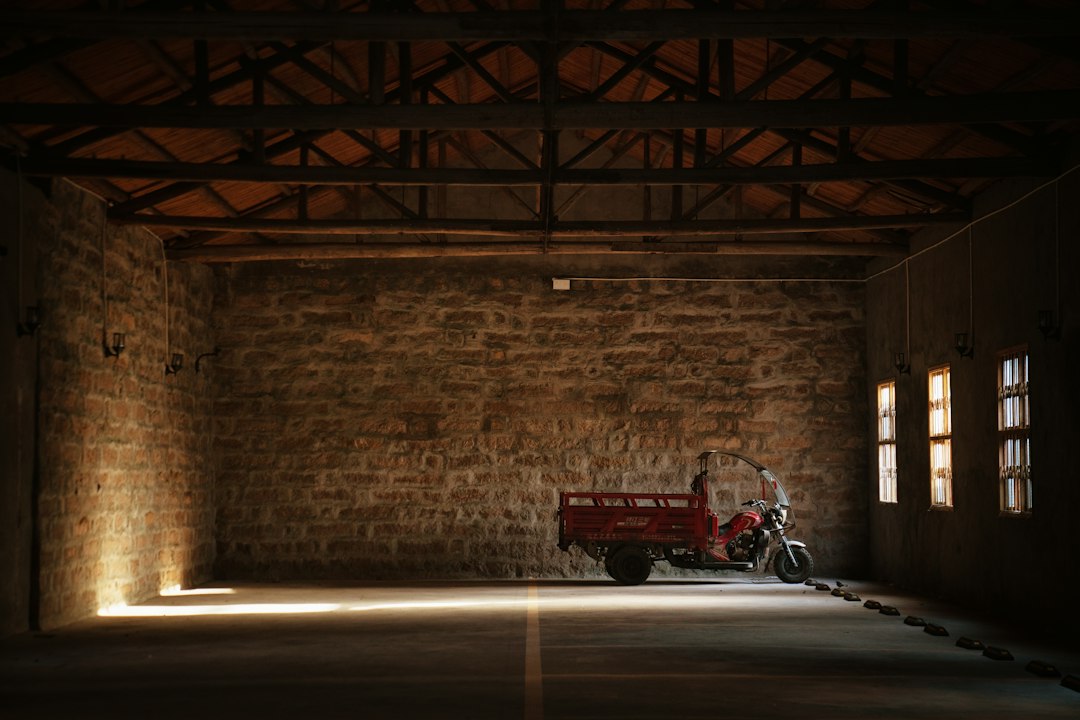
Move that same gun indoors—a hallway, a warehouse, a tiled bathroom—and the acoustics change completely. Now the sound waves hit walls, floors, and ceilings. They reflect back in layers, creating reverb. Hard surfaces like concrete, tile, or metal produce bright, ringing echoes. Soft surfaces like carpet or curtains absorb some frequencies and dampen the tail. The result is a gunshot that feels bigger, more chaotic, and spatially defined.
Sound Designers Build the Space Around the Gun
Modern action films don’t just record gunshots and drop them in. Sound designers layer the gunshot with carefully tailored reverb that matches the architecture of the scene. If the scene takes place in a narrow stairwell, the reverb will be tight and percussive, with fast early reflections. If it’s a cathedral or an empty office building, the reverb will be longer and more diffuse, with a slower decay.
This isn’t guesswork. Sound teams often use impulse response recordings—audio snapshots of how a space responds to sound—captured from real locations or generated using convolution reverb plugins. They fire a test signal in a space, capture the reflections, and then apply that signature to their gunshot sounds. The result is a gunshot that feels anchored to the physical world of the scene.
Why It Matters for Immersion
Audiences may not consciously notice the difference between indoor and outdoor gunshot acoustics, but they feel it. A gunshot with the wrong reverb pulls you out of the moment. If a character fires a gun in a steel shipping container and it sounds like they’re outside in a field, the brain registers the mismatch. Conversely, when the acoustics are right, the sound reinforces the space, making the environment feel tangible even if you can’t see the walls.
This attention to acoustic detail extends beyond gunshots. Footsteps, dialogue, car engines, explosions—all of these are shaped by the space they occupy. But gunshots are especially revealing, because they’re so sharp and percussive. There’s no room for ambiguity. The reverb either fits or it doesn’t.
Practical vs Stylized
Not every film prioritizes acoustic realism. Some action films stylize their gunshots for impact, adding extra low-end thump or metallic ring regardless of the environment. But even stylized sound design benefits from spatial awareness. A gunfight in a subway tunnel should still feel different from one on a rooftop, even if both are heightened for drama.
The best sound work strikes a balance: grounded enough to feel real, bold enough to hold emotional weight. And in that balance, the difference between indoors and outdoors is one of the most powerful tools a sound designer has.