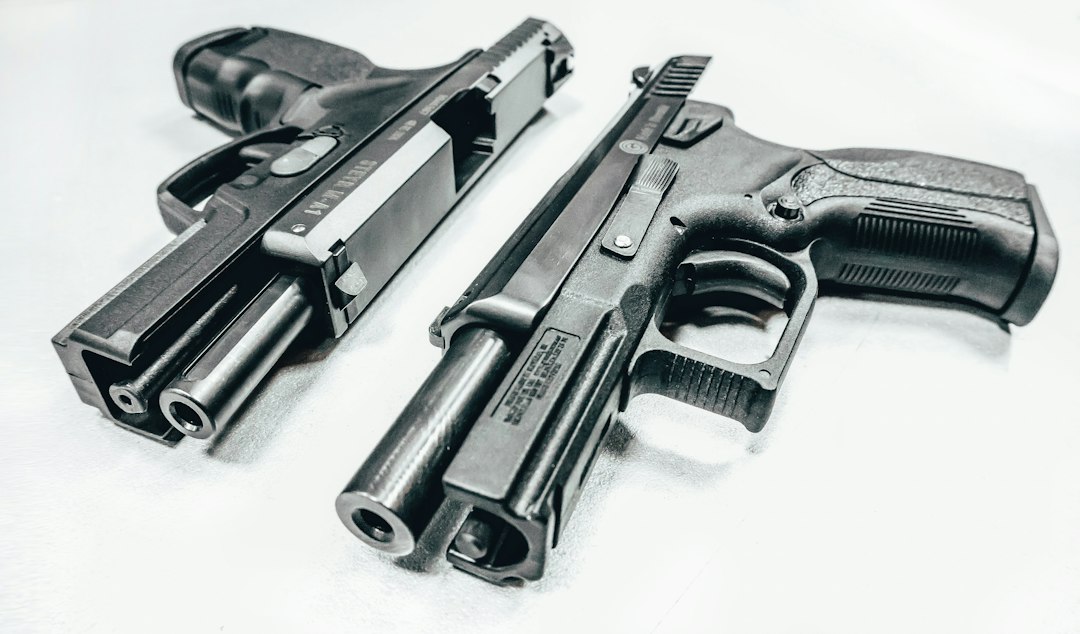
Photo by Maxim Potkin ❄ on Unsplash
Why Movie Guns Rack the Slide After Loading
Watch any action thriller and you’ll see it: a character loads a fresh magazine into their pistol, then pulls back the slide with a sharp, metallic chack. Sometimes they do it twice. Sometimes they do it after the gun has already been fired. The gesture looks decisive and professional, but anyone familiar with firearms knows it rarely makes mechanical sense.
The Redundancy Problem
Modern semi-automatic pistols chamber a round automatically. When you fire, the slide cycles back, ejects the spent casing, and loads the next round from the magazine. If the gun has already been fired, there’s a round in the chamber. Racking the slide again would eject a perfectly good bullet onto the floor.
Even if the weapon hasn’t been fired yet, inserting a magazine into a pistol that’s already been charged means the chamber is loaded. Pulling the slide a second time accomplishes nothing—except in the movies, where it announces intent.
Dramatic Punctuation
The slide-rack is a piece of visual grammar. It’s the equivalent of a cowboy spinning his revolver or a samurai slowly drawing a katana. The sound design amplifies it: that crisp, reverberating metallic snap is often sweetened in post-production to sound more aggressive than the real action would produce.
It marks a turning point. A character who racks the slide is crossing a threshold—they’ve moved from considering violence to committing to it. The gesture separates hesitation from resolve, talk from action. It’s a beat that editors use to build tension or cap off a threat.
The Tactical Aesthetic
Action cinema borrows heavily from military and law enforcement culture, where weapon handling is ritualized and procedural. Racking the slide does have a real-world function when preparing a firearm from a safe, unchambered state, and films adopt that preparatory gesture even when the story context doesn’t warrant it.
The move also simply looks competent. It suggests the character knows what they’re doing, that they’re trained, controlled, and ready. Whether or not the action is mechanically justified becomes irrelevant—the performance conveys authority.
When It Actually Makes Sense
There are scenarios where racking the slide is appropriate. If a character picks up an unknown weapon, checking the chamber is reasonable. If they’ve kept the gun unchambered for safety (Israeli carry), then charging it before use is correct. And in some malfunction situations—failure to feed, stovepipe jam—manually cycling the slide is the remedy.
But those moments are rare in fiction. Most of the time, the gesture is repeated because it works emotionally, not because it tracks with how the firearm operates.
The Bigger Pattern
This habit belongs to a wider set of cinematic gun behaviors that prioritize drama over accuracy: hammers cocking on striker-fired pistols that don’t have external hammers, infinite ammunition until the plot requires an empty magazine, and the ever-present gun-click sound effect whenever a weapon is touched.
Filmmakers aren’t ignorant of these details. They make conscious choices to favor the language of cinema over the language of mechanics. A technically accurate sequence where a character silently checks their pre-loaded weapon lacks the visceral punctuation that the slide-rack provides.
The goal isn’t realism. It’s clarity, rhythm, and emotional impact. The sound and motion of racking the slide tells the audience exactly what they need to know: something is about to happen.