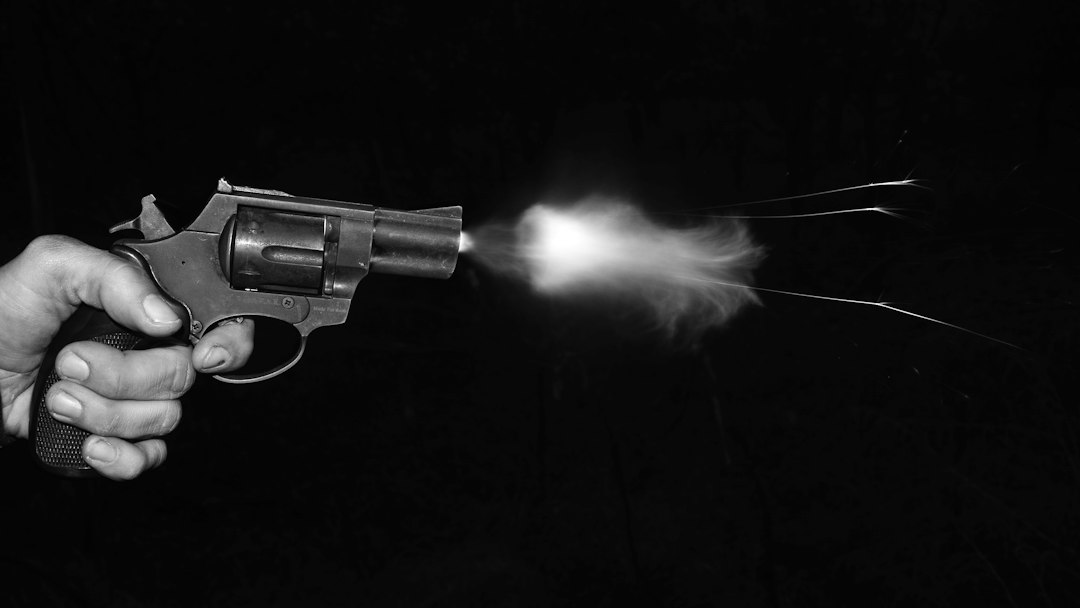
Photo by Tsvetoslav Hristov on Unsplash
Why Movie Guns Never Run Out of Bullets
Watch any action film and you’ll notice something quietly absurd: characters fire dozens of rounds without reloading, handguns that hold fifteen bullets somehow deliver thirty, and belt-fed machine guns churn through entire scenes without a pause. It’s not laziness or ignorance. It’s a deliberate choice that reveals how action sequences prioritize rhythm and emotional escalation over mechanical accuracy.
The Round Count Problem
Real firearms have hard limits. A standard Glock 17 holds seventeen rounds. An AK-47 magazine typically carries thirty. A pump-action shotgun might hold five to eight shells. Reloading takes time—several seconds under stress, longer if you’re not trained—and introduces a break in the action that can deflate tension.
Film action, by contrast, is built on momentum. A hero sprinting through a corridor while firing needs to maintain forward energy. Stopping to reload interrupts the choreography, the music cue, and the viewer’s adrenaline. Directors and editors know that every pause is a potential sag in the scene’s emotional arc. So the gun keeps firing until the moment demands otherwise.
When Reloading Becomes Drama
Filmmakers do use reloading—but selectively, as a narrative beat rather than a logistical necessity. A character fumbling for a fresh magazine signals vulnerability. An empty chamber clicking at the worst possible moment creates suspense. The hero tossing aside a spent weapon and grabbing another keeps the stakes rising.
These moments are choreographed for meaning. The reload happens because it heightens tension or marks a shift in the scene, not because the round count hit zero. It’s the difference between simulating reality and using reality as a tool.
The Grammar of Movie Gunfire
Action cinema has developed its own internal grammar. Automatic weapons fire in sustained bursts that feel relentless. Handguns crack in rhythmic punctuation. The sound, the muzzle flash, the recoil—all are designed to convey power, danger, and forward motion. Interrupting that flow for technical accuracy would be like stopping a musical crescendo to retune an instrument.
This grammar extends to how bullets interact with the environment. Cars explode, bodies fly backward, sparks shower from concrete—all physical impossibilities that serve the scene’s emotional logic. The gun that never empties is part of the same system: a visual language optimized for impact, not mechanics.
Exceptions That Prove the Rule
Some films lean into firearm realism as a stylistic choice. Heat features a street shootout where characters reload frequently, ejecting magazines and slamming in fresh ones with practiced efficiency. John Wick tracks round counts with near-obsessive precision, turning tactical reloads into part of the choreography. These moments work because the filmmakers have decided that realism itself is thrilling—that watching a character manage their weapon under pressure adds texture.
But even in these films, the choice is about what serves the scene. Realism is a flavor, not a mandate. The goal remains the same: keep the audience locked into the forward drive of the action.
Why It Works
We accept infinite magazines because we’ve learned the rules of the genre. Action films operate in a heightened reality where physics bends to drama, where a car chase can demolish fifty vehicles without anyone getting seriously hurt, where a fistfight can last five minutes without exhaustion setting in. The gun that never runs dry is simply one more convention in a grammar we’ve internalized.
What matters isn’t the round count. It’s whether the scene lands, whether the tension builds, whether the hero’s victory or defeat feels earned. The magazine is just a container. What it holds is momentum.