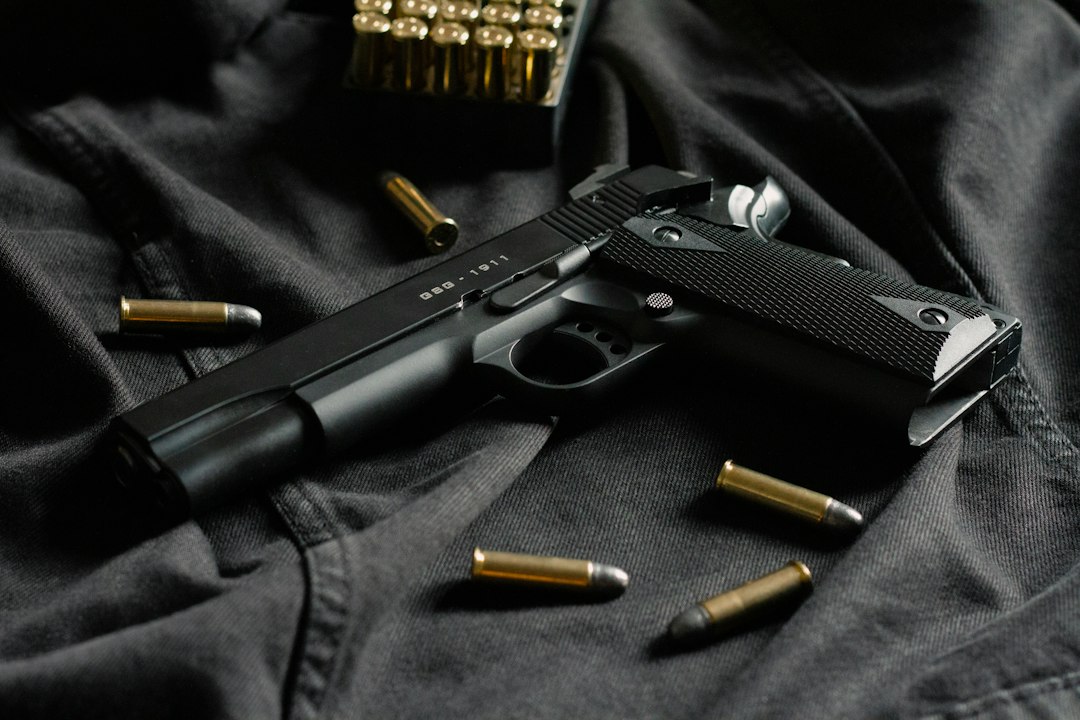
Why Movie Guns Click So Much
Pick up a gun in a movie and it clicks. Aim it and it clicks again. Someone else across the room raises their weapon and you hear a sharp metallic ratchet. A character holsters a pistol after a tense standoff and—click, click, snap. Real firearms don’t behave this way, yet film guns are among the noisiest objects in cinema.
This constant clicking is a deliberate sound design choice, and it serves a specific narrative and emotional function that has nothing to do with ballistic accuracy.
The Reality of Gun Handling
Real firearms are relatively quiet when handled. Modern pistols and rifles don’t click or clank every time someone picks them up or shifts their aim. Safety switches are small and subtle. Slide movements are brief and occur only during loading or chambering. Holstering a handgun produces almost no sound at all.
Even cocking a hammer—one of the few actions that does produce an audible click—happens once, not repeatedly. The exaggerated soundscape of movie guns exists entirely in post-production, added by foley artists and sound designers who layer in metallic snaps, springs, and slides that would never occur in actual use.
Why Sound Designers Add the Clicks
Movie guns click because silence feels wrong. Film is a medium that relies on audio cues to telegraph intention, danger, and status changes. When a character draws a weapon in total silence, the moment loses weight. The action doesn’t register as clearly. Audiences need to know, without looking directly at the gun, that the threat level just escalated.
The click functions as a kind of punctuation. It marks the moment a gun enters a scene, the instant a character makes a decision, or the beat before violence erupts. It’s the auditory equivalent of a close-up—a way to direct attention and shape the rhythm of a sequence.
Sound designers also use gun clicks to build tension. A slow, deliberate cocking sound stretches a moment, creating anticipation. Multiple clicks during a standoff signal hesitation, recalibration, or mounting pressure. The sounds aren’t literal; they’re emotional beats disguised as mechanics.
The Grammar of Weapon Foley
Over decades, certain gun sounds have become so standardized that they function as a shared language. A pump-action shotgun always gets its signature rack, even if the weapon was already loaded. A revolver’s hammer click is a shorthand for commitment or threat. The metallic snap of a safety switch—often inaudible in real life—has become a universal signal that someone just made a choice.
These sounds are rarely sourced from the actual firearms on set. Foley artists use a toolkit of metal objects, springs, and mechanical parts to create exaggerated, stylized versions of weapon handling. The goal isn’t realism; it’s clarity and impact.
When Silence Breaks the Rule
Some filmmakers deliberately strip away the gun clicks to create a different effect. In scenes where violence is sudden or clinical, the absence of foley can make gunfire feel more brutal and less choreographed. A silent draw followed by an abrupt shot collapses the space between intention and consequence, removing the dramatic buffer that clicking usually provides.
But these moments work precisely because they violate an established convention. The silence registers as a absence, a refusal to give the audience the auditory warning they’ve been conditioned to expect.
The Sound of Control
At its core, the movie gun click is about control—both the character’s and the filmmaker’s. It signals that someone has taken hold of a weapon, made it ready, or shifted the stakes. It’s a narrative tool that borrows the language of mechanics to communicate psychology. Real guns may be quieter, but cinema has never been interested in quiet when a click will do the job better.