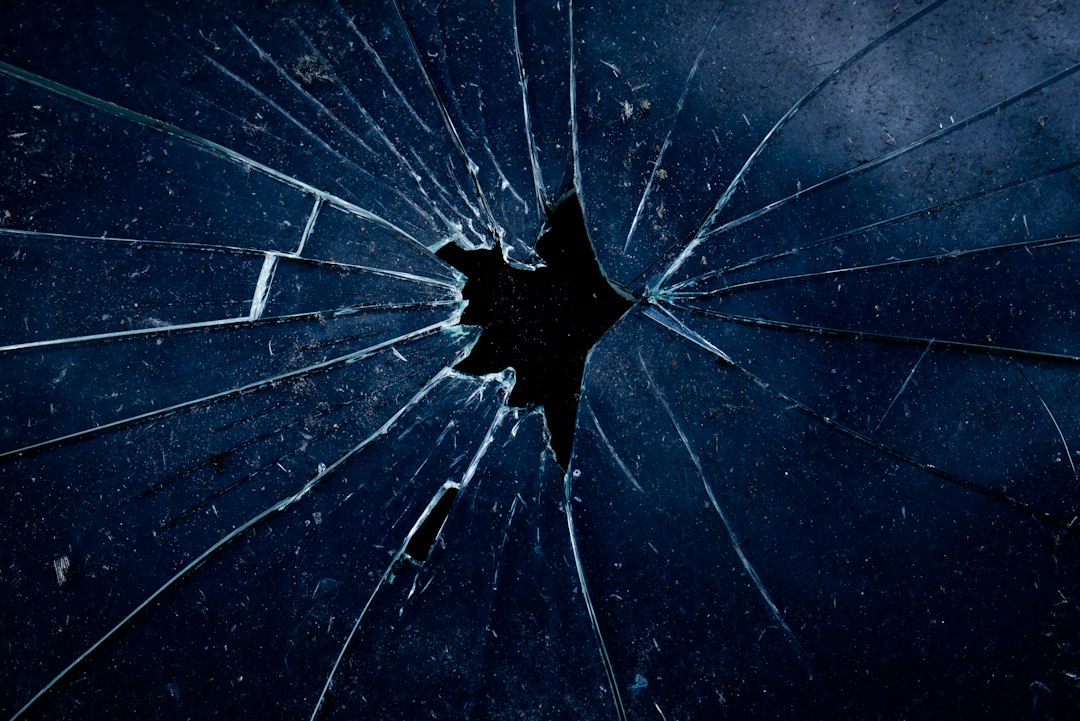
Why Movie Glass Shatters So Easily
When a character crashes through a window in an action film, the glass explodes into a satisfying spray of fragments. Tap a car window with a pistol grip and it spider-webs instantly. Hurl a chair at a storefront and the whole pane disintegrates. Real glass doesn’t behave this way—it’s far more resistant to impact and far more dangerous when it breaks. The movie version relies on specialized materials and careful preparation to create a spectacle that’s both dramatic and safe.
Sugar Glass and Resin Alternatives
The most common substitute for real glass in stunt work is sugar glass, a brittle material made from sugar syrup heated and cooled to create panes that shatter cleanly. It looks convincing on camera but fractures with minimal force, producing fragments with dull edges that won’t cut performers. The recipe is simple—sugar, water, cream of tartar—but the execution requires precision. Pour it too thick and it won’t break on cue; too thin and it shatters under its own weight.
Modern productions often use resin-based alternatives that offer more consistency. These materials can be molded into any shape, tinted to match real glass, and broken repeatedly for multiple takes. They’re more expensive than sugar glass but less sensitive to temperature and humidity, which matters on outdoor shoots or under hot stage lights. Some formulations are designed to break into larger, slower-moving pieces for close-ups, while others produce a fine spray for wide shots.
Pre-Scoring and Controlled Breakage
Even with breakaway materials, crews don’t leave shattering to chance. Pre-scoring is standard practice: technicians etch lines into the back of the pane to control exactly how it fractures. The scoring pattern determines whether the glass explodes outward in a starburst or collapses in large sheets. For car windows, the scoring might radiate from a central point to mimic the way tempered glass breaks. For plate glass, horizontal and vertical lines create a grid that ensures the pane doesn’t leave jagged shards in the frame.
In scenes where a character punches through a window, the glass is often pre-broken and held in place with light adhesive or tension. The actor’s hand passes through what’s essentially a glass-shaped curtain, and the pieces fall away on contact. For thrown objects, the timing is everything—the prop needs to strike the pane at the exact moment the stunt coordinator triggers a pneumatic charge or wire pull to shatter it from behind. The coordination sells the illusion that the object’s impact caused the break.
Why Real Glass Won’t Work
Real glass is too dangerous and too unpredictable. When it breaks, it produces sharp edges capable of severing tendons and arteries. Tempered glass, used in car windows, breaks into small cubes but still poses a laceration risk. Laminated glass, used in windshields, holds together when cracked but doesn’t shatter cinematically. Even in controlled conditions with protective gear, the risk of serious injury is unacceptable for a shot that might require five or ten takes.
Beyond safety, real glass doesn’t break the way audiences expect. It resists moderate impacts and then fails suddenly, often in ways that don’t read well on camera. A thrown chair might bounce off a window rather than smashing through it. A person hitting a pane at speed might crack it without breaking through, which defeats the momentum of an action sequence. Sugar glass and resin allow directors to choreograph the exact moment and manner of the break, ensuring the stunt looks powerful without requiring excessive force.
Sound Design Completes the Illusion
The shattering sound you hear in the final cut rarely comes from the material actually breaking on set. Sugar glass produces a dull crunch; resin often makes almost no sound at all. Foley artists layer in recordings of real glass breaking, often multiple panes at once to create a fuller sound. They’ll add high-frequency tinkles for falling shards and low crunches for the initial impact, building a sonic texture that matches audience expectations rather than acoustic reality.
The combination of breakaway materials, pre-scoring, stunt coordination, and sound design creates one of cinema’s most reliable illusions. The ease with which movie glass shatters is a carefully engineered lie, designed to keep performers safe while delivering the visceral thrill of destruction.