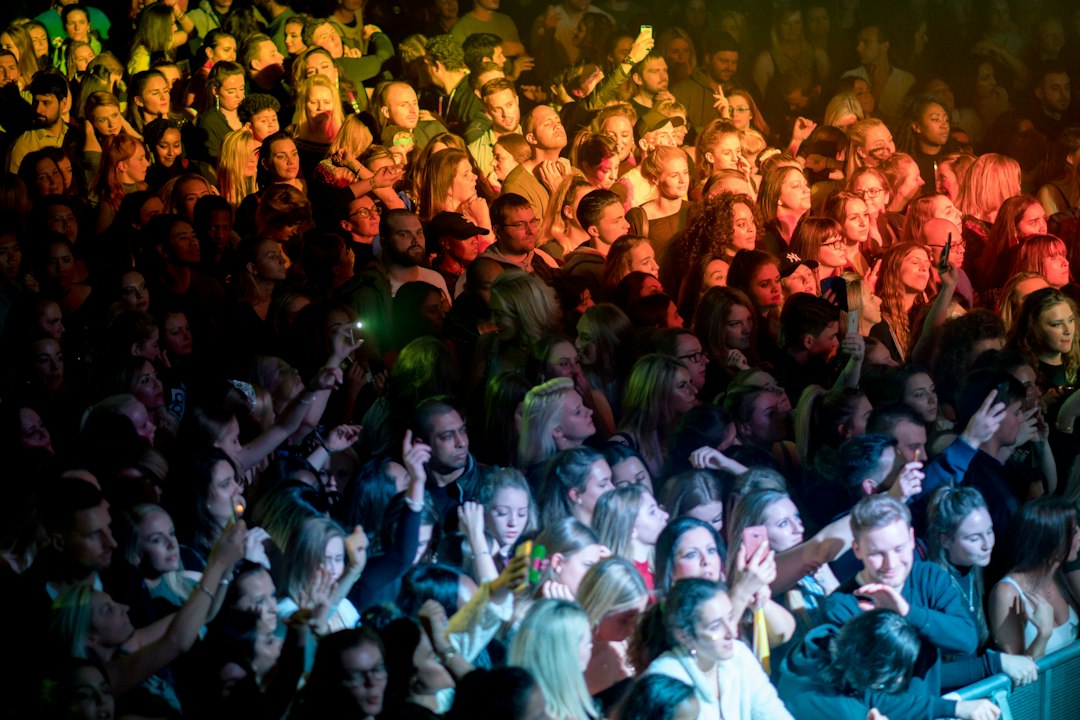
Photo by Craig Whitehead on Unsplash
Why Movie Extras Never Make Eye Contact with the Camera
Watch any crowd scene in a film and you’ll notice something curious: dozens of people moving through the frame, yet none of them ever glance at the camera. It’s not luck or careful editing. It’s the result of one of the most fundamental rules drilled into every background actor from their first day on set.
The instruction is simple and absolute: never look at the lens. Break this rule once and the shot is ruined. The moment an extra makes eye contact with the camera, the fourth wall shatters and the audience is yanked out of the story. What was a bustling train station or a tense courtroom gallery becomes a film set with people pretending.
The Discipline of Selective Blindness
Background actors are taught to treat the camera as if it doesn’t exist—an invisible observer they must train themselves not to acknowledge. This is harder than it sounds. Human instinct drives us to look at anything pointed in our direction, especially a large piece of equipment surrounded by crew members. Suppressing that reflex takes practice and constant awareness.
On a busy set with multiple cameras, extras must track which lenses are live and where they’re pointed, all while performing natural behavior. A background actor walking through a restaurant scene might be told to cross frame left, pause at the bar, then exit right—all without ever glancing toward any of the three cameras capturing the moment. One slip breaks the take.
Why It Breaks the Reality
Cinema depends on the audience forgetting they’re watching a constructed illusion. The camera is our surrogate eye, placing us inside the world of the story. When a character looks directly into the lens—an intentional fourth-wall break—it’s a deliberate creative choice that reframes the entire narrative relationship. But when an extra does it, it’s simply a mistake that reminds us we’re watching actors on a set.
The problem compounds in scenes with deep staging, where background action continues far into the distance. A single extra glancing at the camera in the back of a wide shot might seem minor, but it draws the eye and contaminates the reality of everything else in the frame. Editors can sometimes crop or reframe to hide the error, but it’s far better to avoid it entirely.
The Craft of Professional Background Work
Professional extras understand that their job is to build the world, not to be seen. They create the texture of reality—the anonymous pedestrians, the courtroom observers, the restaurant diners—that makes the foreground story feel embedded in a living environment. Looking at the camera is the amateur mistake that marks someone as uncommitted to the craft.
Some productions use “non-professional” crowds for authenticity, particularly in documentary-style filmmaking or guerrilla street shoots. In those cases, the risk of civilians staring at the lens is managed through tight framing, long lenses that keep the camera distant, or simply accepting that a few curious glances will be part of the aesthetic. But in controlled narrative filmmaking, the expectation is total.
When the Rule Gets Broken
Occasionally you’ll catch an extra’s eyes flicking toward the lens in a finished film—usually in a chaotic crowd scene where the editor had no better take to cut to. These moments live on in blooper reels and internet compilations, small cracks in the illusion that only become visible once you know to look for them.
But the vast majority of the time, the system works. Hundreds of background actors move through the frame in a single shot, each one maintaining the discipline of looking anywhere except at the one object that most demands their attention. It’s an invisible skill, noticed only in its absence—and that’s exactly the point.