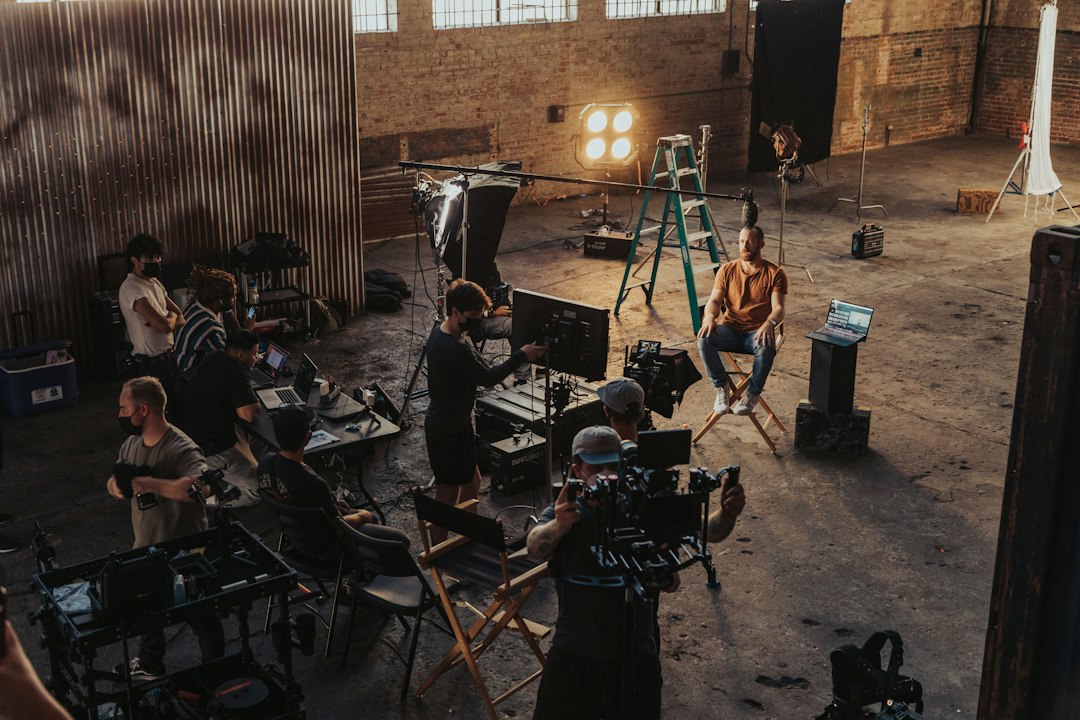
Photo by Jakob Owens on Unsplash
Why Movie Extras Can't Wear Stripes or Busy Patterns
If you’ve ever worked as a background actor or watched behind-the-scenes footage of a film set, you’ve probably heard the wardrobe rule: no stripes, no tight patterns, no bold logos. It sounds arbitrary, but these restrictions exist for very specific technical and creative reasons that have everything to do with how cameras see the world differently than the human eye.
The Moiré Effect
The primary culprit is a phenomenon called moiré (pronounced “mwah-RAY”), an interference pattern that occurs when a repetitive pattern—like stripes, herringbone, or fine checks—interacts with the pixel grid of a digital camera sensor. The result is a shimmering, wavy distortion that looks like ripples moving across the fabric. It’s especially pronounced on fine patterns like pinstripes or tightly woven textures.
Film cameras were less susceptible to moiré because they captured images on a continuous emulsion rather than a grid of discrete sensors. But in the digital era, even high-end cinema cameras can produce moiré under the wrong conditions. Once it’s baked into the footage, it’s difficult and expensive to remove in post-production. Easier to prevent it at the wardrobe stage.
Visual Distraction and Hierarchy
Even if moiré doesn’t occur, busy patterns draw the eye. Background actors exist to populate the world of the film without pulling focus from the principal actors. A brightly striped shirt or a loud graphic tee can become an unintentional focal point, especially in a wide shot where the viewer’s eye is free to wander.
Directors and cinematographers carefully control where the audience looks using composition, lighting, depth of field, and movement. A single extra in a neon zebra-print jacket can break that control. Wardrobe departments typically dress background in muted, solid colors—earth tones, grays, navy—so they blend into the scene without disappearing entirely.
Logos and Legal Issues
Trademarked logos present a separate problem. Visible brand names can trigger clearance issues, potentially requiring permission from the trademark holder. Even if the production secures that permission, a recognizable brand can anchor the film to a specific time and place in a way that breaks immersion or dates the film prematurely.
Some productions intentionally feature brands as part of product placement deals, but that’s a controlled decision. An extra wearing a prominent Nike swoosh or a sports team jersey introduces branding into the frame without creative intent or legal vetting.
White and Bright Colors
While not as strictly forbidden as patterns, pure white and extremely bright colors also raise red flags. White can blow out in high-contrast lighting, creating hotspots that distract from the main action. Wardrobe supervisors often steer background actors toward off-whites, creams, or light grays instead.
Bright neon colors pose a similar problem—they pop too much on camera and can clash with the film’s color palette, especially if the cinematographer has carefully graded the scene toward a specific mood or temperature.
The Practical Outcome
When you’re called to set as a background actor, the wardrobe guidelines usually include instructions to bring a range of solid, neutral clothing. If you show up in something problematic, wardrobe will either provide a replacement or send you home. It’s not personal—it’s physics and visual storytelling working in tandem.
The result is a background that feels lived-in and realistic without competing for attention. When it works, you don’t notice the extras at all. And that’s exactly the point.