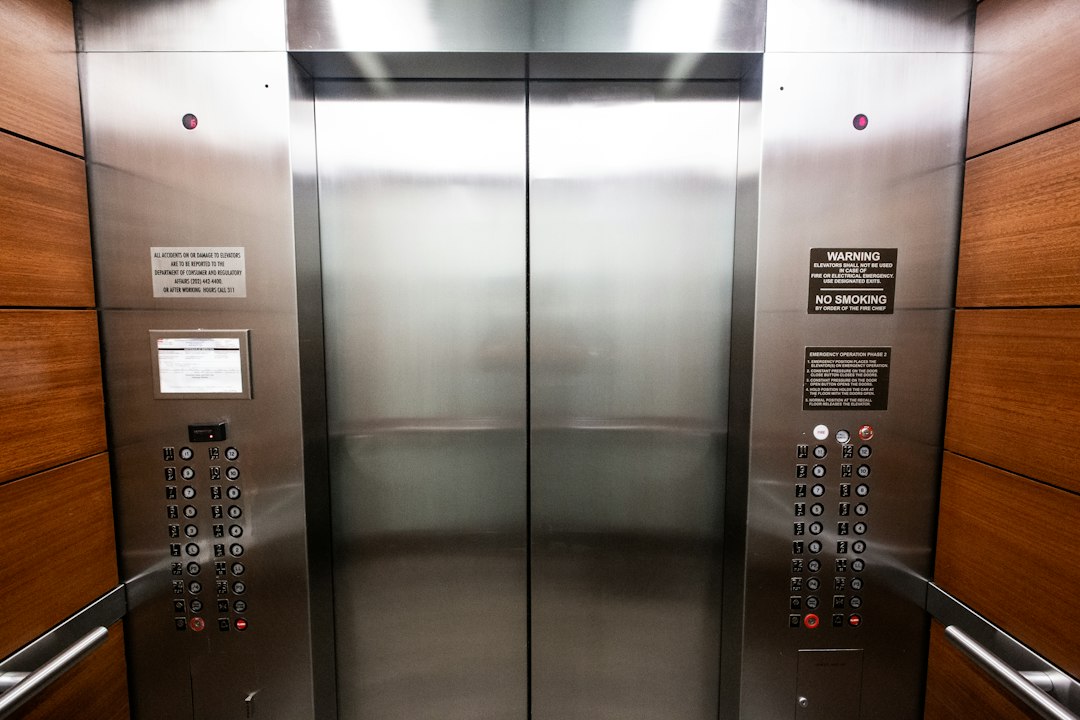
Photo by Derrick Treadwell on Unsplash
Why Movie Elevators Always Stop Between Floors
Pay attention during your next film binge and you’ll notice a pattern: movie elevators malfunction at an alarming rate. Characters step inside, the doors close, and within seconds the car lurches to a stop, lights flicker, and someone frantically jabs at buttons that no longer work. Real elevators are statistically among the safest forms of transportation, but in cinema they’re ticking time bombs of narrative opportunity.
The Instant Pressure Cooker
A stalled elevator solves one of screenwriting’s trickiest challenges: forcing characters who would otherwise avoid each other into sustained, unavoidable proximity. There’s no walking away mid-argument, no retreating to separate rooms, no convenient interruptions. The space is small, the air grows stale, and every word lands with claustrophobic weight.
This manufactured intimacy accelerates emotional arcs that might otherwise unfold over multiple scenes. Two characters who’ve been circling an unspoken tension for half the film suddenly have nowhere to hide. The confession that seemed impossible five minutes ago becomes inevitable when you’re trapped three feet from someone with nothing to do but talk.
The Neutral Territory Advantage
Elevators exist outside the normal geography of a story. They’re not anyone’s office, home, or territory, which strips away the power dynamics that come with location. A CEO and an intern stuck between floors aren’t boss and employee anymore—they’re just two people in a metal box. This spatial neutrality lets filmmakers reset relationship hierarchies and create exchanges that would feel forced in other settings.
The transient nature of elevator space also provides built-in narrative justification for raw honesty. People reveal things to strangers on planes and in elevators precisely because these spaces exist outside normal social contexts. Characters can speak truths they’d never voice in their everyday environments, and the temporary nature of the confinement provides psychological permission for vulnerability.
The Control Reversal
Modern life is defined by the illusion of control, and elevators represent that control in miniature—push a button, arrive at your destination, everything proceeding according to plan. When that system fails, it triggers primal anxiety. Characters who moments ago were powerful, composed, and in command of their worlds are suddenly helpless, reduced to shouting into emergency intercoms that may or may not connect to anyone.
This reversal is dramatically efficient. A single malfunction strips away all the armor a character has built up, revealing who they are when the veneer of control disappears. The businessman who runs a corporation can’t fix a stuck elevator. The action hero who dispatched a dozen enemies can’t punch through steel cables. Everyone becomes equal in their powerlessness.
The Ticking Clock Built In
Stalled elevators come with implicit urgency. The air supply is limited. Someone might be waiting. The cables could fail. A character might be claustrophobic, diabetic, late for something crucial. Unlike other confined spaces, elevators aren’t designed for extended occupation, which means every minute of delay carries escalating stakes.
This built-in countdown means filmmakers don’t need to manufacture artificial tension—the situation itself provides it. The longer characters remain trapped, the higher the pressure rises, and audiences understand this instinctively. No exposition required.
The Production Practicality
From a purely logistical standpoint, elevator interiors are cheap and simple to shoot. Build one small set or dress an existing elevator, add a camera and two actors, and you’ve got a scene that can run five minutes with minimal setup. The confined space limits what needs to be lit, dressed, and controlled. For productions watching their budgets, a good elevator scene delivers maximum dramatic impact per dollar spent.
The confined frame also forces actors into close-ups and tight two-shots naturally, creating visual intimacy without elaborate camera choreography. The space does the compositional work.
When the Doors Finally Open
The eventual rescue or escape provides a natural scene boundary and often a relationship turning point. Characters who entered as strangers or adversaries emerge changed, having been forged into something new by shared crisis. Or they step out with relief, escaping back to their separate worlds but carrying the weight of what was revealed in that suspended space between floors.
Real elevators almost never malfunction. Movie elevators fail constantly. And cinema is better for it.