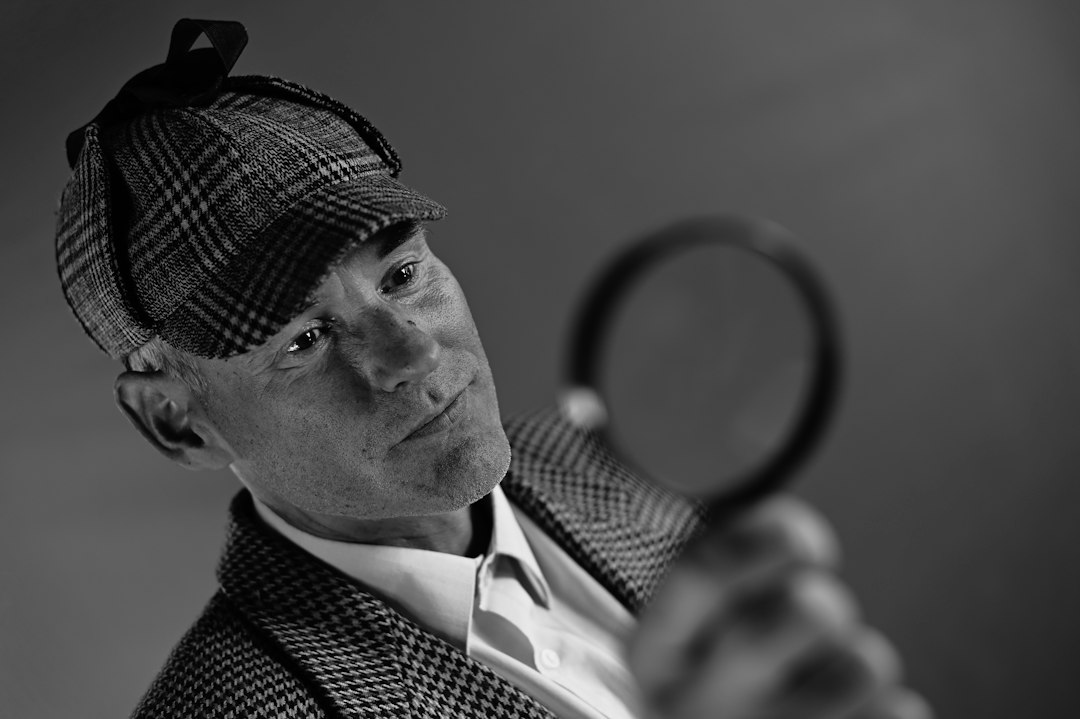
Photo by Andres Siimon on Unsplash
Why Movie Detectives Always Squint at Photographs
Watch any detective thriller and you’ll see the same gesture: the investigator holds a photograph at arm’s length, narrows their eyes, and tilts their head slightly. Sometimes they step closer to a window. Sometimes they pull out reading glasses and perch them halfway down their nose. The photograph might be grainy surveillance footage, a decades-old Polaroid, or a crime scene print, but the ritual is identical. The detective squints, and the audience knows something important is about to be discovered.
Visual Shorthand for Mental Work
Film has always struggled to show thinking. Unlike action or emotion, cognition doesn’t have an inherent physical form. The squint solves this problem elegantly. It’s a visible cue that the character is concentrating, scrutinizing, engaging in close analysis rather than passive looking. The narrowed eyes suggest effort and focus, transforming a simple act of viewing into detective work the audience can see.
The gesture also buys time. A character can hold a photograph and squint for three or four seconds without saying a word, and the audience remains engaged. That silence creates space for the score to swell, for a flashback to trigger, or for a verbal revelation to land with weight. It’s a pause that doesn’t feel like dead air because the actor’s face is doing the work.
Framing the Frame
There’s a practical reason this gesture shows up so often: it creates a natural close-up opportunity. When a detective squints at a photo, the camera can push in on their face, capturing the micro-expressions that signal realization or confusion. Then it can cut to an insert shot of the photograph itself, guiding the audience’s attention to the exact detail that matters.
This two-shot pattern mirrors the detective’s own process. First we see them noticing something, then we see what they noticed. The squint becomes a visual bridge between observer and observed, cueing the editor to make the cut and the audience to pay closer attention.
The Performance of Competence
Squinting also communicates authority. It suggests the detective sees things others miss, that they possess a trained eye capable of extracting meaning from overlooked details. This is especially important in scenes where the photograph has already been examined by other characters. The protagonist’s squint signals that this time will be different, that expertise and intuition are about to reveal what procedure missed.
The gesture separates the professional from the amateur. A casual witness might glance at a photo and shrug. A detective squints, tilts, holds it to the light. The physical ritual reinforces the character’s role and justifies their presence in the narrative.
Anatomy of the Gesture
The specific choreography matters. Holding the photograph at arm’s length suggests objectivity and distance, the ability to see the whole picture. Bringing it closer implies a shift to fine detail, the moment when a face in the background or a reflected license plate becomes legible. Removing glasses or putting them on marks a transition between modes of seeing.
Tilting the photograph often accompanies this. It’s not that the image is literally easier to read at an angle; it’s that the tilt externalizes the detective’s mental process of reconsidering, of looking at the evidence from a new perspective. The physical rotation stands in for cognitive reframing.
When Dialogue Would Break the Spell
The squint endures because it’s more efficient than the alternative. A detective could simply announce “I see something in this photo,” but that flattens the moment. The gesture lets the audience experience the discovery in real time, preserving a sense of mystery and momentum. It also allows the character to remain in the world of the story rather than stepping out to narrate their own thought process.
In a medium built on showing rather than telling, the squint is a tool that does its job quietly. It signals investigation, creates rhythm, and guides the viewer’s eye—all without a single line of dialogue. That’s why it shows up in everything from noir classics to network procedurals, a small piece of physical language the camera loves and audiences instinctively understand.