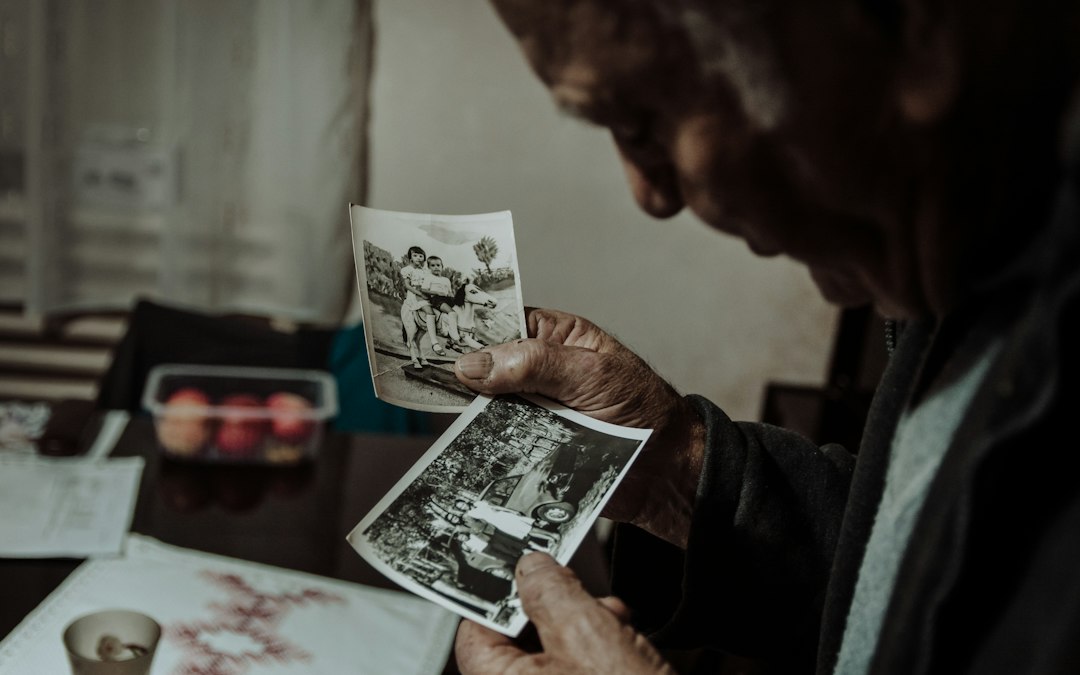
Photo by Andreea Popa on Unsplash
Why Movie Detectives Always Flip Through Photos Instead of Swiping
Watch any crime thriller made in the last decade and you’ll see the same ritual: a detective sits at a desk under a pool of lamplight, slowly flipping through a stack of printed photographs. They study each one, arrange them in patterns, pin them to cork boards. Meanwhile, the rest of the world moved to digital photos years ago, yet cinema’s investigators remain committed to physical prints.
This isn’t an oversight. It’s a deliberate production choice rooted in how film communicates investigation visually.
Physical Objects Create Screen Presence
A detective swiping through photos on a phone presents a problem: the audience can’t see what the character sees. The screen is too small, the angle too narrow, and the gesture too fast. Printed photos solve this immediately. The camera can frame them in close-up, hold on details, and show multiple images in a single composition. The audience reads what the character reads, at the same pace.
Physical photographs also give actors something concrete to handle. They can spread them across a desk, hold one up to the light, or slide one toward a colleague. These actions create blocking—movement and gesture that fills the frame and gives the scene visual variety. A finger swiping glass offers none of that texture.
Tangibility Signals Active Thinking
Flipping through printed photos suggests manual, deliberate work. The character isn’t scrolling passively; they’re handling evidence, making choices about what to look at and in what order. The physical act of moving paper communicates mental labor in a way that a thumb on a screen cannot.
This matters especially in montage sequences, where investigators sift through material late into the night. The repetitive gesture of picking up a photo, examining it, setting it down, and reaching for the next one becomes a visual rhythm. It’s tactile and effortful. Digital swiping, by contrast, reads as frictionless—efficient, maybe, but not cinematic.
Arrangement as Storytelling
Printed photos can be arranged spatially. A detective might lay out images in a timeline, group suspects by connection, or circle faces with a marker. This transforms a passive review into an active diagram the audience can parse. The detective’s thinking becomes externalized and visual.
Cork boards covered in pinned photos and red string have become a cliché precisely because they’re so effective at showing investigative process. Digital equivalents exist—software with tagging, timelines, relationship maps—but they live inside a monitor, hidden from the camera unless a clunky interface shot intrudes.
Practical Production Reasons
There’s also a mundane technical factor: controlling what appears on screen. A printed photo is a fixed prop. The image is locked, the framing deliberate, and continuity simple to maintain across takes. A phone or tablet requires either live screen compositing or post-production screen replacement, both of which add time, cost, and potential for error.
Printed photos also remain readable in any lighting condition. A phone screen, especially under the moody single-source lighting common in detective scenes, can wash out, reflect the key light, or show distracting interface elements.
The Anachronism Is the Point
Modern detectives would, in reality, work almost entirely digitally. But cinema doesn’t always track real-world workflow—it tracks what makes emotional and visual sense. The printed photograph persists because it’s specific, tactile, and legible. It gives the actor a prop, the cinematographer a surface to light, and the audience a clear window into the character’s investigation.
So when you see a detective flipping through photos in a film set firmly in the present day, you’re not watching a mistake. You’re watching a medium choose its own grammar over literal realism, the way it always has.