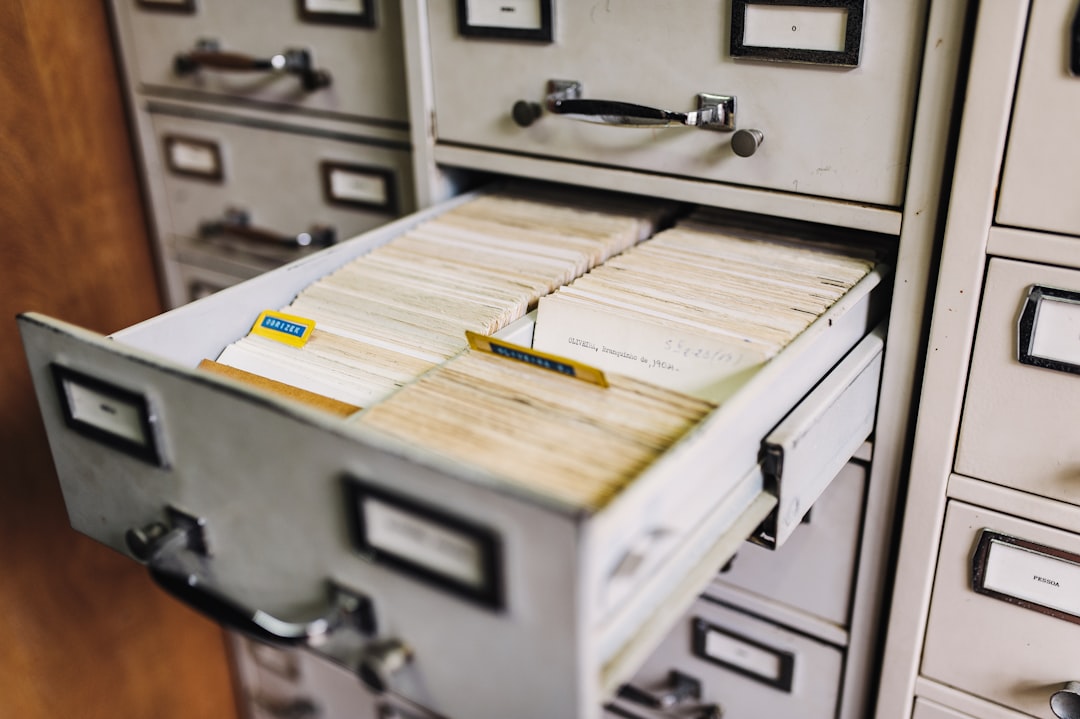
Photo by Maksym Kaharlytskyi on Unsplash
Why Movie Detectives Always Use Filing Cabinets Instead of Computers
Walk into any movie detective’s office and you’ll find towering filing cabinets, accordion folders stuffed with papers, and case files stacked on every surface. Even in contemporary thrillers set in the 2020s, investigators still yank open metal drawers and flip through manila folders rather than opening a laptop. Real police departments digitized their records decades ago, so why does cinema cling to analog filing systems?
Physical Action Creates Visual Interest
A detective typing into a database makes for static, uncinematic footage. Someone pulling a drawer, rifling through tabs, extracting a folder, and spreading photos across a desk gives the camera something dynamic to follow. Each step is a distinct physical action that can be shot from multiple angles and edited for rhythm.
Filing cabinets also allow actors to move through space. A character can cross the room to a cabinet, creating blocking that wouldn’t exist if they simply sat at a computer. They can slam a drawer shut in frustration or leave one hanging open to signal distraction. These small physical beats give performances texture that mouse clicks cannot provide.
Paper Makes Information Tangible
When information lives on paper, it can be handled, marked up, pinned to walls, or thrown in anger. A detective can circle a name in red pen, cross-reference two documents side by side, or tear a page from a file. These gestures make the investigation feel tactile and urgent in ways that scrolling through PDFs does not.
Paper also photographs better. A close-up of a typed report, a mugshot clipped to a folder, or a handwritten note carries immediate visual weight. Computer screens often wash out under film lights or require unrealistic on-screen graphics that pull viewers out of the story. A physical file looks authentic without technical intervention.
The Clutter Tells a Story
Stacks of files signal obsession. A detective surrounded by years of case folders looks consumed by the work in a way a clean desk with a single laptop does not. Production designers use filing cabinets to build character: battered metal suggests a veteran cop, a pristine system implies bureaucratic precision, and an overflowing mess communicates someone who has lost control.
The physical accumulation of paper also visualizes time passing. A detective adding another folder to a growing pile shows months or years of effort. Digitally, that same progression would be invisible, just another file saved to a hard drive with no outward sign of the mounting burden.
Analog Systems Are Democratically Accessible
Not every viewer understands database software, but everyone understands a file folder. The visual language of paper filing requires no technical literacy. A drawer labeled “Cold Cases” or a folder marked “Classified” communicates instantly, while a screenshot of a database interface might confuse or bore audiences who aren’t familiar with that specific software.
This accessibility also keeps the focus on story rather than technology. When a detective searches a filing system, the audience watches their face and body language. When they search a computer, the audience watches the screen, and the performance disappears.
The Convention Reinforces Genre
Filing cabinets have become such a reliable shorthand for investigative work that their presence alone signals genre. They belong to the same visual vocabulary as cork boards, dim desk lamps, and half-empty coffee cups. Removing them would make a detective’s workspace feel less like the archetypal version audiences expect, even if it would be more realistic.
Genre conventions persist because they work. Audiences accept these visual choices not as literal representations of modern police work but as a storytelling language that prioritizes clarity and drama over documentary accuracy. The filing cabinet endures because it does its job better than the technology that replaced it in the real world.