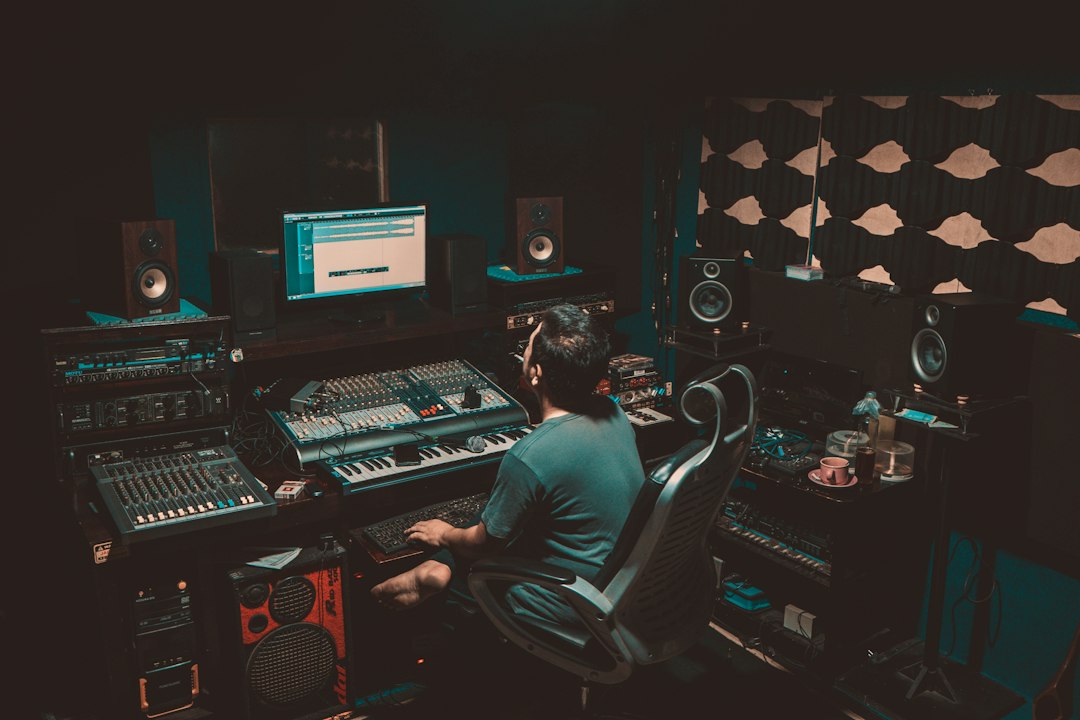
Photo by Jesman fabio on Unsplash
Why Movie Crowds Always Sound the Same
You’ve heard the same crowd a hundred times. A distant murmur of conversation in a restaurant. Background chatter at a party. The hum of a busy airport terminal. These ambient human sounds feel universal enough that most viewers never notice they’re hearing the exact same recording across completely different films, sometimes years apart.
Professional sound libraries contain a surprisingly small collection of crowd recordings that get reused constantly across the industry. The same “walla” track—the term for unintelligible background conversation—appears in blockbusters, indie dramas, and television shows alike. It’s the audio equivalent of stock photography, but even more invisible.
The Economics of Recording Crowds
Recording convincing crowd ambience is expensive and unpredictable. You need to gather dozens of people, often actors from a walla group who specialize in creating believable background conversation. They improvise overlapping dialogue that sounds natural but remains unintelligible, usually by repeating nonsense phrases or speaking in deliberately vague patterns. “Peas and carrots” and “rhubarb rhubarb” are classic standbys, though modern walla sessions use more sophisticated techniques.
The session might take hours to capture enough usable material for a sound library. You need variations: indoor and outdoor recordings, different crowd densities, various emotional tones from celebratory to tense. All of this requires a controlled recording environment, skilled performers, and experienced sound engineers. Most productions can’t justify that expense when adequate crowd tracks already exist.
Why Editors Keep Using the Same Files
Sound editors work under brutal time pressure. A single film might need dozens of crowd scenes, each requiring layered ambient tracks to build realistic density. Reaching for a proven library track is faster and more reliable than organizing a custom recording session. The editor knows exactly what that file sounds like, how it sits in a mix, and which variations exist for continuity across related scenes.
There’s also an element of “good enough” at play. Crowd ambience lives so far back in the mix that most viewers process it subconsciously. As long as it doesn’t call attention to itself—no recognizable voices, no jarring tonal shifts—it does its job. A restaurant scene needs the impression of other diners, not a bespoke sonic signature.
When Repetition Becomes a Problem
The issue emerges for attentive viewers who watch a lot of films. Once you recognize a specific crowd recording, you start hearing it everywhere. It breaks immersion in the same way a repeated stock sound effect does. The restaurant in a 2015 thriller has the identical ambient chatter as the museum gala in a 2022 heist film. The airport terminal loop is unmistakable once you’ve keyed into its rhythm.
Some high-budget productions do invest in custom crowd recordings, particularly for period pieces where modern speech patterns would feel anachronistic, or for films set in specific cultural contexts where generic American walla doesn’t fit. But even then, editors often supplement with library material, layering it beneath more distinctive custom recordings.
The Invisible Craft
The persistence of recycled crowd sounds reveals how invisible good sound design is meant to be. Background ambience succeeds when it disappears into the story. The moment a viewer consciously notices the sound, something has gone wrong—or they’ve seen too many movies. Like film grain, lens flares, or color grading choices, crowd walla is part of the texture that makes a fictional world feel inhabited and real.
Most audiences will never consciously hear the same crowd twice. But for those who do, it’s a reminder that filmmaking is built on layers of accepted shortcuts and shared resources. The craft lies not in reinventing every element, but in assembling borrowed pieces into something that feels whole.