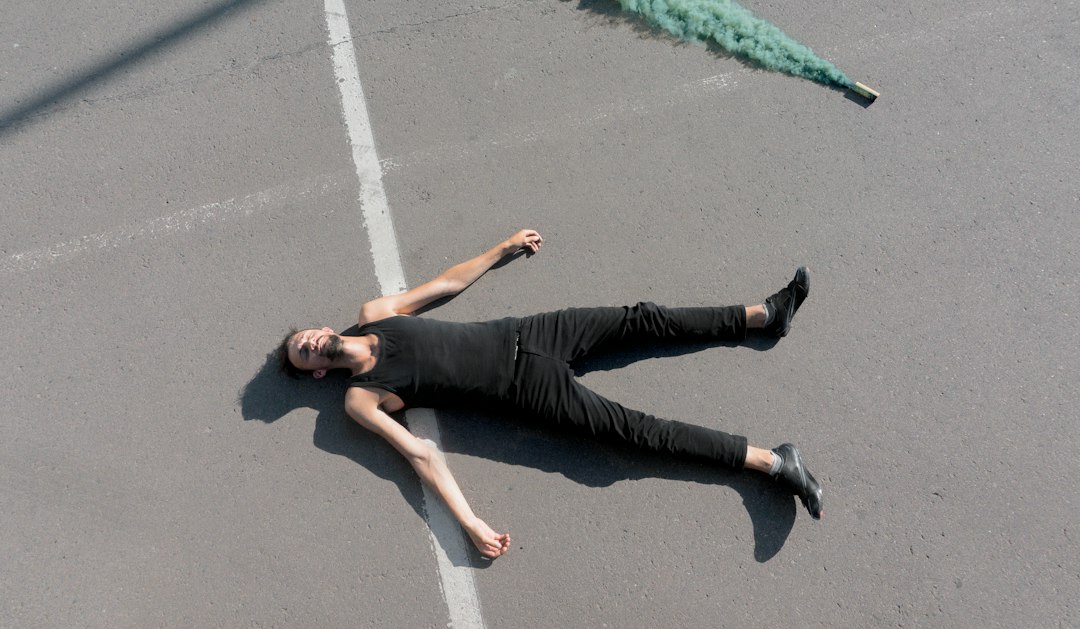
Photo by Anton Mishin on Unsplash
Why Movie Corpses Never Blink
Playing dead is harder than it looks. While audiences focus on the detective examining evidence or the hero discovering a body, background performers face one of the most physically demanding challenges in film acting: holding absolutely still while camera crews, lights, and principal actors work around them for minutes or even hours at a time.
The Physical Challenge
The human body fights stillness. Even when we think we’re motionless, we’re breathing, blinking every few seconds, and making micro-adjustments to maintain balance. A corpse can’t do any of that. The moment a “dead” character’s chest rises with breath or an eyelid flickers, the illusion shatters and the take is ruined.
Professional background performers who specialize in corpse work train themselves to breathe shallowly through their mouths, taking small sips of air that won’t register as chest movement on camera. They learn to fix their gaze on a single point and resist the urge to blink, even under the punishing heat of production lighting. Some actors report being able to hold a death stare for three to five minutes before their eyes water uncontrollably.
Coverage and Multiple Takes
A single death scene might require a dozen takes from different angles, each demanding the same level of commitment. The performer lies on cold concrete or wet asphalt, staying frozen while the crew resets lights and adjusts camera positions. Between takes, they can move and blink freely, but the moment “action” is called, they return to absolute stillness.
Close-ups present special challenges. When the camera pushes in tight on a corpse’s face, every tiny movement becomes magnified. Makeup artists sometimes apply a light layer of glycerin or water to the eyes to create a glassy, lifeless appearance, which helps mask minor eye movements but makes holding a stare even more uncomfortable.
When Stillness Isn’t Enough
For extended close-ups or shots where even shallow breathing might read on camera, productions sometimes resort to prosthetic corpses or digital compositing. A performer might act the scene in full, then hold a perfect stillness for ten seconds while a clean plate is captured. In post-production, that frozen moment can be looped or extended as needed.
In other cases, especially for bodies discovered in water or visible only from certain angles, practical dummies handle the work. But for scenes requiring interaction—an investigator checking for a pulse, a character cradling a victim—only a living performer can provide the weight, warmth, and subtle texture that reads as human.
The Forgotten Performance
Corpse performers rarely receive credit or recognition, yet their work demands extraordinary discipline. They endure uncomfortable positions, repeat the same motionless performance dozens of times, and do it all while other actors deliver emotional speeches or complex blocking around them.
The next time you watch a crime procedural or thriller, pay attention to the bodies on screen. That perfect stillness isn’t effortless—it’s a small, invisible feat of physical control that disappears the moment it’s done well.